



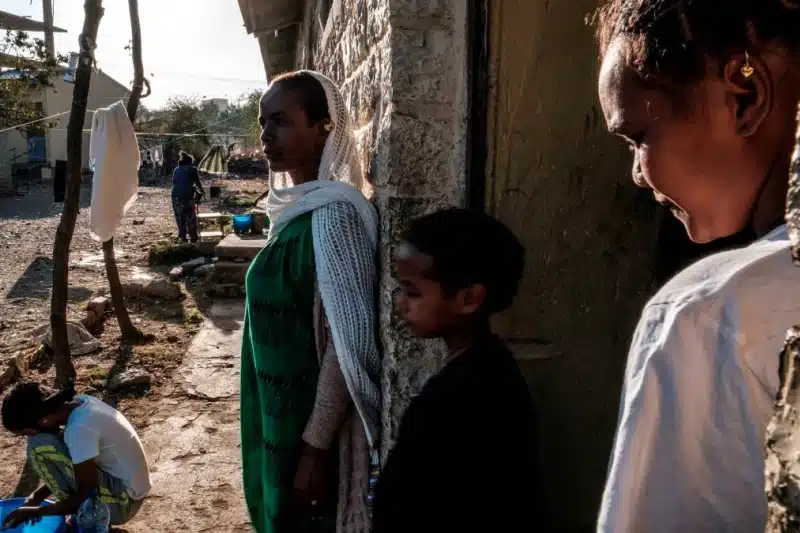

A new report documents how ethnic Tigrayans live as second-class citizens under a system of identity denial, arbitrary detention and enforced poverty
Four years after Ethiopia’s warring parties signed a ceasefire agreement that was supposed to end one of Africa’s deadliest conflicts, ethnic Tigrayans living under Tigrayan persecution in Western Tigray are still being systematically stripped of their rights, their freedom and their dignity.
That is the central finding of a report released on 22 April 2026 by Human Rights Watch, titled Ethiopia: Persecution of Tigrayans Unrelenting, which concludes that the region has not recovered from war. It has simply traded open warfare for institutionalised repression.
A Peace Agreement That Changed Little on the Ground
The 2022 Cessation of Hostilities Agreement, brokered in Pretoria, was celebrated internationally as a turning point for Ethiopia. For the Tigrayans of the west, Human Rights Watch argues, it changed very little.
Tigrayans in Western Tigray are being treated as second-class citizens, the report states, subjected to a rigid structure of control administered by an interim authority dominated by Amhara regional forces and local militias. The system, HRW documents, is not incidental. It is organised.
At its centre is a policy of identification denial. Without local identification cards, which the interim authorities systematically refuse to issue to Tigrayans, residents cannot access basic government services, open bank accounts or secure formal employment. The denial of a document becomes, in effect, the denial of an economic future.
Towns That Function as Open-Air Prisons Under Tigrayan Persecution in Western Tigray
Movement, too, has been severely curtailed. According to the HRW report, Tigrayans must obtain temporary permits merely to leave their towns. Those permits, interviewees told researchers, are rarely granted outside of dire medical emergencies.
The report also documents continued suppression of the Tigrinya language in public and administrative spaces, a practice that amounts to forced cultural assimilation for a population already under enormous pressure.
Tigrayan persecution in Western Tigray, the report makes clear, is not a series of isolated incidents. It is a closed-loop system: people cannot move, so they cannot work; they cannot work, so they cannot access services; they cannot access services, so they remain trapped.
Arbitrary Arrests and Extortion
Human Rights Watch documented ongoing arbitrary arrests and round-ups of ethnic Tigrayans by security forces. Witnesses who fled the region as recently as early 2026 described to researchers being beaten in overcrowded, unofficial detention facilities.
Families, the report notes, frequently have to pay bribes to local militias to secure the release of detained relatives, a practice that further drains communities already cut off from the formal economy.
740,000 People Still Cannot Go Home
The scale of displacement highlights how Tigrayan persecution in Western Tigray continues to prevent returns. More than 740,000 internally displaced persons remain in camps across central and eastern Tigray, unable to return to their homes in the west for fear of violence.
This population, which has now been displaced for years, faces worsening conditions as global humanitarian funding has seen significant cuts in 2025 and 2026, leaving camps with acute shortages of food, medicine and clean water.
A Contested Territory With No Resolution in Sight
Western Tigray sits at the heart of a long-running territorial dispute. Both the Amhara and Tigray regions claim the zone, and the federal government in Addis Ababa has promised a referendum to resolve its status. Human Rights Watch notes, however, that no concrete steps have been taken to organise such a vote or to guarantee the safety of those who would participate in it. This lack of progress ensures that, the dispute remain unresolved, further entrenching Tigrayan persecution in Western Tigray.
The report is particularly critical of international actors, which it accuses of prioritising diplomatic stability and bilateral ties with Addis Ababa over their obligations to protect civilians. This deference, HRW argues, has allowed what began as wartime ethnic cleansing to solidify into something more durable: a permanent demographic and territorial status quo.
This is not a new allegation. A landmark joint report by Human Rights Watch and Amnesty International had previously documented an ethnic cleansing campaign in Western Tigray during the war, including mass forced displacement, killings, sexual violence and the deliberate denial of humanitarian aid.
From Ethnic Cleansing to Institutionalised Discrimination
What the new report adds to that record is a longitudinal argument: the abuses did not stop with the fighting. They evolved.
Where artillery once enforced control, administrative exclusion now does the same work. Tigrayan persecution in Western Tigray has, according to Human Rights Watch, moved from a wartime atrocity into what might be described as a frozen injustice, sustained not through open violence alone but through bureaucratic suffocation and impunity.
The report explicitly warns that if current patterns of unlawful imprisonment, forcible transfer and persecution are sustained, they amount to crimes against humanity under international law.
Calls for Accountability
Human Rights Watch is calling on the African Union and the United Nations to reinstate independent human rights monitoring in the region and on the Ethiopian federal government to hold the interim authorities in Western Tigray accountable. Failure to act now, risks normalising Tigrayan persecution in Western Tigray
The context matters. Ethiopia is not dealing with this crisis in isolation. Armed conflict continues in the Amhara and Oromia regions. Reports of renewed clashes in Tigray itself have emerged in 2026, raising fears among analysts that the broader war could restart.
The unresolved grievances in Western Tigray, where land, identity and justice all remain contested, represent one of the most combustible elements in that wider picture.
The Risk of Renewed War
Tigrayan persecution in Western Tigray is, in the assessment of Human Rights Watch, not a post-conflict condition. It is a pre-conflict one. The displaced remain displaced. The perpetrators remain unpunished. The territorial question remains unanswered.
For hundreds of thousands of Tigrayans, the ceasefire that ended the fighting never quite arrived. And for the international community, which has largely looked elsewhere since 2022, the question the HRW report puts squarely on the table is whether a slow-burning crisis will be addressed before it erupts again. Unless Tigrayan persecution in Western Tigray is addressed decisively, we may risk another full blown war.
Human Rights Watch’s full report, “Ethiopia: Persecution of Tigrayans Unrelenting,” was released on 22 April 2026.


