




AfricanQuarters has reached out to the company named in the dispute for comment and has not yet received a response. The lawsuit has not been independently verified.
A Shopper’s Question That Stopped Nigerians
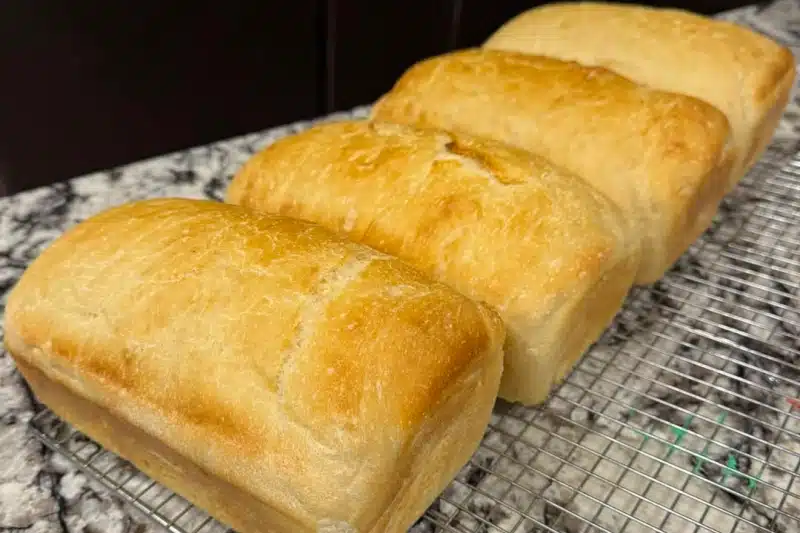
In the first video, which has been widely circulated and reposted across X and other platforms, the woman stands inside what appears to be a small retail shop holding a packaged loaf of sliced bread.
She explains, calmly and without naming any brand, that she bought the loaf more than two months prior. The bread, she says, still appears fresh to the eye, remains soft to the touch, carries no visible mould, and even smells normal.
Holding a slice up to the camera, she asks a question that many Nigerians are now repeating: what kind of preservatives could possibly keep bread in that condition for that long?
The video spread quickly. Nigerians, already navigating one of the country’s most severe cost-of-living pressures, were unsettled by it. Food safety is not an abstract concern here; it is a daily one.
A Legal Notice She Did Not Expect
In a second video, the same woman appears seated, holding what she describes as legal documents served on her by solicitors representing an Abuja-based bakery she identifies as Bon Bread.
She says the company is demanding ₦50 million in damages, alleging that her viral video caused a sharp fall in sales within days of its circulation.
The woman’s response throughout the clip is composed but clearly frustrated. She makes one point repeatedly: she never mentioned any brand name, company, or product identifier in her original video.
For many watching, that is precisely what gives the case its sting. By pursuing legal action, she argues, the company effectively identified itself.
AfricanQuarters has not been able to independently confirm the contents of the legal documents, the company’s filing, or the alleged drop in sales.
This Has Happened Before
The threat of a corporate lawsuit against a Nigerian woman for speaking about a food product is not new.
In September 2023, Chioma Okoli, a Lagos-based small business owner, posted a Facebook review saying a tin of Nagiko Tomato Mix she purchased tasted excessively sweet. Within a week, she was arrested by plainclothes police officers during a church service and subsequently detained as reported by Open Democracy following a complaint by Erisco Foods Limited, the company that makes the product.
Erisco Foods later filed a civil lawsuit against Okoli seeking five billion naira in damages, claiming her post caused the company substantial financial losses and damaged its reputation.
The police charged Okoli with two counts of “instigating people against Erisco Foods Limited, knowing the said information to be false,” citing provisions of Nigeria’s Cybercrime Act.
A coalition of over 300 women’s organisations called on Nigerians to boycott all Erisco products, arguing that the company’s response amounted to the oppression of a consumer who spent her own money on a product and shared her experience.
The Okoli case drew condemnation from human rights groups, lawyers, journalists and citizens domestically and internationally, becoming a reference point for the risks faced by ordinary Nigerians who comment on products online.
What the Law Says – and What It Leaves Open
Nigeria’s Cybercrime Act has been the instrument of choice in several such disputes. Section 24 of the original 2015 Act was regularly used to target journalists, bloggers and critics for online posts deemed annoying or insulting, raising deep concerns about free speech.
The ECOWAS Court of Justice, in a 2020 ruling, ordered the Nigerian government to repeal or amend Section 24, finding that it violated the right to freedom of expression. The government did not act on that order until 2024.
A 2025 academic review of the Cybercrimes (Prohibition, Prevention) Amendment Act 2024 concluded that the amendment, while an improvement, remains insufficient in shielding Nigerian citizens from the arbitrary criminalisation of online expression, and that further reform is urgently needed.
Legal analysts note that product reviews, opinion pieces and satirical content could still be challenged under the amended law if they are considered to contain false or misleading information, and that this uncertainty affects how people post, share and speak online.
For consumers, the practical effect is a chilling one: you may buy a product, eat it, question it and find yourself in court.
The Regulatory Question Nobody Is Answering
At the centre of the Nigerian woman viral bread lawsuit food safety controversy is a legitimate food safety question that deserves a scientific answer, not a legal one. This aligns with broader global concerns around food safety and regulation as highlighted by the World Health Organization.
A 2025 peer-reviewed study published in Health Science Reports found that food safety regulation in Nigeria suffers from fragmentation, with enforcement by the National Agency for Food and Drug Administration and Control (NAFDAC) frequently compromised by overlapping responsibilities with other agencies, inadequate infrastructure and restricted resources.
Researchers reviewing Nigeria’s food safety culture noted that the root causes of food safety incidents are rarely identified, investigated and communicated to the public in a detailed manner, and that this represents a significant regulatory failure.
NAFDAC, which holds the primary mandate for regulating packaged food products in Nigeria, has not yet issued a public statement on the specific bread in the viral video. AfricanQuarters has contacted the agency for a response.
What consumers want to know is straightforward: is the bread safe? What is in it? And who is checking?
Suing Into the Spotlight
There is an irony at the heart of this story that analysts and social media observers have been quick to identify.
The woman in the original video mentioned no brand. Had no legal action followed, the video might have circulated for a few days and faded, as many viral clips do.
Instead, the reported lawsuit has transformed a consumer observation into a national news event. Every platform that has covered the litigation has, in the process, amplified the original concern about the bread.
This dynamic has a name. The Streisand Effect, coined after American entertainer Barbra Streisand’s 2003 lawsuit that inadvertently drew far greater attention to photographs she sought to suppress, describes what happens when attempts to silence information achieve the opposite. The phenomenon is now a recognised feature of digital-age communications.
Whether the company that reportedly issued the legal notice anticipated this outcome is unknown. What is clear is that the lawsuit has made the bread, and the questions surrounding it, far more famous than the video alone ever would have.
The Bigger Picture Behind the Nigerian Woman Viral Bread Lawsuit Food Safety Debate
The Nigerian woman viral bread lawsuit food safety controversy sits at the intersection of several urgent issues that this country has not resolved.
There is the question of what is actually in the food Nigerians buy every day, particularly mass-produced, packaged goods sold across informal and formal retail channels. There is the question of whether regulatory agencies have the capacity and independence to answer that question honestly and publicly.
And there is the question of what happens to a citizen who simply asks.
The case of Chioma Okoli and Erisco Foods was described by analysts as a landmark legal battle that could set a precedent for how consumer feedback is treated in Nigeria’s digital era. That precedent, whatever form it eventually takes, will shape whether Nigerians feel safe enough to raise concerns about the food they feed their families.
The woman in the bread video has not been identified by name at the time of publication. The footage appears to have been reposted across multiple accounts, making it difficult to confirm its origin. AfricanQuarters will update this report as new information becomes available.
AfricanQuarters has contacted Bon Bread and NAFDAC for comment. This story will be updated upon receipt of any response.
This report is based on publicly circulating video content and claims made therein. AfricanQuarters has not independently verified the lawsuit and will update the story as more information becomes available


