



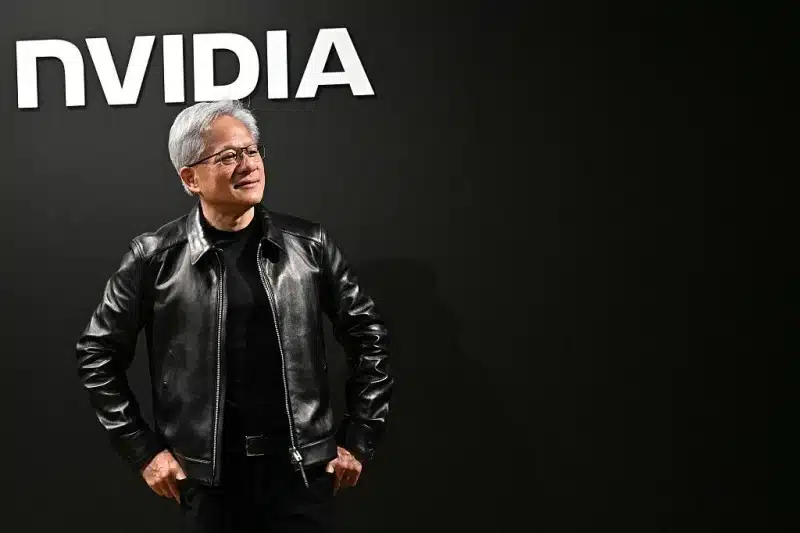

Eleven days after Jensen Huang resigned from the company he co-founded, Nvidia’s board has reinstated him as president and chief executive.
Jensen Huang’s return took effect immediately, after a unanimous vote. He is again Nvidia’s president, chief executive and a director.
Few saw Jensen Huang’s return coming. Only last week, board chair Harvey Jones told investors the directors did not intend to reinstate him. A search firm was already looking for a successor.
So what changed?
The board says a series of meetings with Huang left it satisfied with his candour and his ability to lead. It also says it took input from senior levels of the US government. On that basis, directors say they are confident that Jensen Huang’s return poses no national security risk.
That last point carries the whole story.
The trouble began on 8 November, when Huang admitted in an internal message that he had been unfaithful. The New York Times then reported that one relationship was with Alice Huang, a former executive at Megaspeed, the Singapore data centre firm and a major Nvidia partner in South-East Asia. The two are not related.
US authorities suspect she was working as an agent for the Chinese government, an allegation Beijing has dismissed as “baseless and purely slanderous smears”. Megaspeed says she left the company in August 2025.
A second report followed on 11 November. It said Huang also had a relationship with a senior Nvidia executive who reported to him. He resigned the next day. Finance chief Colette Kress took over as interim chief executive.
Investors did not wait for answers. Nvidia shares fell 14 per cent last Friday alone, closing at $125.53. The week was the worst for the stock since October 2008. At its October peak, it had touched about $243.
Then the politics shifted. Treasury Secretary Scott Bessent had called for a “dramatic shake-up” and an outside leader. By Sunday, on CBS, he was softer. He still wanted answers on export controls, but he no longer ruled out Jensen Huang’s return.
President Donald Trump went further. He posted late on Sunday that he hoped the board would rehire Huang. An online petition backing the founder, signed by Elon Musk among others, passed 200,000 names.
Huang and the board spoke on Saturday and again on Sunday. By Monday morning it was done. Investors welcomed Jensen Huang’s return, sending Nvidia shares up nearly 30 per cent in early trading to just over $162.
Mr Trump called the decision “correct and proper”. He said Attorney General Todd Blanche had confirmed the government “does not possess evidence” of unlawful conduct by Huang.
That leaves an important distinction: the board is satisfied with Huang’s return, but its investigation into the circumstances surrounding his departure is not finished. An independent committee, with its own lawyers, will carry on to a conclusion. Huang has said he will cooperate.
The company has also created a National Security and Export Control Committee made up of independent directors. It is hiring a chief compliance officer too.
A company at ease with its past would not need both in the same breath. Jensen Huang’s return comes with new guardrails attached, and that says plenty.
Washington is not convinced. Senator Elizabeth Warren, who takes over the Senate Banking Committee in January, called the decision “reckless”, Reuters reported. She said the board still owes Congress answers on export compliance.
Criticism was not confined to Democrats. Republican Representative Don Bacon also demanded answers, while Senator John Cornyn questioned the board’s assessment of the national security risk.
The stakes of Jensen Huang’s return go beyond one man’s conduct. The US has also tightened export controls to address a loophole that allowed Chinese companies to access restricted computing power through data centres overseas. The new rules introduce licensing requirements for certain advanced computing exports to overseas facilities serving restricted entities, including companies based in China.
Jensen Huang’s return has a precedent of sorts. In 2023, OpenAI sacked Sam Altman and took him back within days, after staff and investors revolted. The causes were different. The pull of a founder was the same.
Huang said he could not wait to get back to work. He now has a share price to defend and a long list of questions to answer.
Markets forgive fast. Regulators and lawmakers do not.


