



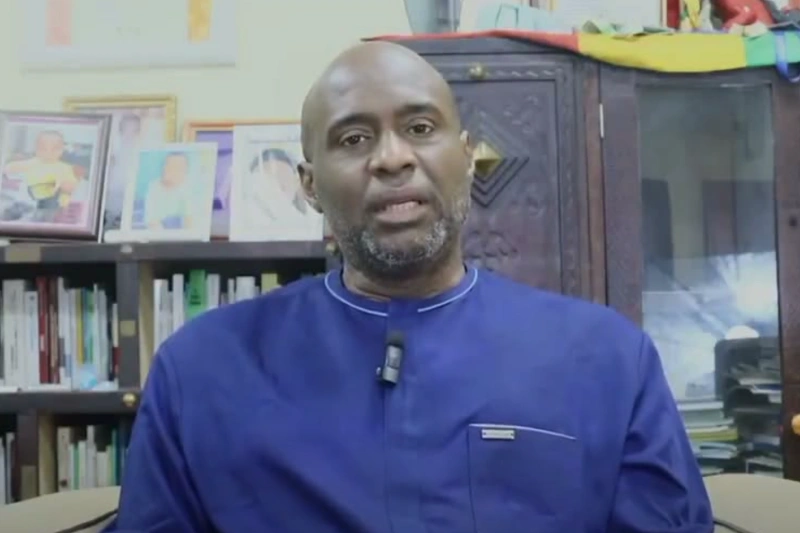

Moussa Mara walked free from Bamako’s central prison on Saturday, 1 August 2026, after serving the custodial portion of a two year sentence handed down by a Malian court.
In a video shared from his living room, with the national flag visible behind him, Mara appealed to Malians to embrace forgiveness. He said he prayed for more humanity and empathy among citizens, so that the country could achieve genuine unity and reconciliation, according to Dakaractu.
“I forgive and forgive me,” Mara said in the video, as reported by allAfrica, adding that only truth endures and eventually prevails.
Mara, who served as prime minister from April 2014 to January 2015 under former President Ibrahim Boubacar Keita, was arrested on 1 August 2025.
Authorities charged him with undermining the credibility of the state, inciting public disorder and opposing legitimate authority, Reuters reports. The charges stemmed from a post Mara made on the social media platform X on 4 July 2025, in which he expressed solidarity with jailed politicians and activists.
Bamako’s national anti-cybercrime unit convicted Moussa Mara on 27 October 2025. The court sentenced him to two years, with one year to be served in custody and the second year suspended. Judges also fined him 500,000 CFA francs, equivalent to roughly $887, according to Amnesty International.
An appeals court upheld the conviction on 9 February 2026. This means Moussa Mara’s release does not amount to an acquittal or a pardon. The suspended portion of his sentence remains active and could be triggered by any fresh offence.
Amnesty International had described the prosecution as part of a wider clampdown on dissent under the transitional government led by General Assimi Goita. The rights organisation’s regional director, Marceau Sivieude, said Malian authorities were weaponising the justice system against critics rather than upholding the rule of law.
Moussa Mara founded the opposition Yelema party and had campaigned for a return to constitutional order and fresh elections before his detention. Mali’s transitional authorities dissolved political parties, including Yelema, in May 2025, weeks before his arrest.
The transitional charter was revised in July 2025 to grant Goita a renewable five year presidential mandate, with no fixed limit on the number of terms. Elections have been postponed indefinitely since April 2025.
Since seizing power through coups in August 2020 and May 2021, Mali’s military government has restricted political activity and media freedom. It has done so while battling insurgents linked to al Qaeda and Islamic State, alongside communal violence in parts of the country.
Despite the restrictions, Moussa Mara remains one of Mali’s most recognised political figures. His appeal for unity and reconciliation comes as the country continues to grapple with political uncertainty and an unclear timetable for elections.
As Mali navigates an uncertain political future, Moussa Mara message of forgiveness and national cohesion is likely to resonate with many citizens seeking stability and a return to democratic governance.


