




Excavation at Jabi Lake Park raises questions over future of Abuja’s public space
There is growing concern over ongoing ground works at Jabi Lake Park in Abuja, after visible excavation disrupted key sections of one of the city’s most widely used public recreational spaces.
On a recent morning walk through Jabi Lake Park, the changes were difficult to ignore. Heaps of sand had been piled across parts of the park, while sections of the pedestrian walkway had been dug open. In multiple areas, the once continuous trail was broken, leaving trenches where people previously walked, jogged, and exercised.
For regular users of Jabi Lake Park, this goes beyond routine construction.
People on-site suggested the work may be connected to the construction of a wall, although there was no visible signage explaining the project, its purpose, or its timeline.
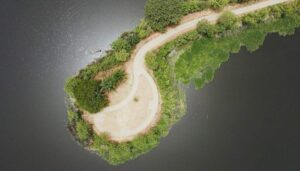 More concerning is what residents say they are beginning to understand about the scope. The development may involve the entire Jabi Lake Park space being allocated to different organisations, raising fears that the park could be divided into separate, restricted sections.
A daily lifeline for thousands
For years, Jabi Lake Park has served as one of the few truly open spaces in Abuja where residents from across the city can gather. Visitors come from Lugbe, Kubwa, Gwarinpa, Life Camp, and Wuse, especially in the mornings and on weekends when the area around Alex Ekwueme Way fills with cars.
But beyond leisure, the park serves deeper needs.
Some visitors are recovering from serious health conditions, including stroke patients working to regain mobility. Others rely on the park simply to stay active and maintain their health.
Certain areas now affected by excavation are not just walkways. They are active community spaces.
Open sections of the park host volleyball courts, often marked by upright poles where games regularly take place. Other stretches of the walkway are used by children learning how to roller skate, while teenagers and young adults frequently gather there for skating practice and informal competitions.
These are not incidental uses. They are part of what gives Jabi Lake Park its character as a shared, living space.
Their disruption therefore carries real consequences.
From public asset to uncertain future
The park was commissioned on May 7, 2007 by former President Olusegun Obasanjo as part of Abuja’s vision as a modern, livable capital.
Less than two decades later, there is a growing sense that the original purpose of Jabi Lake Park is being tested.
Many residents agree that the park needs better management. Maintenance can be improved. The lake itself could be cleaned and developed further for water activities. Facilities could be upgraded to better serve the public.


But there is a clear distinction between improving a public space and breaking it apart.
Global trends point in a different direction
Across the world, cities are investing more in public green spaces, not less.
In Kigali, a city frequently visited by Nigerians for conferences and leisure, authorities have prioritised clean, accessible parks and recreational areas as part of urban development. These spaces are treated as essential to public health, tourism, and quality of life.
That contrast raises an important question for Abuja.
If not here, where?
The Federal Capital Territory is not short of land for development.
A newly developed road corridor linking Life Camp to Dei-Dei has opened up large stretches of undeveloped land that could accommodate new projects without affecting an existing public park.
This makes the situation at Jabi Lake Park harder for many to understand.
Why alter a space that is already serving thousands?
Why disrupt a place that supports both physical health and community life?
Questions without clear answers
At the moment, there has been no detailed public communication outlining the full scope or intent of the ongoing works at Jabi Lake Park, according to information available from the Federal Capital Territory Administration.
What remains are visible changes on the ground and growing concern among those who use the park regularly.
For many, the issue is no longer just about construction.
It is about access.
It is about preservation.
And ultimately, it is about who the city is being planned for.


There is a problem in this country that needs to be addressed by all, how can you destroy a park built only 19 years ago? As in, how,why???