



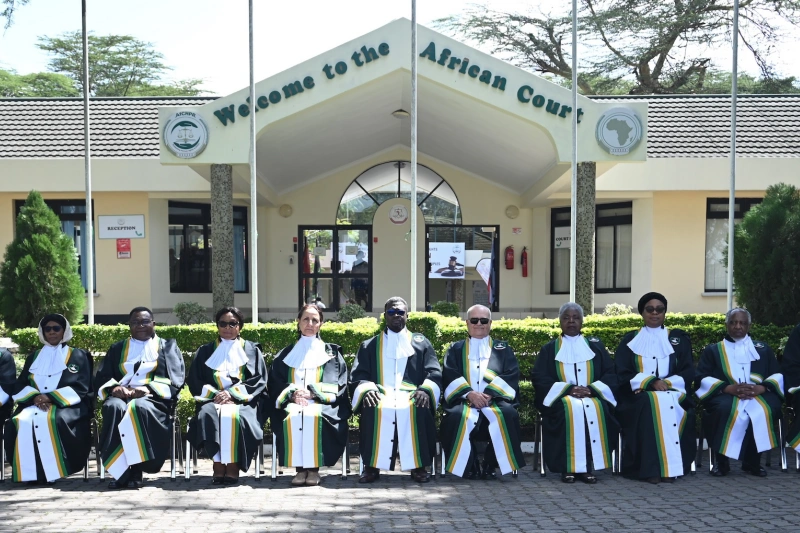

Sierra Leone has taken a formal first step toward becoming a state party to the African Court on Human and Peoples’ Rights, tabling the protocol establishing the continental court before Parliament this week.
Attorney General and Minister of Justice Alpha Sesay presented the protocol to lawmakers in Freetown on Wednesday, according to AYV News. The government says the move will allow Sierra Leone to play a more active role in Africa’s human rights architecture and deepen its engagement with the African Court on Human and Peoples’ Rights.
The timing carries weight. Sierra Leone’s presentation of the protocol coincides with the 20th anniversary of the African Court on Human and Peoples’ Rights. The African Union says the court marked two decades of work with a ceremony in Arusha, Tanzania, in March, held under the theme of twenty years of service in protecting human and peoples’ rights.
Once Parliament completes its review and grants approval, Sierra Leone will deposit its instrument of ratification. That step will formally place it among the African Union member states that have already ratified the protocol establishing the African Court on Human and Peoples’ Rights. Only 34 of the bloc’s 55 members have done so, Amnesty International said in a report released to mark the court’s anniversary.
Government officials frame the move as part of a wider push to modernise Sierra Leone’s legal and justice systems. AYV News reported that the initiative sits alongside the country’s continued adherence to intellectual property treaties administered by the World Intellectual Property Organization and the African Regional Intellectual Property Organization, pointing to a broader pattern of deeper participation in regional and international legal frameworks.
Civil society groups have welcomed the development. The Campaign for Human Rights and Development International, known as CHRDI, said in a statement on Thursday that the step demonstrates the government’s commitment to strengthening the rule of law and aligning with regional human rights standards. The organisation described the process as opening the door to greater accountability by allowing human rights protections to extend beyond Sierra Leone’s borders through the African Court on Human and Peoples’ Rights system.
CHRDI said the move was not only a legal act but also “a public affirmation that human dignity, justice and accountability must remain central to governance,” according to a statement carried by Sierraloaded.
The rights group urged the government to follow through with full implementation once the process concludes, particularly by expanding access to justice for poor, vulnerable and marginalised communities across the country, including in rural districts. CHRDI also called on civil society organisations, the legal profession and development partners to help turn the milestone into real, practical outcomes on the ground.
Sierra Leone’s engagement with the African Court on Human and Peoples’ Rights has been years in the making. The country first signalled its intent to ratify the protocol in 2018, when President Julius Maada Bio assured a visiting delegation led by the court’s then president, Justice Sylvain Oré, that his government would give the matter positive consideration.
For ordinary Sierra Leoneans on the street, accession would open an additional avenue of legal recourse. In states that have both ratified the protocol and deposited a special declaration under Article 34(6), individuals and non-governmental organisations can petition the African Court on Human and Peoples’ Rights directly, rather than routing complaints solely through domestic courts or the African Commission.
The protocol will now proceed through Parliament’s ordinary ratification procedure. Legal experts in Freetown have welcomed the tabling, noting that Sierra Leone’s growing engagement with continental legal instruments reflects its commitment to constitutional governance, improved access to justice and sustainable national development.


