



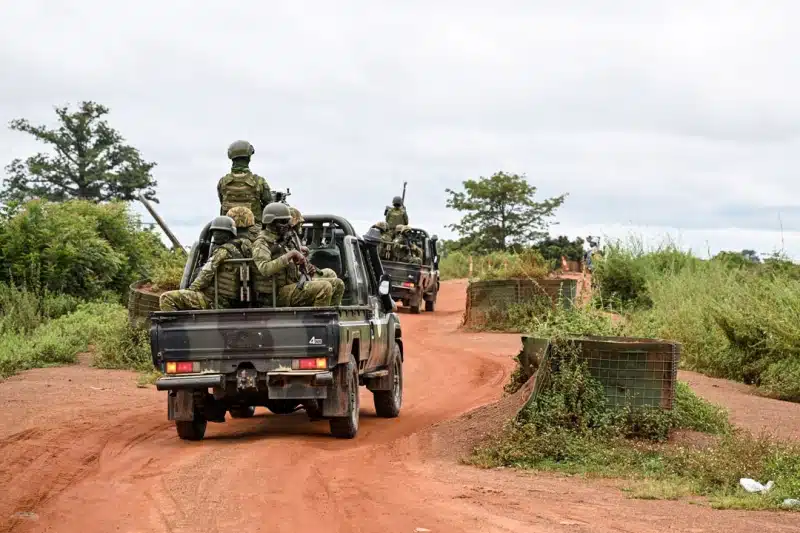

The General Staff, known locally as the EMGA, confirmed operations on 8 and 9 August. They fall under the long-running Opération Dougoukoloko. Targets included positions northeast of Bambara-Maoudé, the Abéibara and Razelma sectors, and an area northwest of Mahou.
Soldiers reported destroying armed vehicles, drones and motorcycles used by fighters linked to Jama’at Nusrat al-Islam wal-Muslimin, known as JNIM. A separate group near San was also targeted. It had been blamed for an earlier attack on a military camp. Some of its equipment was seized.
These counter-insurgency operations form part of a broader push that ran through June and July. A two-month assessment was released on 11 August by the Directorate of Information and Public Relations of the Armed Forces. It showed Malian forces neutralised 1,850 fighters.
Air crews flew 1,545 sorties, totalling more than 5,300 hours. Troops destroyed 45 bases belonging to armed terrorist groups. The same report noted that soldiers escorted almost 15,600 fuel tankers during the period. That figure reflects how deeply militant blockades have disrupted supply routes into Bamako.
The counter-insurgency operations sit alongside a quieter effort to draw fighters away from armed groups. On 5 August, the Disarmament, Demobilisation, Reintegration and Reinsertion programme, known as DDRI, formally absorbed 648 former combatants. Most came from militias and armed movements in the north and centre of the country.
Much of the fighting west of Bamako has direct implications for Mauritania. Analysts at the Africa Center for Strategic Studies note that Kayes and Nioro du Sahel sit close to the Mauritanian border. Both towns became a new front for JNIM in mid-2025. The group’s Macina Liberation Front branch carried out coordinated attacks along a stretch of territory bordering Senegal and Mauritania. Nioro du Sahel is also a significant religious centre for the Tijaniyya brotherhood, which makes any disruption there a cross-border concern.
That concern has already produced friction between Bamako and Nouakchott. The African Security Analysis platform reports that Malian troop movements near the shared frontier have strained relations in recent months. Incidents affecting Mauritanian civilians and accusations tied to refugee camps have added to the strain.
Mauritania now hosts more than 300,000 Malian refugees and asylum seekers. Most live in the Hodh Chargui region, with the Mbera camp alone sheltering around 120,000 people. Nouakchott has so far responded through formal protest rather than direct military confrontation.
Mali’s military rulers, led by Colonel Assimi Goita, have framed the counter-insurgency operations as proof that the state retains the initiative against JNIM and the Azawad Liberation Front. Officials say the pace of these counter-insurgency operations will continue through the coming weeks. That claim follows a difficult year.
The April offensive killed Defence Minister Sadio Camara and forced troops to abandon several northern bases. Whether this latest round brings lasting security to communities along the Mauritanian border is another matter. Militant mobility in the region typically rises once the rainy season eases.


