



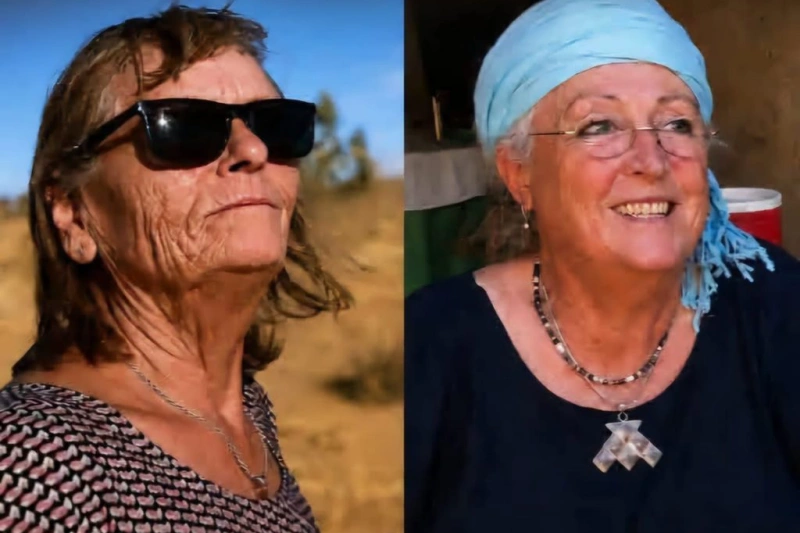

Eva Gretzmacher spent 21 months in captivity. Claudia Abbt spent 18. Both came out by way of Libya, not Niger.
Reports of a Niger hostage release involving these women emerged on Wednesday. Two officials told Reuters that the Austrian and Swiss women had arrived in Benghazi, in eastern Libya. The officials asked not to be named. They said the women would be handed to their own governments once the formalities were done.
Hours later, Libya’s al-Masar TV aired a video of the pair seated beneath a portrait of Marshal Khalifa Haftar. They looked exhausted. Speaking French, they thanked Haftar and his son Saddam, the deputy commander-in-chief of the eastern forces, for their freedom. Gretzmacher said she had been held for a year and nine months. Abbt said she was “glad to be free.”
Gretzmacher’s son, Christoph, had already shared the news. Late on Wednesday he wrote on Facebook that “Eva and Claudia are now free” and were on a plane to Benghazi.
Vienna was more cautious about the news of Niger hostage release. On Thursday, Austria’s foreign ministry spoke of encouraging information but said the “complex and very dangerous process” of release and handover was not yet complete. Switzerland’s foreign ministry had not commented on the latest reports.
That caution has a history. Gretzmacher, then 73, was bundled into a 4×4 outside her home in Agadez on the evening of 11 January 2025. She had lived in the Saharan city since 1997 and had worked with young people for almost three decades. Abbt, a long-time resident of the same city, was seized from her home on the night of 13 April.
Six months in, Christoph Gretzmacher described “six months of silence, six months of diplomatic limbo.”
The Austrian ministry’s answer was that discretion matters in kidnapping cases.
Neither government has publicly said who held the women. Local and security sources say middlemen carried out the kidnappings and sold the women on to Islamic State fighters in Mali. That account remains unconfirmed.
The bigger question is why Benghazi. Reuters reported in August, citing four sources, that Haftar’s side helped free Kevin Rideout, an American missionary pilot kidnapped in Niger in October 2025. The report portrayed Haftar as an emerging broker in Sahel security, using that role to cultivate favour with the Trump administration.
The two women’s release follows a road already travelled: out of the Sahel and into Benghazi. An American in August. Two Europeans in October.
September showed how fragile any hope of this Niger hostage release was. Reuters wrote on 11 September that Austria had encouraging news but no finished release, while Switzerland was checking whether its citizen was free. Almost six weeks passed before the women appeared on camera.
The contrast is hard to miss. Libya is split between a UN-recognised administration in Tripoli and the eastern authorities that Haftar leads. This operation ran through the east. The women thanked Haftar on camera. Their governments, so far, have said little.
None of the public accounts ascribes Niger’s military authorities with any role in securing the women’s freedom. These are the same authorities who broke with France, expelled French and US forces after taking power in 2023 and moved closer to Russia.
What the Niger hostage release cost is remains unknown. In Rideout’s case, one of Reuters’ four sources said the Libyan side paid a ransom, without giving details. For Gretzmacher and Abbt, nobody has said what, if anything, changed hands.
Austria still advises against travel to Niger because of the risk of attacks and kidnappings. That advice stands.
Two women vanished in Niger. They resurfaced in Libya. How they got from one to the other is still untold.


