Oil prices now at pre-war levels for the first time in nearly four months as tankers resume movement through the Strait of Hormuz following a preliminary agreement between the United States and Iran. For millions of Africans, particularly Nigerians, the relief visible on global trading floors has yet to reach the fuel pump.
Brent crude futures fell to $73.34 a barrel on Thursday, while US West Texas Intermediate dropped to $70.07 a barrel. Both benchmarks are now approaching the $70 mark last seen before the US-Israeli campaign against Iran began on 28 February.
How the crisis began
The Strait of Hormuz had been largely blocked by Iran since 28 February 2026, when the United States and Israel launched coordinated airstrikes on Iran targeting military facilities, nuclear sites, and leadership, resulting in the death of Supreme Leader Ali Khamenei. In retaliation, Iran’s Revolutionary Guard Corps issued warnings forbidding passage through the strait, boarded and attacked merchant ships, and laid sea mines in the waterway.
Before the conflict, about 25 per cent of the world’s seaborne oil trade and 20 per cent of global liquefied natural gas passed through the strait. The International Energy Agency described the resulting supply disruption as the largest in the history of the global oil market. Crude surged well above $120 per barrel at the height of the crisis.
Oil prices now at pre-war levels as waterway reopens
The turnaround came after the US and Iran signed a memorandum of understanding to reopen the strait, setting up a 60-day negotiation period covering Iran’s nuclear programme and other unresolved issues.
At least 20 stranded tankers, holding a combined 35 million barrels of crude, have now cleared the Strait of Hormuz, pushing confirmed daily oil shipments through the gateway to roughly 4.8 million barrels per day, according to data from Kpler. The rapid recovery in shipping flows has reinforced market belief that oil prices now at pre-war levels could remain stable if negotiations between Washington and Tehran continue.
US Energy Secretary Chris Wright said oil traffic through the strait had already returned to normal and would continue regardless of whether the negotiations with Iran held.
Oman’s Foreign Minister Sayyid Badr bin Hamad Al Busaidi confirmed after talks with Gulf counterparts and US Secretary of State Marco Rubio that future arrangements for the strait would not involve transit fees.
With oil prices now at pre-war levels confirmed by both Brent and WTI contracts, markets are treating the development as a structural shift in supply, not a temporary pause.
Nigeria: crude is cheaper, pump prices are not
The gap between what the world is paying for crude and what Nigerians are paying at the pump has become a source of mounting frustration.
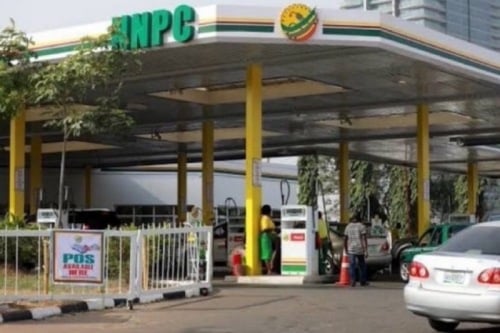
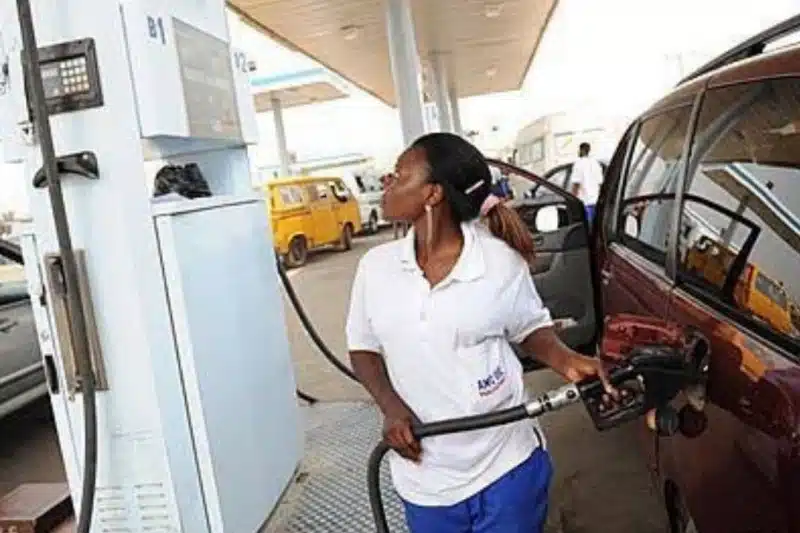
Pump prices across Nigeria have largely remained unchanged despite global oil prices falling to levels last seen before the US-Iran war, prompting concerns over the pace at which global market gains are reaching domestic consumers. This means that although oil prices now at pre-war levels have reduced pressure on international markets, Nigerian consumers have yet to experience comparable savings
The Petroleum Products Retail Outlets Owners Association of Nigeria, PETROAN, has called for a nationwide reduction in petrol pump prices from the current N1,300 per litre, arguing that the recent drop in global crude prices should be reflected immediately at depots and filling stations. PETROAN argued that with oil prices now at pre-war levels, there is little justification for maintaining pump prices at crisis-era levels.
The Dangote Petroleum Refinery has cut its ex-depot petrol price by N75 to N1,175 per litre, with some filling stations in Lagos and Ogun states beginning to adjust downward. Private depot operators have followed with cuts ranging between N1 and N22 per litre depending on location and volume.
Yet analysts say those adjustments do not go far enough. Dr Ayodele Oni, an oil and gas analyst, said the exchange rate remained the critical variable. “For the ordinary Nigerian, the honest answer is that even if crude falls back, pump prices are unlikely to follow it all the way down. Our market is deregulated, and the binding factor is no longer Brent or crude prices alone, but the exchange rate, since landed petrol cost is priced in dollars.”
Data from the Major Energy Marketers Association of Nigeria showed that the landing cost of imported petrol had fallen to N1,117 per litre as of early June 2026, below what some local refiners were charging. That gap has intensified competition in the downstream market but has not yet produced meaningful pump price relief for most consumers.
The Independent Petroleum Marketers Association of Nigeria, IPMAN, said further price declines would depend on continued crude stability and easing geopolitical tensions, noting that financing costs and logistics remained significant factors in how quickly marketers adjusted prices.
Africa’s wider lag
Nigeria’s slow response to falling crude prices is part of a broader continental pattern. With oil prices now at pre-war levels globally, the question of when African consumers will benefit has become politically charged from Lagos to Nairobi.
In Kenya, a public debate played out on television in April 2026 after the energy regulator raised pump prices mid-month, with a lawmaker challenging why fuel prices in Kenya appeared to rise quickly when global oil increased but fell slowly, if at all, when they dropped.
The International Energy Agency tracked several African countries that had capped retail fuel prices, increased gas subsidies, or lowered fuel taxes during the crisis, including Ethiopia, Ghana, Kenya, Mozambique, Namibia, and Zambia, while Cameroon, Côte d’Ivoire, Rwanda, Senegal, and Togo continued to keep pump prices tightly controlled. The result across the continent has been uneven and often politically driven relief.
South Africa has moved more decisively. Data from the Central Energy Fund projected pump price cuts of around R1.37 per litre for petrol and nearly R3 per litre for diesel taking effect on 1 July 2026, driven by surging international over-recoveries as crude fell sharply following the June ceasefire and the reopening of the strait. The projected reductions highlight how countries can pass benefits to consumers when oil prices now at pre-war levels translate more quickly into domestic fuel pricing.
The contrast is striking: despite oil prices now at pre-war levels, Nigerian consumers continue to face some of the highest petrol costs seen since the crisis began. Governments and energy regulators are under growing scrutiny over how quickly the benefits of oil prices now at pre-war levels are passed on to consumers.