



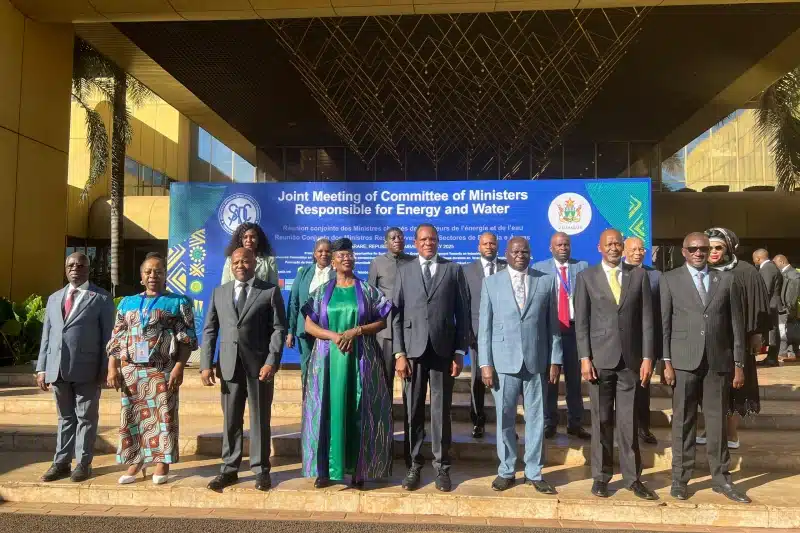

SADC energy and water ministers are gathering in Pretoria this week for a four day meeting that could reshape how the region delivers power to millions of households.
The joint session runs from 14 to 17 July and comes ahead of the 46th Ordinary SADC Summit due in Durban this August, according to the SADC Secretariat’s official schedule. It is a hybrid meeting, meaning ministers, senior officials and delegates from cooperating partners will join both physically and virtually.
South Africa is chairing proceedings as the current head of the relevant SADC sectoral committees, the Secretariat confirmed. SADC energy and water ministers will use the gathering to review electricity supply and demand trends across the sixteen member bloc and assess how far regional energy projects have progressed.
A central theme will be the Dar es Salaam Declaration on Mission 300, an initiative that SADC energy and water ministers are pushing to speed up across Southern Africa. Mission 300 was launched in January 2025 by the African Development Bank and the World Bank Group, with the goal of connecting 300 million Africans to electricity by 2030, according to the African Development Bank.
Nearly 600 million people across the continent still lack access to electricity, the World Bank has said, and the Pretoria talks are expected to translate that global pledge into concrete regional action. SADC energy and water ministers will discuss cross border grid synchronisation as one route to closing that gap, alongside renewable energy deployment and energy efficiency measures, the Secretariat noted in a statement carried by the Herald.
Ministers are also set to weigh progress on hydrocarbons infrastructure, including fuel pipelines and storage facilities, and to consider emerging technologies such as green hydrogen, smart grids and electric mobility. Zimbabwe’s Herald newspaper reported that the Secretariat described these as priorities for diversifying the region’s energy mix.
Water resource management sits alongside energy on the agenda. SADC energy and water ministers will review transboundary water projects coordinated through River Basin Organisations, along with the implementation of earlier Council of Ministers decisions on shared water resources, the Secretariat said.
The Pretoria meeting builds on an earlier joint ministerial session at which the Secretariat’s Executive Secretary, Elias Magosi, reported that eight member states had signed the amended Protocol on Energy. He urged the remaining states to accelerate ratification so the region can align fully behind shared energy rules.
Progress on the Inga III Transmission Line Project and the RETRADE-SA initiative, which aims to expand the regional electricity market through the Southern African Power Pool and the World Bank, is also expected to feature in updates to ministers. SADC energy and water ministers had previously called for countries involved in the Inga III project to sign an inter governmental memorandum of understanding, a step still regarded as central to unlocking cross border power trade.
A regional Just Energy Transition Framework is also up for discussion, alongside clean cooking initiatives and outcomes from the 2026 SADC Sustainable Energy Week, according to the Secretariat’s published agenda. These items sit close to Mission 300, since expanding clean cooking access and grid reliability are treated by SADC energy and water ministers as linked goals rather than separate tracks.
The Southern African Power Pool remains the backbone of any cross border grid synchronisation plan, since it already links national utilities across most member states. SADC energy and water ministers are expected to press for faster resourcing of priority transmission projects under the pool, so that power generated in one country can reach homes in another without lengthy delays.
Outcomes from the Pretoria gathering will feed into preparations for the 46th SADC Summit, which South Africa hosts in eThekwini in August under the theme of advancing industrialisation, agricultural transformation and energy transition, the Presidency has said. Ministers responsible for finance and other portfolios have held similar preparatory sessions in recent months as South Africa steers the bloc through its chairship.
For a region where daily blackouts still disrupt businesses and households in several member states, the decisions taken by SADC energy and water ministers in Pretoria this week carry real weight. Whether cross border grid synchronisation and Mission 300 targets translate into switched on homes by 2030 will depend on how quickly member states now move from declarations to delivery.


