




Ghost workers in Angola are no longer a street rumour. The government has now put a number on them.
More than 31,000 names sit on the civil service database as active staff. Many cannot be traced. Some belong to retirees. Some, the minister said, belong to people who have died.
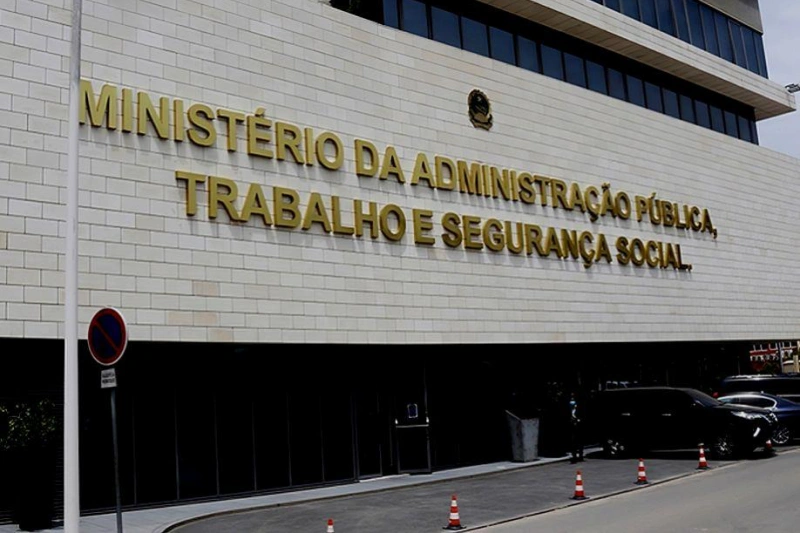
Portuguese news agency Lusa reported that Minister Teresa Rodrigues Dias admitted the scale of ghost workers in Angola on 28 October. She leads the Ministry of Public Administration, Labour and Social Security. She was speaking in Luanda at the launch of SINGERH, a new human resources system for the public service.
Loading staff onto the platform exposed problems she described as worrying. Some workers have unknown whereabouts. Others have no identity papers, no proof of employment or duplicate agent numbers.
She said the staff in question cost the state large sums that could be saved “if the control were more effective.” She gave no figure for ghost workers in Angola. That leaves a gap. The public has a headcount. It still has no bill.
So here is rough arithmetic the government has not shown. In September, Secretary of State Domingos Filipe put the civil service wage bill at 245 billion kwanzas a month. His projection for the year was 3.4 trillion kwanzas, about €3.1 billion.
The 31,000 flagged names are about 7 per cent of the 426,000 records the minister cited. If each drew a typical share of that bill, ghost workers in Angola would cost roughly 18 billion kwanzas a month. That is more than 200 billion a year, close to €200 million.
This is an illustrative estimate based on the average payroll cost, not an official figure. Reports of her speech do not say how many of the 31,000 were actually being paid. The minister herself described them as likely ghosts, not proven ones.
None of this is new. On 4 September 2015, a joint decree from the finance, territorial administration and public administration ministries ordered biometric re-registration of state workers.
By May 2016, the Finance Ministry said it had switched off 55,127 so-called ghost employees in the state payroll system. They included retirees, sick workers, the dead and people with unexplained absences.
By then, the exercise had reached Luanda and only six provinces. The ministry did not say what it saved. Lusa had reported on 24 March 2016 that the state was spending 3.27 billion kwanzas on 33,683 workers who no longer served. No period was given.
Ten years later, a fresh data exercise has found ghost workers in Angola all over again.
Underneath sits a records problem. At the start of 2026, only about 30,000 of more than 426,000 entries in the state financial database, SIGFE, had up-to-date data, the minister said. That is 7 per cent.
Between 26 January and 30 September, teams across central and local government pushed the figure above 91 per cent. More than 388,000 records were refreshed. The 31,000 are the ones that would not update.
So who is responsible for ghost workers in Angola? Reports of her speech do not name a single official, ministry or province.
She said the agencies concerned were notified and given repeated deadlines to justify each case. Where no justification arrives, precautionary measures follow. Anyone in a regular situation, she added, has nothing to fear.
The structure helps explain the silence. In August 2024, Dias said human resources management still depended on the Finance Ministry. Her ministry and Finance shared duties and resources, she said, and that was “often not efficient.” She wanted her own ministry to take the job over.
On paper, at least three layers touch each record. They are the employing agency, the Finance Ministry that runs SIGFE and the ministry that sets public service policy. Shared ownership makes blame easy to spread.
Nigerian readers will know the pattern. When Katsina State screened 50,172 local government and education staff in 2025, it removed 3,488 for fake credentials, absconding, fraud or refusing to appear. That is almost exactly 7 per cent. Ghost workers in Angola and suspect staff in Katsina turned up in nearly the same share of each payroll.
But Katsina named a name. Its screening committee said an education secretary at Zango Local Education Authority had allegedly presented 24 ghost workers. Chairman Abdullahi Gagare called it a “serious breach of trust.” The committee also projected monthly savings of ₦453.3 million if its recommendations were followed. Katsina published a price tag. Angola has not.
The timing gives ghost workers in Angola a sharper edge. On 26 October, two days before the admission, the government offered public workers a 10 per cent pay rise for 2027.
Unions say a 2024 agreement promised a cumulative 100 per cent over three years. They say workers got 25 per cent in 2025 and 10 per cent in 2026.
Francisco Jacinto, secretary-general of the CG-SILA union confederation, called the government’s arguments for the new offer “unacceptable.” Dias says the agreement is 80 per cent implemented.
Nobody is claiming ghost workers in Angola explain the shortfall. They do not. Education and health staff make up about 73 per cent of the 437,157 civil servants and administrative agents, according to Filipe. Every kwanza diverted to a name that should not be on the payroll is money unavailable for legitimate public workers.
The gaps are plain. So far, nobody has said how many of the 31,000 ghost workers in Angola were drawing pay, or what they cost. And nobody has said who kept them on the books. The minister says each case is being treated on its merits. Until the figures arrive, that claim cannot be checked.
For now, ghost workers in Angola have no price tag and no one answerable for them. The real workers are still waiting for their pay rise.


