




Africa’s trapped capital is one of the most defining contradictions of the continent’s economy today. The money exists. The need is urgent. Yet a structural wall keeps Africa’s own savings from building Africa.
A Summit, a Stark Number, and a Question
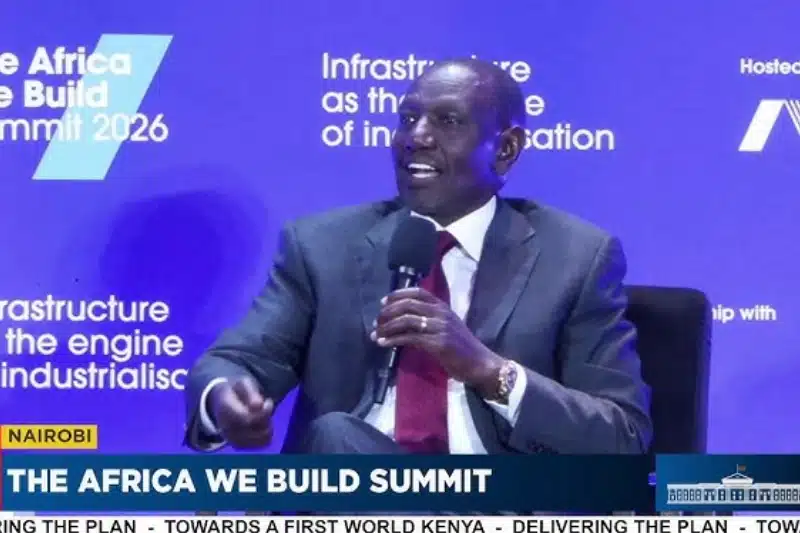
When delegates gathered in Nairobi on 23 April 2026 for the “Africa We Build” Summit, one figure stopped the room.
Africa’s institutional investors now hold more than $2 trillion in domestic capital. That is wealth sitting inside pension funds, sovereign wealth funds, commercial banks, and central bank reserves across the continent.
And almost none of it is building anything.
The State of Africa’s Infrastructure Report 2026(click here for full report), unveiled at the summit, laid out what experts are calling one of the defining paradoxes of modern African development: a continent flush with savings, yet haemorrhaging from a lack of roads, power, and ports.
The report’s conclusion was blunt. Africa’s trapped capital is not a shortage problem. It is an allocation failure.
Gold Prices Swelled the Pot
The $2 trillion figure represents a sharp rise from the $1.6 trillion recorded in 2025. Some of that growth came from expanding economies and rising savings rates.
But a significant portion came from an unexpected source: record-high global gold prices, which inflated the book value of central bank reserves across gold-holding African nations. The money grew, but it did not move.
Instead, it settled deeper into what economists at the summit described as a developmental liquidity trap.
Africa’s trapped capital is more than sufficient to fund its development. Savings are growing. But productive investment remains stubbornly low.
The Bond Trap: Why Africa’s Trapped Capital Avoids Infrastructure
Understanding Africa’s trapped capital requires understanding where fund managers are putting the money, and why.
The answer, almost universally, is government bonds and treasury bills.
High interest rates on domestic sovereign debt have made government bonds unusually attractive. Fund managers can meet their return targets without touching a single brick or cable. The yields are competitive, the risks are manageable, and the paperwork is familiar.
Infrastructure offers none of that comfort.
Power generation projects run for 20 to 30 years. Transport networks face political risk, currency volatility, and cost overruns. For institutional investors bound by mandates that prioritise capital preservation and liquidity, these are not features of a sound investment. They are red flags.
The result is a continent where the money and the need exist side by side, but are kept apart by incentive structures that were never designed with development in mind.
Regulation Is Locking the Door
Beyond investment culture, regulation is doing its own damage.
Across many African markets, pension fund regulations strictly limit how much of a fund’s assets can be placed in “alternative assets,” a category that frequently includes unlisted infrastructure. Even when a fund manager sees opportunity in a toll road or an energy project, the law may bar the move.
The State of Africa’s Infrastructure Report 2026 identified this regulatory gap as one of the most urgent and solvable barriers to unlocking Africa’s trapped capital. Adjusting liquidity requirements, creating long-term investment vehicles, and expanding the definition of permissible assets for pension funds were among the remedies proposed at the Nairobi summit.
No Projects Ready to Receive the Money
Even where regulation permits infrastructure investment, another wall appears: there is often nothing ready to invest in.
This is the bankability problem. Many infrastructure projects across Africa exist as proposals or political pledges, but lack the legal structuring, feasibility documentation, and governance frameworks that institutional investors require before committing funds.
Samaila Zubairu, chief executive of the Africa Finance Corporation, put it plainly at the summit: “Africa is not capital-poor; it is capital-trapped.”
What is missing, he argued, is not money. It is the financial and legal infrastructure to move money from bank vaults into the ground.
The Foreign Funding Era Is Closing
For decades, African governments could rely on a dependable circuit of external support. Foreign direct investment. Chinese-led lending. Multilateral development loans. Bilateral aid.
That circuit is breaking down.
Post-pandemic economic pressures, geopolitical fragmentation, and sustained high global interest rates have pushed foreign capital back towards Western markets. The International Monetary Fund has repeatedly warned that more than half of sub-Saharan African countries are now at high risk of debt distress, making new external borrowing either impossible or prohibitively expensive.
The Nairobi summit was built around a single acknowledgement: if Africa wants to build, it must increasingly use its own savings.
That makes unlocking Africa’s trapped capital not just a financial priority. It is a sovereignty question.
A New Architecture to Shift the Money
African leaders at the summit recently launched the Africa Infrastructure Financing Facility, known as the AIFF, as a direct response to the capital allocation failure.
The facility is designed to move the continent away from isolated national projects and towards integrated infrastructure systems, including regional rail and port corridors, value chain development that shifts African economies from raw material exports towards local processing, and a risk-mitigation framework that pools the balance sheets of multilateral institutions such as the Africa Finance Corporation and Afreximbank.
That last element is central to the strategy. By having credible multilateral institutions stand behind infrastructure projects, the AIFF aims to give local pension funds the confidence to invest where they previously would not.
The Northern Corridor from Mombasa, which links Kenya’s port city to landlocked Uganda, Rwanda, Burundi, and the eastern Democratic Republic of Congo, was cited as a model for the kind of integrated regional project the AIFF is designed to accelerate.
Cost of Doing Nothing
The stakes are not abstract.
Africa’s population is expanding faster than any other region. The continent needs to create roughly 12 million formal jobs every year to absorb new workers entering the labour market. Without sustained infrastructure investment, that target is unreachable.
Energy shortages keep factories idle. Poor logistics inflate the cost of moving goods. Industrial development stalls. And youth unemployment deepens into a long-term social crisis.
The State of Africa’s Infrastructure Report 2026 described this compounding failure as the hidden cost of Africa’s trapped capital. Not just a lost investment opportunity, but a daily drag on the lives of hundreds of millions of people.
What Has to Change
The report and the summit converged on four broad requirements.
Institutions such as the Africa Finance Corporation and Afreximbank must operate at a significantly larger scale, both to structure deals and to provide the guarantees that make infrastructure investable for cautious pension funds.
African governments must reform financial regulations to allow pension funds greater participation in long-term assets without exposing them to undue risk.
A pipeline of properly prepared, legally structured, and transparently governed projects must be built, because the money cannot move towards projects that are not ready to receive it.
And risk-mitigation tools, including credit guarantees, blended finance arrangements, and currency hedging instruments, must be developed and standardised so that the gap between institutional caution and development need can be bridged.
The Turning Point
Africa has crossed a threshold.
The era when the continent could look outward for the financing of its own development is ending. The era when it must look inward has begun.
The challenge is that looking inward requires more than political will. It requires reformed regulations, prepared projects, strengthened institutions, and financial tools that do not yet exist at the scale needed.
Africa’s trapped capital will not move on its own. But the Nairobi summit made clear that the understanding of why it is trapped, and what it would take to free it, has never been sharper.
Whether that understanding translates into action is the question that will define the continent’s infrastructure decade.
The State of Africa’s Infrastructure Report 2026 was released on 23 April 2026 at the “Africa We Build” Summit in Nairobi, Kenya.


