



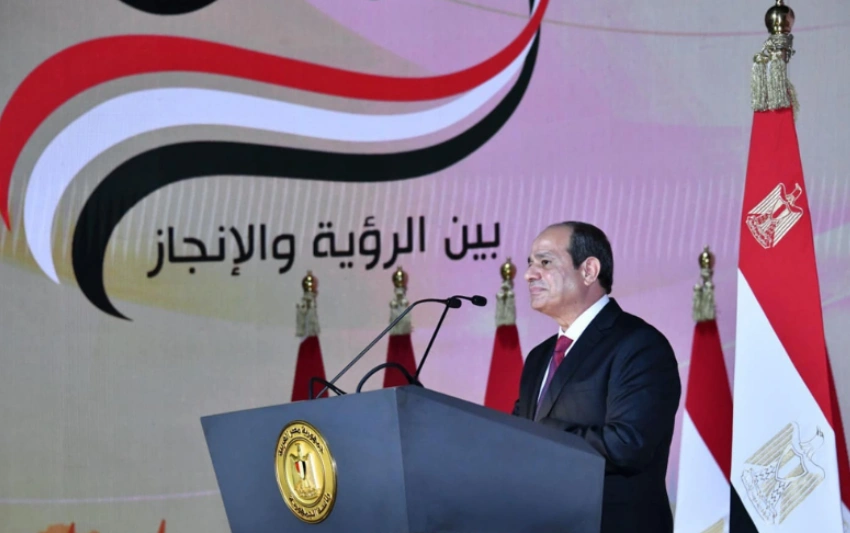

Cairo – The economic situation in Egypt has reached a critical tipping point this evening, March 5, 2026. President Abdel Fattah el-Sisi has declared a state of near-emergency as financial markets react to the widening conflict between the United States and Iran.
As of 21:00 Cairo local time, the Egyptian pound has breached the psychological barrier of 50 to the US dollar, reaching 50.2, signalling a dramatic vote of no confidence from global credit markets as the Egypt economic crisis US-Iran war scenario intensifies across the region.
The currency shock, collapsing maritime traffic through the Suez Canal and sudden energy shortages are converging into what analysts describe as the most severe economic pressure on Cairo since the 2022 currency crisis.
AfricanQuarters News Desk examines the three pillars driving the Egypt economic crisis US-Iran war crisis.
Currency crash pushes Egyptian pound to historic pressure levels
The Egyptian pound’s plunge to 50.2 per US dollar represents one of the sharpest currency declines seen this year in emerging markets.
Economists say the drop reflects a wave of capital flight triggered by the regional escalation. As the Egypt economic crisis US-Iran war situation deepens, global investors are rapidly withdrawing short-term funds from Egyptian treasury bonds.
These flows, often referred to as “hot money”, had previously supported Egypt’s foreign currency reserves. Their sudden reversal has intensified pressure on the pound.
For an economy that imports most of its wheat, fuel and industrial inputs, the consequences are immediate.
A weaker currency raises the cost of nearly every essential commodity. Food importers are facing sudden cost increases while fuel import bills are rising sharply.
Financial indicators are also deteriorating. Insurance costs on Egyptian sovereign debt have surged, signalling that international markets are preparing for the possibility of payment stress if reserves decline further.
In practical terms, the currency collapse is becoming the financial core of the Egypt economic crisis US-Iran war shock spreading through the country.
Suez Canal slowdown drains Egypt’s most important revenue stream
The conflict is also crippling Egypt’s most strategic economic asset.
The Suez Canal, which normally generates close to ten billion dollars annually, is witnessing an extraordinary collapse in ship traffic.
Global shipping companies including Maersk and Hapag-Lloyd have instructed vessels to bypass the Red Sea due to security fears linked to the regional war.
Instead of using the canal, ships are rerouting around the Cape of Good Hope.
The scale of this diversion is enormous. Bypassing Suez adds roughly 3,500 nautical miles, or about 6,500 kilometres, to a journey between Singapore and Rotterdam. For a modern mega-container vessel, the additional distance can increase fuel costs by around one million dollars per voyage.
President Sisi confirmed that declining traffic has already cost Egypt billions in lost revenue since regional tensions escalated.
With the Strait of Hormuz facing disruption and the Red Sea increasingly militarised, the canal’s traditional advantage as the fastest link between Asia and Europe has temporarily vanished.
This maritime shift has become a major contributor to the widening Egypt economic crisis US-Iran war shock.
South African ports benefit from global shipping diversion
While Egypt is losing revenue, the global shipping diversion is creating unexpected opportunities further south.
Ports along South Africa’s coastline are experiencing increased vessel calls as ships rounding Africa require refuelling, maintenance and logistical support.
The Port of Durban and the Port of Cape Town have both reported rising activity linked to the new shipping routes.
Analysts say the so called Suez to Cape shift is boosting demand for bunker fuel, port services and logistics across southern Africa.
However, the longer shipping routes are increasing global freight costs and adding delays to supply chains, another indirect effect of the Egypt economic crisis US-Iran war disruption to maritime trade.
Military courts deployed to combat rising food prices
The Egyptian government is also responding with extraordinary domestic measures.
President Sisi has authorised military tribunals for traders accused of hoarding goods or manipulating prices for essential commodities such as flour, sugar and cooking oil.
The move is widely linked to Egypt’s longstanding Emergency Law, Law No. 162 of 1958, which allows authorities to expand military jurisdiction during national crises.
By invoking military courts for economic offences, Cairo is signalling that it views food inflation not simply as a market problem but as a national security threat.
Officials argue that rapid prosecutions will deter speculation and stabilise prices during the Egypt economic crisis US-Iran war emergency.
Critics warn, however, that such measures could undermine investor confidence and deepen concerns about economic governance.
The silent energy crisis draining Egypt’s foreign reserves
A less visible but equally dangerous factor in the Egypt economic crisis US-Iran war shock is the sudden disruption of regional gas supplies.
Israel has suspended exports from the Tamar Gas Field and the Leviathan Gas Field due to security concerns linked to the war.
These pipelines had become essential to Egypt’s energy strategy in recent years.
Without those supplies, Egypt must now purchase expensive liquefied natural gas on the global spot market, paying in US dollars at a time when foreign reserves are already under pressure.
The disruption has also forced the shutdown of Egypt’s major liquefaction facilities at Idku LNG Terminal and Damietta LNG Terminal.
Both facilities had previously allowed Egypt to export gas to Europe and position itself as a regional energy hub.
With the plants effectively silent, Egypt has temporarily shifted from an exporter of gas to a buyer of emergency fuel shipments.
Energy analysts warn that the cost of these LNG imports is accelerating the depletion of foreign reserves and amplifying the broader Egypt economic crisis US-Iran war shock facing the country.
A fragile economic balance
The convergence of currency instability, collapsing canal revenue and energy shortages has created one of the most dangerous economic moments Egypt has faced in years.
The Egypt economic crisis US-Iran war crisis illustrates how regional conflict can rapidly destabilise economies that depend heavily on global shipping, imported energy and foreign investment.
With the pound under pressure and Suez traffic falling sharply, Cairo now faces a difficult task. Stabilising financial markets while preventing domestic economic unrest will require rapid policy decisions and external financial support.
Much now depends on how long the regional war continues. If maritime disruptions and energy shortages persist, the Egypt economic crisis US-Iran war shock could deepen into a full-scale financial emergency.


