




By AfricanQuarters Newsdesk |
GOMA – A Goma drone strike early Wednesday killed at least three people, including a French humanitarian worker, in what appears to be the first aerial attack inside the rebel-held city since it fell to the M23 movement last year.
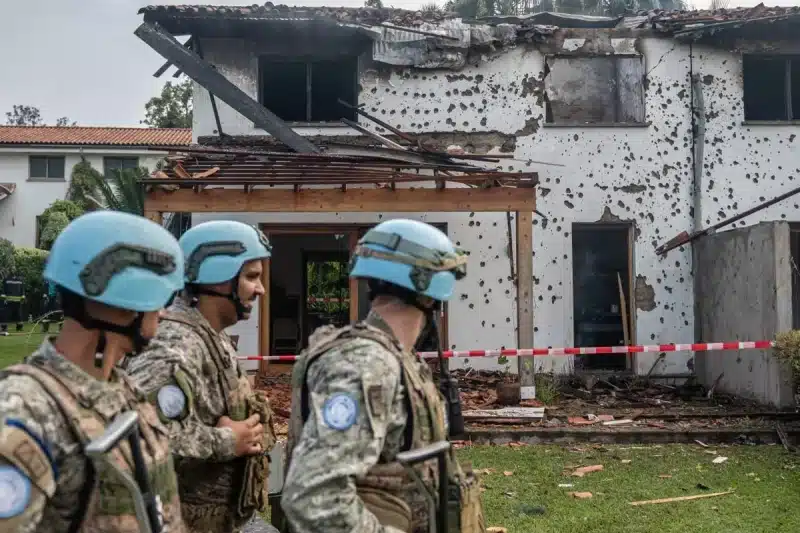
The strike hit the Himbi district of Goma shortly after 4:00 a.m., according to local residents and officials. Witnesses reported hearing a drone overhead before an explosion ripped through the roof of a residential building.
Among those killed was Karine Buisset, a French national working for UNICEF on child protection programmes in North Kivu Province.
The attack has drawn condemnation from European officials and renewed concern about the escalating war in eastern Democratic Republic of Congo.
Strike Hits Residential Area
Residents said the blast occurred in a multistory building in one of the city’s better known neighbourhoods, not far from the residence of former president Joseph Kabila.
One drone reportedly crashed into Lake Kivu. Another struck the building.
Emergency workers and neighbours spent hours searching through debris after the explosion.
Local sources said several people were injured in addition to the three confirmed dead.
For many residents, the Goma drone strike was the first time the city itself had been directly hit by a drone attack since M23 rebels captured it in early 2025.
A City Under Rebel Control
Goma is the capital of North Kivu Province and one of the largest cities in eastern Congo. Nearly two million people live in the lakeside city, which sits directly on the border with Rwanda.
M23 fighters seized Goma after months of fighting with government forces. The Congolese army withdrew from the city but continues to hold territory nearby.
Front lines now run through the hills surrounding Goma. That geography keeps the city within reach of government artillery and air strikes.
The Goma drone strike highlights how the conflict has shifted toward aerial attacks as the government struggles to regain ground control.
Disputed Responsibility
M23 officials quickly blamed the Congolese army for the strike.
Rebel spokesman Lawrence Kanyuka said the attack targeted a civilian neighbourhood and described it as a deliberate escalation.
The government in Kinshasa has not publicly confirmed launching the operation.
In previous statements, Congolese authorities have defended the use of drones against rebel positions in North Kivu, saying the strikes are aimed at weakening M23 leadership.
Growing Use of Military Drones
Congolese military sources say the army has expanded its drone fleet over the past two years, introducing systems such as the Chinese CH-4 and Turkish-built combat drones.
Those aircraft can stay airborne for many hours and strike targets far beyond the front line.
Instead of sending infantry into fortified rebel positions, commanders can now launch attacks remotely from government-held territory. Aid agencies say that shift carries risks in cities like Goma, where civilians and fighters often live only a few streets apart.
The Goma drone strike is one of the clearest signs yet that the war is entering a more technologically driven phase.
Mineral Wealth Driving the Conflict
The battle for North Kivu is closely tied to the region’s mineral deposits.
Mining areas scattered across the hills north of Goma produce coltan, cobalt and cassiterite, materials used in smartphones, computers and electric vehicle batteries.
Armed groups have long competed for control of these sites because they generate cash through taxes, transport fees and informal trade networks.
One of the most contested locations is the Rubaya coltan mine, a sprawling mining zone about 60 kilometres from Goma. Traders say material from Rubaya moves through regional supply chains before entering the global electronics market.
Clashes have repeatedly erupted around the mining corridor during the past year, underlining why territory in North Kivu remains so fiercely contested.
One of the World’s Largest Displacement Crises
Eastern Congo is also facing a massive humanitarian emergency.
International organisations estimate that more than seven million people are displaced across the region.
Many of them have fled to Goma, turning the city into a hub for humanitarian operations.
Large camps and informal settlements now surround the city.
For aid agencies working there, the Goma drone strike raises new fears about the safety of humanitarian staff and civilians living close to active battle zones.
Regional Tensions Remain High
The war in eastern Congo has long had a regional dimension.
Kinshasa accuses neighbouring Rwanda of backing the M23 rebellion. United Nations reports have cited evidence suggesting Rwandan support.
Rwanda denies the allegations and says it is responding to security threats near its border.
Because Goma sits only a few kilometres from Rwanda, any escalation of fighting around the city carries the risk of drawing neighbouring countries deeper into the conflict.
International Reaction
The killing of a French aid worker prompted an immediate reaction from Paris.
French President Emmanuel Macron condemned the attack and called for respect for international humanitarian law.
United Nations officials called for an investigation and urged all parties in the conflict to protect civilians and humanitarian workers.
It is not yet clear whether the strike was aimed at a specific rebel figure or another military objective.
An Uncertain Path to Peace
Attempts to stop the fighting have struggled to gain traction.
Regional leaders, including the government of Angola, have hosted several rounds of talks between Kinshasa and M23 representatives. Ceasefires have been announced more than once, but clashes on the ground have continued.
For residents of Goma, diplomacy has so far brought little relief from a conflict that has dragged on for years.
The Goma drone strike now raises fresh questions about how the war may evolve in the months ahead.


