



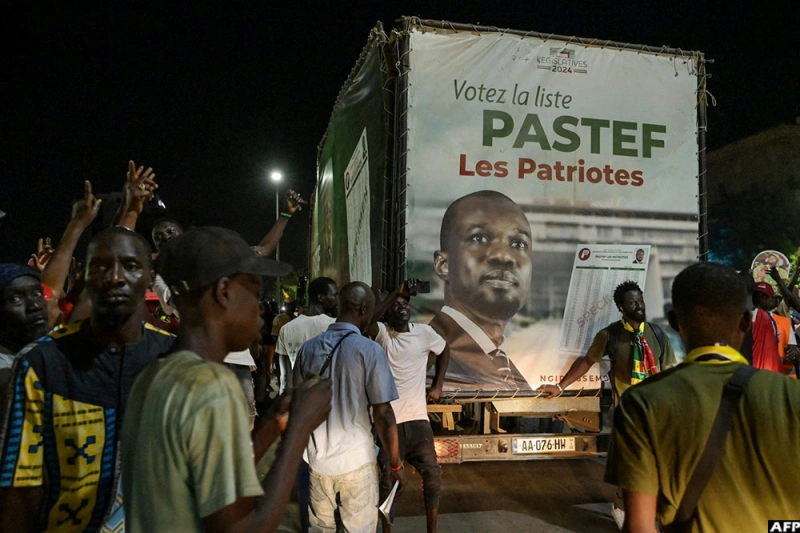

The ruling Pastef party has rejected the proposed Senegal supplementary budget in a parliamentary committee, opening a new front in its widening split with President Bassirou Diomaye Faye.
The decision, announced on Friday 23 October, puts a bill central to the government’s fiscal plans at risk. Pastef controls 130 of the National Assembly’s 165 seats, giving its opposition considerable weight when the full chamber considers the bill.
The decision is not final. The full Assembly is due to sit on Tuesday 27 October at 10am. But Pastef, which holds 130 of the 165 seats according to AFP, has already said it will not approve the text in its current form.
So Senegal supplementary budget now faces a hostile majority in a chamber the president does not control.
The stakes reach well beyond Dakar’s ministries. The bill sits beneath a 36-month IMF programme worth about $2.2 billion, agreed at staff level on 1 September. That deal still needs board approval. Senegal’s public debt stood at 132 per cent of GDP at the end of 2024, AFP noted.
Pastef insists it is not against reform. Its statement said it did not reject “the necessity of revising the budget”. Its quarrel is with spending choices, financing methods and what it called weak guarantees for parliament. The group also declared that the Assembly “is not a rubber-stamp chamber”, in the wording published by Seneweb.
The government’s case for the Senegal supplementary budget rests on a weaker economy. The bill, sent to parliament on 18 September, lifts the projected deficit to 7.6 per cent of GDP from 5.4 per cent. It cuts the growth forecast from 5 per cent to 2.7 per cent. Revenue falls by 340 billion CFA francs while spending rises by 150 billion.
Pastef wants the cuts to health, education, vocational training and water projects reviewed. It wants tax relief on petroleum products if fuel subsidies shrink. It also wants an explanation for 120 billion CFA francs routed through an emergency response project. And it wants the audit reports on non-financial debt, from the General Inspectorate of Finance and from Forvis Mazars, made public.
Fuel is the sharpest edge of the Senegal supplementary budget row. Ousmane Sonko leads Pastef and presides over the Assembly. He told a press conference on 19 October that energy subsidies would fall from 790 billion to 552 billion CFA francs. He tied the cut to a cap of 1 per cent of GDP in the IMF agreement. Diesel, now 755 CFA francs a litre, could rise, he warned.
The president’s camp sees something else. Aldiouma Sow, coordinator of the Kiiraay coalition backing Faye, wrote that blocking a vital budget text would expose thousands of households to unpaid wages and push firms towards bankruptcy.
One deputy broke ranks on the Senegal supplementary budget. Cheikh Ahmed Tidiane Youm says he alone voted yes in committee, because the bill “will have an impact on the purchasing power” of citizens. His explanation highlighted the central disagreement: whether the revised spending and subsidy arrangements would protect household purchasing power or weaken it
The Senegal supplementary budget fight did not begin in October. On 22 May, Faye dismissed Sonko as prime minister after months of rows over the IMF and the hidden debt. Sonko was elected Assembly president on 26 May. On 15 October, the Constitutional Council voided a special funds law the Assembly had passed on 1 October, after Faye challenged it. Within four days, Sonko announced that Pastef would not back the budget.
Faye does have a constitutional lever. Former parliamentarian Doudou Wade has pointed to Article 86, which lets the prime minister, after the Council of Ministers, commit the government’s responsibility on a finance bill. The text then counts as adopted unless a censure motion filed within 24 hours succeeds.
That route is a gamble. If the president invokes Article 86, it risks triggering a confidence battle in a chamber dominated by Pastef, which holds 130 of the 165 seats.
Prime Minister Ahmadou Al Aminou Lo was due to face the press at 4pm on Sunday to set out the economic case for the bill. His office says the committee rejected it despite the extra clarifications the government supplied. Pastef says it remains open to talks before Tuesday, but says the Senegal supplementary budget cannot pass as it stands.
Both camps say they are protecting ordinary Senegalese. Tuesday’s session will test whether they can reach a compromise over spending priorities, energy costs and parliamentary oversight, or whether the dispute deepens the rupture between Faye and Sonko.


