



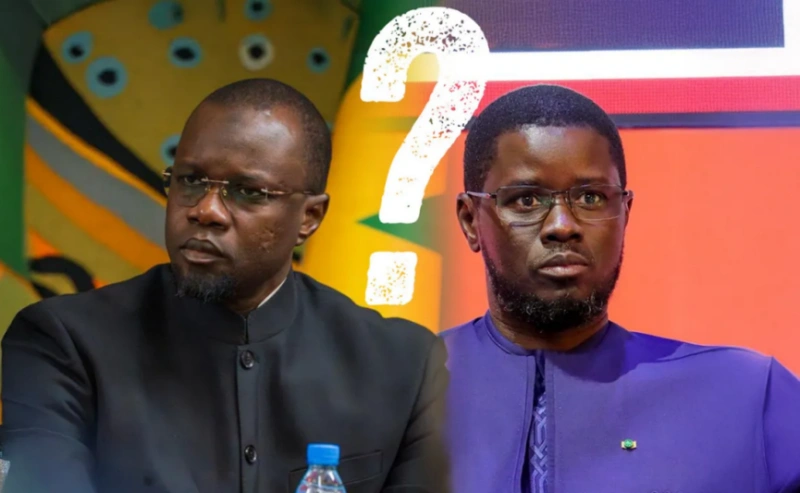

Ousmane Sonko has completed one of the fastest political comebacks in recent West African history, moving from dismissed prime minister to Speaker of Senegal’s National Assembly within the space of four days.
The sequence of events has hardened what was already a serious Senegal power struggle into a full institutional standoff between the country’s two most powerful politicians.
Fired on Friday, Speaker by Tuesday
President Bassirou Diomaye Faye dismissed Sonko and dissolved the government on 22 May 2026.
By Tuesday 26 May, Sonko had been reinstated as a lawmaker, installed as deputy speaker, and then elected Speaker of the National Assembly with 132 votes out of 133 cast.
He received a long ovation after the result, with no member voting against him and one abstaining, according to the session’s presiding officer Ismael Diallo. Sonko was the sole candidate for the position.
The speed of the transition left little doubt about where loyalty within the ruling PASTEF party still sits.
PASTEF holds firm behind Sonko
Sonko remains the undisputed leader of PASTEF, the party which controls 130 of the 165 seats in Senegal’s only legislative body.
He replaced El Malick Ndiaye, a loyal supporter who resigned on Sunday, clearing the path for Sonko’s return.
The vote demonstrated that Faye’s decision to remove Sonko from government had not reduced his hold over the party’s parliamentary bloc. If anything, the result showed that the Senegal power struggle had moved into a new and more visible phase.
A new prime minister, but an uncertain mandate
President Faye named economist Ahmadou Al Aminou Lo as the country’s new prime minister on Monday 25 May, three days after dismissing Sonko.
Lo, a former head of the Senegal branch of the Central Bank of West African States, stated that Senegal remained committed to President Faye’s long-term vision of systemic transformation and economic recovery.
However, Lo now leads a government that must pass legislation through an assembly headed by the man who was removed from office only days before his appointment. That reality places the new prime minister at the centre of the Senegal power struggle from the first day of his tenure.
In his first speech as Speaker, Sonko said that “in all democracies, the executive branch cannot appoint a government without consulting the majority.”
That remark signalled that the new prime minister will face scrutiny from parliament at every turn.
Debt crisis at the centre of Senegal Power Struggle
The Senegal power struggle did not emerge from a personal falling-out alone. It grew directly from a dispute over how to manage the country’s deteriorating finances.
The rupture between the two men stemmed from deep disagreements over the management of Senegal’s debt crisis. The country’s debt stands at 132 per cent of GDP after the IMF froze a $1.8 billion lending programme following the discovery of previously misreported public debt figures.
Faye favoured re-engaging with the IMF on a new support programme. Sonko publicly opposed any form of debt restructuring, advocating instead for what he called a sovereignist approach. In March, Sonko went further, threatening to take PASTEF into opposition if Faye deviated from the party’s agenda.
Earlier on 22 May, Finance Minister Cheikh Diba told parliament that Senegal expected to resume discussions with the IMF during the week of 8 June and hoped to reach agreement on key points before the end of June.
With Sonko now controlling parliamentary procedure and legislative scheduling from the Speaker’s chair, the path to passing any IMF-linked reform remains complicated.
Opposition calls it a coup
Not everyone accepted the outcome as constitutionally legitimate.
Aissata Tall Sall, who heads the main opposition, denounced an “institutional coup” which she said had been prepared under “pressure that the majority wants to impose.”
Opposition MP Abdou Mbow was more direct, telling reporters: “The parliamentary majority has installed someone, Ousmane Sonko, who has already lost his parliamentary seat and cannot regain it. We will not be associated with this charade.”
Supporters of Sonko rejected that interpretation, arguing that the Constitutional Council had officially validated his election and that it was never legally challenged within the stipulated deadline.
Two centres of power, one ruling party
The deeper significance of the Senegal power struggle is structural.
Sonko has since established a rival power centre within the same ruling party. As the Senegal power struggle evolves, both institutions are increasingly being used as platforms to advance competing visions of governance.
Senegal’s international bonds have crashed to deeply distressed levels, the new technocrat prime minister has declared the economy in a “state of emergency,” and IMF talks remain in limbo.
Faye largely owes his position to Sonko, his one-time mentor, who would almost certainly have taken the presidency himself had he not been barred from the election due to a defamation conviction.
That history now cuts both ways. The man Faye tried to sideline now controls the institution with the power to approve or block everything his government wants to do.
Senegal’s political future will depend on whether the two men can find a working arrangement across the two institutions they separately control, or whether the Senegal power struggle continues to widen in the months ahead.


