



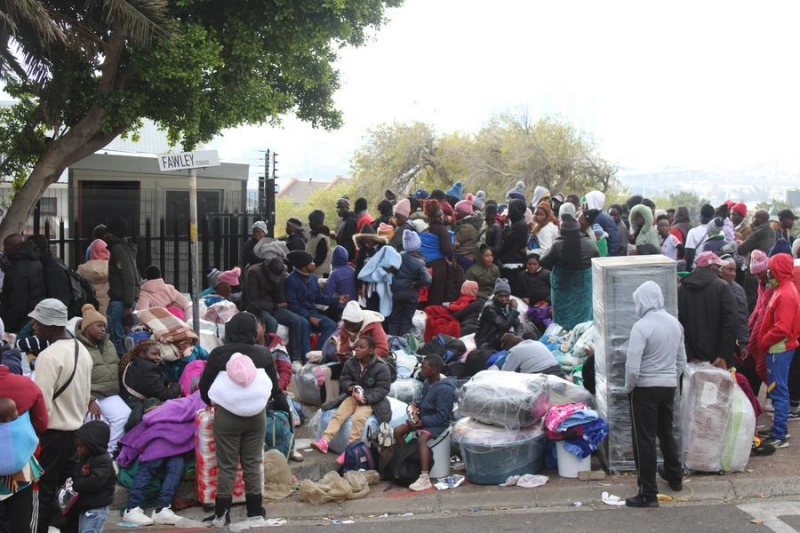

Hundreds of Malawi nationals gathered outside their country’s embassy in Johannesburg on Tuesday, part of a growing Malawian repatriation effort as anti-immigrant protests continue to shake South Africa. According to Africanews, one man in the queue, Bashil Austin, appealed to Malawi’s government to help citizens who feel threatened and want to return home.
The scene in Johannesburg reflects a much larger movement now under way. South Africa’s Justice and Constitutional Development Minister, Mmamoloko Kubayi, said on Sunday that 53,449 people had been processed for deportation or Malawian repatriation between 14 June and 11 July, according to allAfrica. More than 80 percent of them were Malawian nationals.
Malawi’s own figures tell a similar story. The country’s Department of Disaster Management Affairs said, as reported by Malawi24, that 38,094 Malawians had returned home between 7 June and 8 July. More than 570 buses were used to carry people across the border, most through the Beitbridge crossing.
The Malawian repatriation drive follows an unofficial deadline set by anti-migrant groups on 30 June, demanding that undocumented foreigners leave South Africa. The South African government rejected the deadline, but the pressure pushed thousands of Malawians toward temporary immigration sites regardless, particularly in Durban and Musina.
Protests have not stayed peaceful throughout. NBC News reported that groups in Johannesburg’s Alexandra township went door to door, breaking into homes believed to shelter undocumented migrants and handing residents to police, including a woman and a small child from Malawi. Similar marches took place in Soweto and Durban, led in part by former radio presenter Jacinta Ngobese-Zuma, who has said the demonstrations will continue weekly until her group’s demands are met.
The Malawian repatriation operation has also turned deadly on several occasions. Eyewitness News reported that a Malawian national died on 6 July after falling ill roughly ten kilometres into a bus journey from a Limpopo processing centre. Deputy government spokesperson William Baloyi confirmed the South African Police Service opened a forensic investigation and said South Africa would communicate the circumstances to Malawian authorities through diplomatic channels.
That death was not isolated. Malawi24 reported that six Malawians have died during the wider repatriation exercise, five while travelling and one at a hospital in Mwanza district. Earlier bus crashes compounded the toll. Fifteen Malawians died near the Nyamapanda border post in Zimbabwe on 5 May, and eight more died two days later near Louis Trichardt in Limpopo, according to allAfrica.
South African police are also investigating the deaths of at least three migrants, two Mozambicans and one Malawian, linked to the unrest, per Africanews. Nigeria has separately said two of its citizens were killed in the protests, though South African authorities have denied any link between those deaths and the demonstrations.
Not everyone caught up in the Malawian repatriation surge lacked documentation. Sabina Tadera of the Southern Africa Network for Immigrants and Refugees told the Associated Press that some Malawians gathering at temporary camps were in South Africa legally but feared attacks regardless, adding that there is a misconception that all people on the move are undocumented.
President Cyril Ramaphosa announced new plans last month to tighten border security and strengthen enforcement of immigration law. He acknowledged rising tensions and warned South Africans against taking the law into their own hands, following reports of vigilante attacks on foreigners.
Malawi’s Minister of Foreign Affairs and International Cooperation, George Chaponda, told Parliament this is the worst crisis affecting Malawians in South Africa in years. The Malawian repatriation crisis has strained diplomatic relations, with several affected countries accusing South Africa of allowing a climate of xenophobia to take hold.
Malawi is not alone in bringing citizens home. Zimbabwe’s government said it had helped nearly 21,300 citizens return since late May, while Uganda reported repatriating around 1,100 nationals. Smaller numbers of Ghanaians, Nigerians, Kenyans and citizens of the Republic of Congo have also left South Africa in recent weeks.
Officials have not given a full breakdown of how many people were formally deported against how many left through voluntary Malawian repatriation. South African authorities say all legal and forensic procedures are being followed in cases of death, though the human cost of the crisis continues to draw scrutiny from rights groups and neighbouring governments alike.
The situation remains fluid, with camps still overcrowded in parts of South Africa and returnee numbers changing by the day. AfricanQuarters will continue to verify claims from all sides as the crisis develops.


