



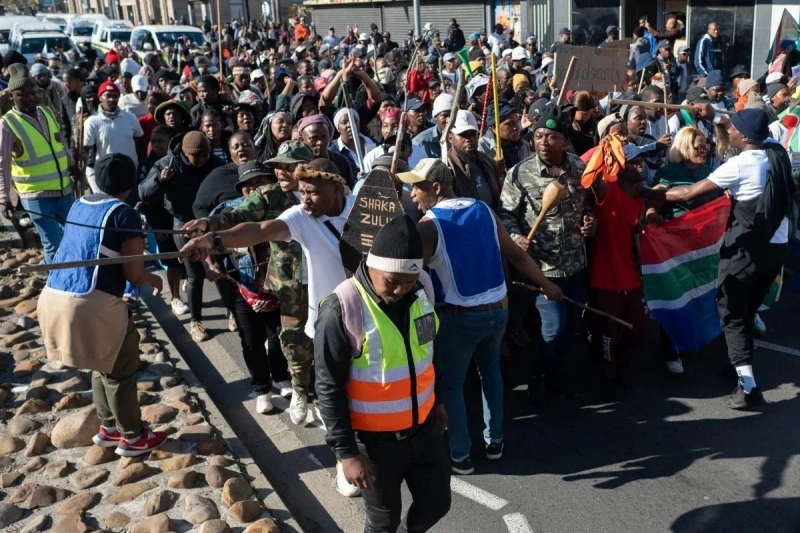

Malawi has begun busing its nationals home from South Africa, with 150 citizens departing Western Cape Province on Saturday under a voluntary Malawi repatriation from South Africa programme triggered by escalating anti-immigrant violence.
Malawi’s Ministry of Foreign Affairs and International Cooperation confirmed that two buses carrying 150 nationals departed Western Cape Province on Saturday, 6 June 2026.
The 150 Malawians were among foreign nationals displaced and sheltering in temporary camps in Mossel Bay, Western Cape Province, after being driven from their communities.
The evacuation was facilitated by a multidisciplinary Malawi Task Team dispatched to Western Cape under the coordination of the Malawi High Commission in South Africa.
The buses are taking a road route through neighbouring countries before reaching home soil.
The returnees are travelling by road through Zimbabwe and Mozambique before entering Malawi via Mwanza Border Post on Monday, 8 June 2026.
Malawi Repatriation From South Africa Ripples Across the Region
Malawi is not alone in pulling its citizens out. The Malawi repatriation from South Africa follows similar moves by several other governments in recent weeks.
South Africa’s Border Management Authority confirmed that 933 Mozambican nationals departed through the Lebombo Port of Entry in one of the largest coordinated repatriation operations in recent months, with 349 originating from the Lindela Holding Facility and 584 travelling from Mossel Bay under arrangements made by the Mozambican High Commission.
Ghana’s High Commission in South Africa temporarily suspended new registrations for its evacuation exercise after more than 1,500 Ghanaians applied.
Several other countries, including Kenya, Lesotho and Zimbabwe, have also urged their citizens in South Africa to exercise caution as anti-immigrant protests across several provinces have escalated to the point of requiring police intervention.
The violence that triggered the Malawi repatriation from South Africa has already claimed lives. Mozambique confirmed five of its nationals were killed in violence in the town of Mossel Bay after South African police said the area was hit by riots, with 55 shacks set ablaze following anti-immigrant protests.
Ramaphosa Breaks Silence
South African President Cyril Ramaphosa addressed the nation on Sunday evening in a speech on national television dedicated entirely to the migration crisis, in what amounted to a public acknowledgement of the tensions now gripping Africa’s most advanced economy.
Ramaphosa told the nation that South Africans had raised legitimate questions about border security, jobs, pressure on public services, and the rule of law, saying those concerns “are real” and “deserve to be heard.
He announced measures to strengthen border security, crack down on employers who hire undocumented migrants, and increase workplace inspections, while warning firmly: “We must never give in to violence, xenophobia or vigilantism.
The address coincides with the Malawi repatriation from South Africa and comes ahead of a deadline set by anti-immigration groups demanding that undocumented foreigners leave the country by the end of June.
Ramaphosa made no direct reference in his address to the five Mozambican nationals killed in Mossel Bay, nor to the hundreds of foreign nationals still sheltering in temporary camps across Western Cape Province.
Opposition Responds
Democratic Alliance leader Geordin Hill-Lewis welcomed the address, saying Ramaphosa had delivered the right message at a dangerous moment, and that South Africa’s economic struggles are not caused by foreign nationals but by a failure to grow the economy and create jobs.
Hill-Lewis added that South Africans must reject xenophobia and uphold the country’s constitutional values.
The broader Malawi repatriation from South Africa story reflects a worsening regional crisis that now has multiple governments scrambling to protect their citizens while South Africa’s leadership tries to contain domestic fury without triggering a diplomatic rupture with its neighbours.
South Africa is also due to take over the rotating SADC chairmanship in August, adding diplomatic pressure on Pretoria to manage the crisis carefully.
With the anti-immigrant groups’ end-of-June deadline still looming, more repatriation requests are expected from Malawians and other foreign nationals still sheltering in camps across the country.


