



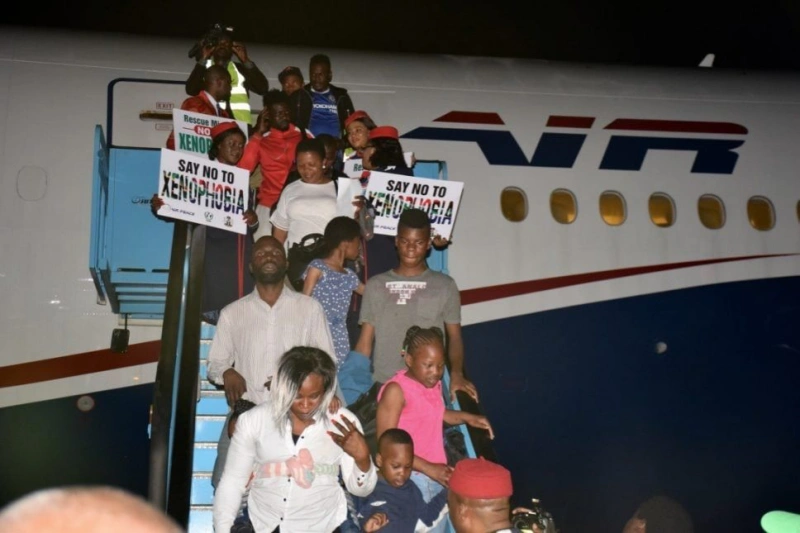

Nigeria has launched its Nigeria voluntary repatriation from South Africa programme, with screening of nationals already under way at the country’s High Commission in Pretoria.
Foreign Ministry spokesman Kimiebi Ebienfa confirmed to AFP on Friday that screening began on Thursday, with the final tally still being compiled but expected to exceed 1,000 persons.
The move marks a significant escalation in Nigeria’s response to a crisis that has been building for weeks.
Waivers Secured for Those With Immigration Issues
A key obstacle for many hop on the Nigeria voluntary repatriation from South Africa train, had been the risk of arrest at the point of departure. Abuja has addressed that directly.
In a communique dated Tuesday, Nigeria’s High Commission in Pretoria said it had negotiated waivers with South African authorities so that citizens with immigration-related offences would be allowed to board repatriation flights without being detained.
The assurance is expected to bring forward a larger number of registrants who had previously held back for fear of arrest.
About 400 Nigerians were being processed in the first phase of the exercise, according to sources familiar with the operation, with the High Commission confirming that the screening would continue until Sunday.
The Threat Driving the Exodus
The Nigeria voluntary repatriation from South Africa process comes against the backdrop of a rapidly deteriorating security climate for foreign nationals.
Groups such as March and March and Operation Dudula have led protests in several cities, with messages and videos circulating on social media showing anti-immigration activists calling for foreign nationals to leave South Africa by 30 June.
ActionSA, the Inkatha Freedom Party and the MK Party are among the political formations supporting calls for tougher immigration controls, accusing the government of failing to act decisively against undocumented migration.
Pat Mokgalusi, the spokesperson for the Dudula Operations Movement, has been unambiguous. He said undocumented foreigners “must just pack and go,” arguing that undocumented migration weakens systems and increases pressure on jobs and services.
Deaths and Violence Preceded the Repatriation Plan
The Nigeria voluntary repatriation from South Africa scheme did not emerge in a vacuum. Diplomatic tensions had already sharpened before Abuja announced the programme.
Foreign Affairs Minister Bianca Odumegwu-Ojukwu confirmed two deaths involving Nigerians allegedly linked to encounters with South African security personnel. Amamiro Chidiebere Emmanuel died on 25 April 2026 from injuries sustained after allegedly being beaten by members of the South African National Defence Force in Port Elizabeth. Nnaemeka Matthew Andrew also died following an alleged encounter with members of the Tshwane Metro Police, with his body later found at the Pretoria Central Mortuary.
Odumegwu-Ojukwu has insisted that Nigeria cannot ignore the continued harassment and alleged extra-judicial killings of its citizens, even after South Africa’s Minister of International Relations and Cooperation, Ronald Lamola, expressed reservations about the evacuation plans during a telephone conversation with her.
Nigeria Not Alone
The Nigeria voluntary repatriation from South Africa effort is part of a wider regional response.
Ghana and Nigeria have organised emergency repatriation flights, while weeks of violent protests have led to the deaths of at least five Mozambican nationals, according to the Mozambican government.
Mozambique has already bused out 545 nationals through the Ressano Garcia border post and is ready to evacuate more, while the Malawian government has also announced it will assist its citizens to leave.
Nigeria is projecting a total departure figure of between 2,000 and 4,000 citizens, according to foreign ministry spokesperson Kimiebi Ebienfa, with full evacuation flight details to be published after the screening process concludes.
A Pattern South Africa Has Not Broken
Those following the Nigeria voluntary repatriation from South Africa situation note that the current crisis echoes events from previous years.
Human Rights Watch researcher Nomathamsanqa Masiko-Mpaka has called on South African authorities to intensify efforts to address anti-immigrant sentiments and violence, in order to ensure the safety and protection of at-risk foreign nationals in the country.
South Africa, the continent’s most industrialised economy, has long attracted workers from across the region but, saddled with an unemployment rate of over 30 per cent, it has seen repeated spurts of xenophobic protests.
Mpho Makhubela, a member of the Consortium for Refugees and Migrants in South Africa, attributed the persistence of these attacks to vigilante groups feeding off the country’s frustrations and socioeconomic regression, unemployment, and the lack of efforts to address equity gaps.
The 30 June deadline set by anti-immigration groups is now less than four weeks away. For the Nigerians currently being processed in Pretoria, the Nigeria voluntary repatriation from South Africa programme may be their safest route home before that date arrives.


