



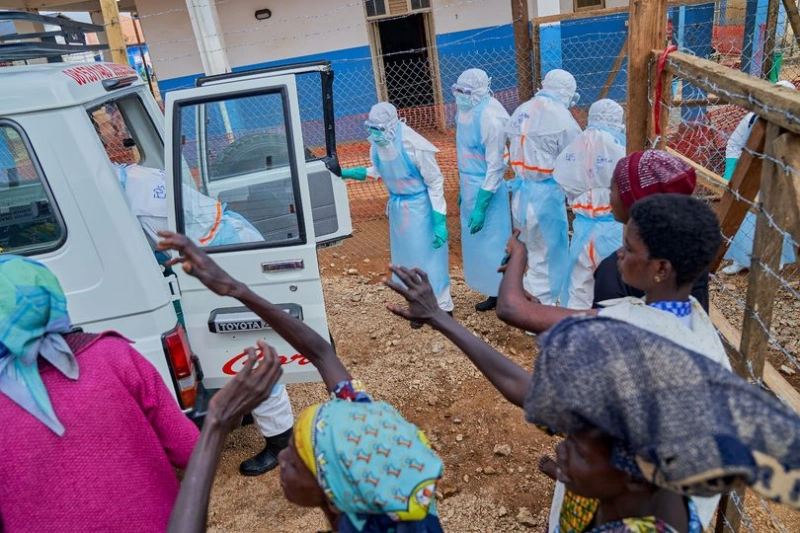

The health ministry recorded 3,075 confirmed infections, including 1,354 deaths and 556 recoveries, while 755 patients remain in hospital or isolation. The figure marks a 27 percent rise from the previous Saturday, Al Jazeera reported, citing updated government data.
The Ebola outbreak in DRC has now spread across five provinces. These are Ituri, North Kivu, South Kivu, Haut-Uele and Tshopo, according to health authorities managing the response.
Health workers say the current Ebola outbreak in DRC is now the fastest spreading epidemic ever documented. Africanews reported that this updated figure came just three days after officials reported more than 1,000 deaths from the same outbreak.
The World Health Organisation’s director-general, Tedros Adhanom Ghebreyesus, has warned that the true number of cases in the Ebola outbreak in DRC could be more than double the official count. He said insecurity in the affected regions continues to restrict access for health workers trying to reach communities.
Eastern DRC, where the outbreak is concentrated, remains in the grip of an armed conflict. This has complicated efforts to trace contacts and isolate patients quickly, slowing the broader containment effort.
The response has also been disrupted by industrial action. Around 100 health workers at the Elikya Ebola Treatment Centre in Bunia, the capital of Ituri province, went on strike on Saturday over unpaid performance bonuses.
Martin Bolombi, one of the striking workers, told the Associated Press that staff needed to be paid because the disease continued spreading inside the treatment centre while they waited. He said he had already watched five patients die inside the facility during the walkout.
The strike underscores how fragile the frontline response to the Ebola outbreak in DRC has become, even as case numbers climb week on week. Bunia, the epicentre of the epidemic, has borne much of the strain on staff and supplies.
DRC Prime Minister Judith Suminwa Tuluka said on Friday that researchers were working to develop a treatment and a vaccine against the Bundibugyo ebolavirus, the strain responsible for the current Ebola outbreak in DRC. She expressed hope that a vaccine and treatment could become available within two to four months, though she gave no further detail on the development stage or expected approval process.
No vaccine or specific treatment is currently approved for the Bundibugyo strain, although several experimental candidates are undergoing clinical evaluation. The University of Oxford announced on Friday that the first volunteer had been vaccinated in what it described as the world’s first human trial of a candidate vaccine known as ChAdOx1 BDB, offering a rare piece of encouraging news amid the crisis.
Tuluka said the government has allocated 50 million US dollars to the response, in addition to funds mobilised by international partners. She acknowledged that the main challenge now lies in delivering logistical resources more efficiently, including laboratory equipment, water and oxygen supplies, ambulances and hygiene materials.
Contact tracing had reached just 73.9 percent of identified contacts as of Thursday, according to figures reported by Daily Sabah, well below the 90 to 95 percent threshold considered necessary to contain transmission effectively in an outbreak of this scale.
The Ebola outbreak in DRC began in May and has already outpaced earlier epidemics in its rate of spread. The Centers for Disease Control and Prevention notes that the current outbreak surpassed 1,000 confirmed cases within 40 days of response activation, compared with roughly 235 days for the 2018 North Kivu outbreak to reach the same milestone.
Imported cases linked to the Ebola outbreak in DRC have also been identified outside the country, including in France, while a US citizen who had worked in the DRC was connected to the epidemic, according to Daily Sabah.
The Congolese government is working alongside the World Health Organisation, Africa CDC and Medecins Sans Frontieres to expand laboratory testing and open additional treatment centres. Authorities have introduced measures to monitor travellers returning from affected areas as international donors commit further funding toward the response.
For now, the scale of the Ebola outbreak in DRC and the labour dispute at one of its key treatment centres suggest the human and logistical toll is likely to keep rising before it slows.


