




One word settled the case. Private.
On Friday, Kenya’s Public Private Partnerships Petition Committee threw out a challenge to the Dangote Lamu refinery. It accepted the government’s view that the $16 billion plant is a private commercial venture.
The Consumers Federation of Kenya, known as COFEK, wanted the Dangote Lamu refinery deal opened up. It asked how the project was approved, which agency could sign for the state and what Kenya would pay for its shares.
The committee never got that far. It found that COFEK had not shown the refinery to be a public-private partnership. It also found no legal basis for ordering the release of documents.
Treasury Cabinet Secretary John Mbadi had told the panel the project was “a private commercial investment” with no plan to hand it to the state. Any government support, he said, would be open to any qualifying private investor.
That answer carried the day. It places the Dangote Lamu refinery outside the Public Private Partnerships Act of 2021. That law would otherwise have governed procurement, approvals and disclosure.
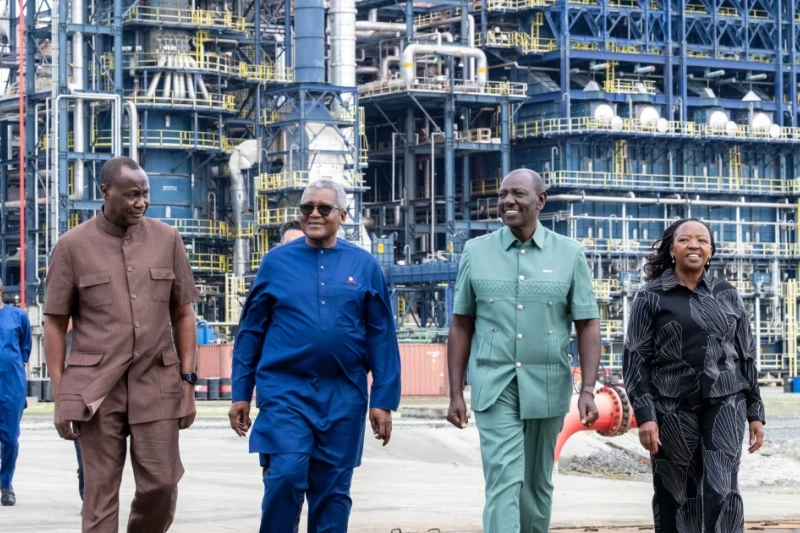
The fight began quickly. COFEK filed in early October, days after President William Ruto and Aliko Dangote broke ground in Lamu on 30 September. Its secretary general, Stephen Mutoro, announced the petition, which was brought under Section 75 of the Act.
By then the Dangote Lamu refinery was already in court elsewhere. On 25 September, Justice Jane Onyango of the Environment and Land Court in Malindi ordered the status quo kept on a disputed parcel. A hearing was set for 14 October. The order followed a petition from 133 residents of Chandavai, who say the land is their ancestral home.
Dangote shrugged it off. Addressing investors in Nairobi on 29 September, he said, as Reuters reported, that such court fights were “normal for us in Africa”. He added that he was ready for anyone who wanted to cause trouble.
The order did not last. On 14 October, Justice Onyango lifted it after finding that the residents had named the wrong parcel. She allowed them to amend their petition. The ruling fixed an error. It did not decide who owns the land. The amended case returns to court on 24 November.
The government says the main site is public land. “The land that is there is government land,” Ruto has said, according to The Standard, adding that nobody would be removed from it.
Lands Cabinet Secretary Alice Wahome has said about 7,000 acres were identified for the Dangote Lamu refinery. The residents say they have farmed the area for generations and were left out of compensation and resettlement plans.
The land question therefore remains a separate test for the Dangote Lamu refinery, particularly over ownership, compensation and the rights of residents who claim ancestral ties to the site.
Now the money. Kenya has been offered a 10 per cent stake in the Dangote Lamu refinery, worth about $500 million, according to Ruto’s economic adviser, David Ndii. Dangote has offered East African governments a combined 30 per cent. Rwanda and Kenya have committed to buying shares. Tanzania has not said whether it will join.
COFEK also asked about a reported KSh21.5 billion seed allocation and the 7,000 acres linked to the project. Those questions still need an answer somewhere else.
A project can be private on paper and still lean on public resources. State land, state shares and any tax incentives are public assets, whatever label the project carries. The committee decided which law applies. The wider question of what the public may see sits in the High Court.
That distinction matters because the Dangote Lamu refinery could still benefit from public land, government participation and fiscal concessions even without being classified as a PPP.
There, activist Francis Awino wants the government ordered to disclose the public money, land, tax incentives and guarantees it plans to commit. Justice David Mburu certified the case as urgent on 6 October. It is due for mention on 12 November.
Supply is another open question for the Dangote Lamu refinery. The plant is designed to process 700,000 barrels of crude a day and include a 1,000-megawatt power plant. Kenya has no commercial oil output, Reuters has noted.
Ndii has said South Sudan, Uganda and Kenya could together supply more than 600,000 barrels a day. Energy Cabinet Secretary Opiyo Wandayi has said Kenya will have to buy crude from other parts of the world as well as local sources.
Dangote has done this once before. His refinery near Lagos began production in 2024 after years of delays and cost overruns. He hopes Dangote Lamu refinery will be finished by 2030, within 40 months of the groundbreaking.
Friday’s ruling gave the Dangote Lamu refinery the label it wanted. In November, the courts start testing whether that label can carry the weight.


