



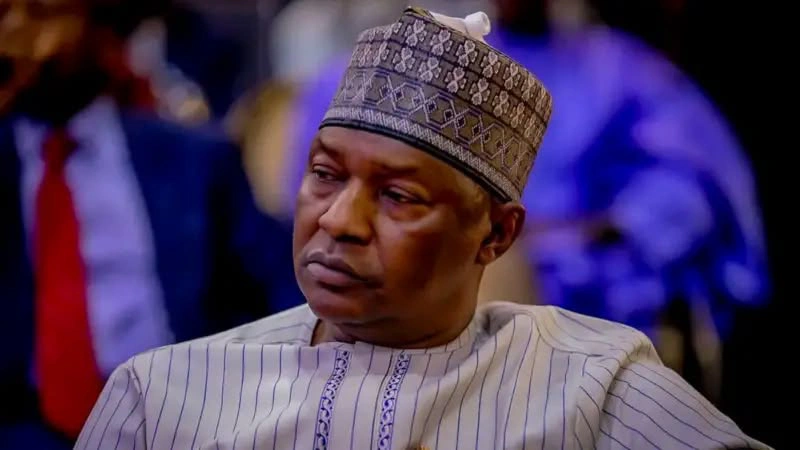

A Federal High Court sitting in Abuja has ordered the forfeiture of Malami’s properties, permanently handing 48 assets linked to former Attorney General of the Federation Abubakar Malami to the federal government.
Justice Joyce Abdulmalik delivered the judgment on Wednesday, closing a case that had been adjourned twice since May. The Economic and Financial Crimes Commission had asked the court to seize 57 properties in total. Nine were spared after the court found credible evidence that they were genuinely owned outside the disputed acquisitions.
The judge said the forfeiture of Malami’s properties rested on a straightforward legal test. She held that the real issue before the court was not who legally owned each asset, but whether the money used to buy it could be traced to a lawful source. Malami, the court found, failed to rebut the reasonable suspicion that the properties were bought with proceeds of unlawful activity.
Section 17 of the Advance Fee Fraud and Other Fraud Related Offences Act gave the court the power to make the order, Justice Abdulmalik ruled, dismissing arguments that some of the affected properties belonged to the wider Malami family in Kebbi State rather than to the former minister himself.
Malami served as Attorney General and Minister of Justice from November 2015 to May 2023 under former President Muhammadu Buhari. The properties at the centre of the forfeiture of Malami’s properties are spread across the Federal Capital Territory, Kano, Kebbi and Kaduna states, and were valued by the EFCC at more than N212 billion when the interim order was first secured in January.
EFCC counsel Jibrin Okutepa, a Senior Advocate of Nigeria, told the court the commission’s application was backed by a 47 paragraph affidavit and 46 exhibits gathered from banks, the Central Bank of Nigeria, the Corporate Affairs Commission and the Code of Conduct Bureau. He argued that Malami could not satisfactorily explain the legitimate sources of the assets and urged the judge to grant the final order.
Malami’s lead counsel, Adedayo Adedeji, also a Senior Advocate, opposed the application throughout the proceedings. He relied on a counter affidavit deposed to by Malami himself, insisting the properties had been declared to the Code of Conduct Bureau in line with the Fifth Schedule of the Constitution and were lawfully acquired. Adedeji told the court repeatedly that the EFCC’s case rested on suspicion rather than concrete evidence, a position the court ultimately rejected for most of the properties in dispute.
The court noted that the forfeiture of Malami’s properties followed months of legal arguments and review of financial records submitted by both parties during the proceedings.
The properties named in the schedule include a duplex on Amazon Street in Maitama, a five storey building in Jabi now operating as a hotel, and a commercial plaza near Birnin Kebbi Market, among dozens of others acquired between 2016 and 2024.
The forfeiture ruling is separate from, but connected to, a criminal trial in which Malami faces a 16 count money laundering charge alongside his wife, Hajia Bashir Asabe, and his son, Abdulaziz. The defendants, accused of laundering about N9 billion in public funds, were granted bail in January after their arraignment before the same court in Abuja.
Legal analysts say the forfeiture of Malami’s properties could become a signpost for future non-conviction based asset recovery cases pursued by anti-corruption agencies in Nigeria.
Malami’s legal team has not yet indicated whether it will appeal the forfeiture order. The case remains one of the most closely watched non-conviction based asset recovery actions brought by the EFCC against a former holder of Nigeria’s top legal office.


