



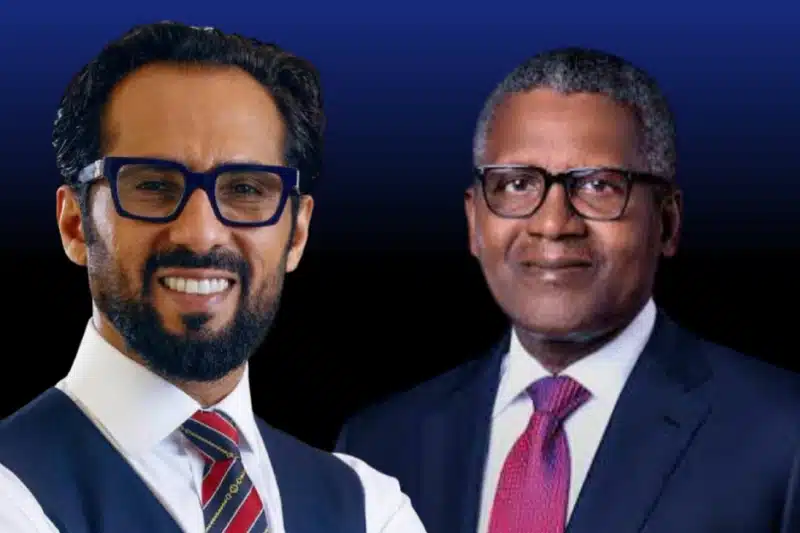

Tanzanian billionaire Mohammed Dewji has pledged $100 million toward the Dangote refinery project, and he says the money stands whether the plant rises in Kenya or in his own country. The MeTL Group president disclosed the commitment during an interview first reported by Bloomberg on Friday, only days after Aliko Dangote’s company settled on Lamu, a coastal county in Kenya, as the site for the venture.
Dewji admitted he would have preferred Tanzania to host the Dangote refinery project. He had hoped the plant would rise on home soil, where his conglomerate already dominates manufacturing, agriculture and logistics. Yet he told Bloomberg he remains ready to back the scheme even now that Kenya has been chosen, calling the wider ambition behind the Dangote refinery project part of a shared push to solve Africa’s industrial problems rather than a matter of national pride.
Talks between the two billionaires on this specific pledge have not formally begun. Dewji said he intends to open the conversation himself and expects Dangote to be receptive, noting the two men already know each other well from earlier dealings.
Dangote Group picked Lamu Island this week for the Dangote refinery project after initially favouring Tanga on Tanzania’s northern coast. The company has said the switch to Kenya reflected commercial and technical considerations, though it offered little further detail publicly. A site has already been identified on Lamu Island, where preliminary engineering studies, design work and geotechnical investigations are under way ahead of construction.
The planned facility will cost roughly $17 billion, according to reporting that placed the figure at about Sh2.2 trillion. Once complete, the Dangote refinery project will process 700,000 barrels of crude oil daily, making it East Africa’s largest refinery and the continent’s second largest after Dangote’s existing Lekki plant in Lagos. Construction is expected to take about five years, a timeline industry watchers say is typical for a plant of this scale. Financing is likely to draw on internally generated funds, corporate bond issuances and proceeds from a planned initial public offering, according to people familiar with the plans.
Dangote’s shift to Kenya has not cooled his appetite for Tanzania. His group continues pouring money into projects across the country, including a new seaport, a 2,000 megawatt coal fired power plant and a 40 kilometre concrete access road built to ease traffic near the port. That parallel investment suggests the rivalry between the two East African economies has not hardened into exclusion for either side.
The Lekki refinery in Lagos, Dangote’s flagship, reached its nameplate capacity of 650,000 barrels a day in February after a year long ramp up, and has since been tested beyond that figure. Dangote has separately outlined a $46 billion investment programme running from 2026 to 2028 that would lift Nigerian capacity to 1.4 million barrels a day while building out the planned Kenyan facility, taking combined refining capacity to 2.1 million barrels a day.
For Dewji, the offer marks another cross border wager from a businessman whose MeTL Group already spans 11 African countries and employs more than 40,000 people across manufacturing, agriculture, energy, textiles and consumer goods. He has spoken of Africa’s need to refine and manufacture its own resources rather than depend on imports, framing the Dangote refinery project as one answer to that long standing complaint among industrialists on the continent.
Whether the $100 million actually lands in the Dangote refinery project now rests on a conversation Dewji says has yet to take place. If it goes ahead, it would add fresh private capital to a venture already drawing interest from investors across the region, and would tie one of East Africa’s most recognisable fortunes to a scheme that is fast becoming its most closely watched industrial undertaking.


