



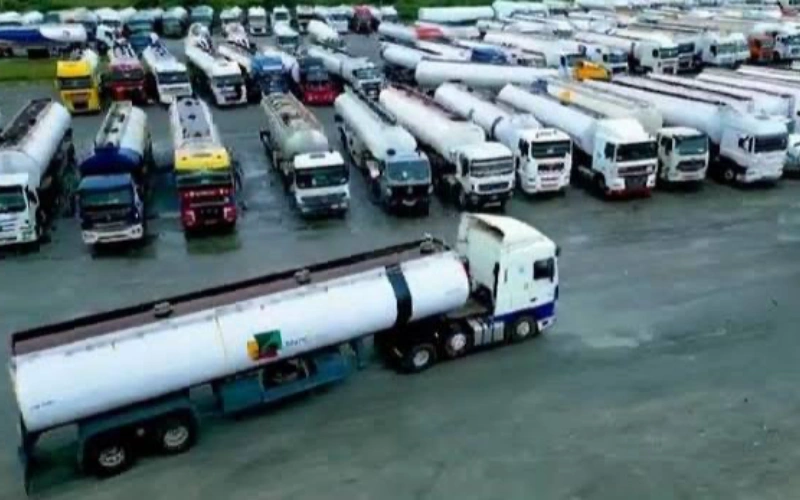

Petroleum marketers across Nigeria have scaled back Dangote fuel loading after the refinery switched to dollar-denominated pricing, triggering fresh anxiety in the downstream sector and pulling the Federal Government into fresh talks with the facility.
The uncertainty has placed Dangote fuel loading at the centre of Nigeria’s downstream fuel market, with marketers closely monitoring government negotiations and refinery pricing decisions before committing to fresh purchases.
Many marketers told reporters that trucks were sitting idle at the Lekki-based plant, with some warning of possible fuel tightness if the standoff drags on. The refinery has pushed back, insisting that Dangote fuel loading has continued and describing scarcity reports as false.
The National Publicity Secretary of the Independent Petroleum Marketers Association of Nigeria, Chinedu Ukadike, said members were being cautious with Dangote fuel loading rather than boycotting the refinery outright. He explained that marketers currently rely on existing stock in tank farms, bought at between N1,250 and N1,300 per litre, while newer supply carries pricing nobody can yet predict.
Ukadike said the uncertainty stems from two unresolved questions. Nobody knows the pricing template for freshly arriving crude, and newly licensed importers are expected to price petrol at around N1,350 per litre, a figure marketers are equally wary of matching.
He added that operators cannot commit to large purchases without knowing whether prices will rise or fall once bought, since retailers are still bound to sell at prevailing pump rates regardless. Ukadike urged the government to resolve the pricing template dispute without further delay.
Separate findings from the South-West paint a similar picture. The Zonal Chairman of IPMAN’s Western Zone, Oyewole Akanni, said the slowdown in Dangote fuel loading began roughly four days before marketers spoke out, forcing many stations to source products from private depots at steeper prices.
According to Akanni, the cheapest ex-depot price in Lagos has climbed to between N1,200 and N1,220 per litre, excluding transport costs, with some depots charging as much as N1,250. He said four truckloads meant for his own stations remained stuck at the refinery, unmoved since loading slowed.
Akanni was careful to distinguish disruption from crisis. He maintained there was no fuel scarcity and cautioned the public against panic buying, though he acknowledged pump prices could rise if Dangote fuel loading situation is not resolved soon. He also noted that the Nigerian National Petroleum Company Limited has been affected, since it too draws supply from the refinery.
Industry stakeholders say the slowdown in Dangote fuel loading is already influencing supply decisions across several states, even though existing inventories have so far prevented widespread shortages.
A Dangote Group spokesman dismissed the scarcity claims as fake news, telling reporters that anyone could visit the plant to confirm loading was ongoing. He argued that marketers importing fuel are struggling to compete because prices in Lomé, Togo, have risen, making it harder to match the refinery’s rates.
Behind the pricing row lies a deeper disagreement between Dangote and the Federal Government. A senior government official said the refinery objects to continued import licences being issued to other marketers despite its own capacity to meet domestic demand. The refinery is also unhappy with the naira-denominated share of the crude it receives from the state oil firm, which the official put at roughly 35 to 40 per cent of total supply.
The official explained that Dangote had signalled its intention to move to dollar pricing weeks earlier, and government had asked for patience while engagement continued. He added that the refinery’s free trade zone status gives it wide latitude over which currency it sells in, though it still pays some categories of tax.
Asked what happens if talks collapse, the official said the government’s fallback would be to widen import access rather than let a single operator dictate terms. He pointed to the cement sector as a cautionary example, arguing that banning imports there had not brought prices down.
The Federal Competition and Consumer Protection Commission has taken a firm line on the currency question. Its Director of Corporate Affairs, Ondaje Ijagwu, said the naira remains Nigeria’s only lawful currency for domestic commercial transactions, a position the commission has held since a public statement issued on 28 June.
Ijagwu also raised a separate concern, noting that falling international crude prices have yet to translate into lower pump prices for consumers. He said the commission would keep monitoring the market and would act where there is credible evidence of anti-competitive conduct or consumer exploitation.
The dispute has been complicated further by a legal challenge from three marketers, Matrix Energy Group, AA Rano Nigeria and AYM Shafa Holdings, who have asked the Federal High Court in Abuja to compel regulators to keep issuing import licences. The companies argue they have invested heavily in storage and distribution infrastructure over the years.
Analysts note that the outcome of the current dispute could shape the future of Dangote fuel loading, particularly as regulators, importers and the refinery continue to debate pricing and market access.
Government sources say the litigation limits how far officials can go in restricting imports to appease the refinery, even if they wanted to. With Dangote fuel loading still running below normal volumes and no agreement yet reached, marketers and consumers alike are watching whether the current pricing template holds or gives way to renewed talks.


