



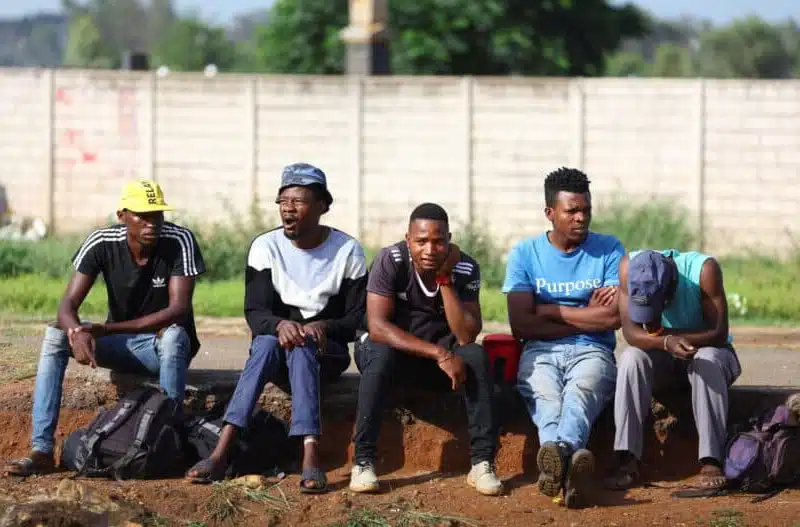

The message arrives like opportunity.
A job offer. Customer service. Sometimes crypto. Sometimes tech support. The pay is good, the process quick, the destination somewhere in Southeast Asia. For many young Africans trying to break through in a difficult job market, it feels like a chance worth taking.
Within weeks, travel is arranged. There is little time to question details. The urgency is part of the design.
By the time the journey ends, the job is gone.
So is the passport.
What is unfolding behind these stories is now being recognised as part of a growing Africa-Asia crime pipeline, a system linking recruitment in Africa to exploitation inside foreign criminal networks.
Where the Promise Breaks
Investigations across Myanmar, Cambodia and Laos show how the Africa-Asia crime pipeline operates once victims arrive.
They are taken to secured compounds where movement is restricted and activity is closely monitored. Inside, rows of workers sit behind screens, carrying out tasks that differ from the roles they were initially offered.
The work follows a fixed routine and continues for long hours. Victims are trained to build trust online, often over extended conversations, before introducing fraudulent financial schemes. Many of these operations revolve around cryptocurrency scams or relationship-based deception.
Failure is not an option. The system depends on output, and coercion enforces it.
When Victims Are Forced to Become Perpetrators
At the centre of the Africa-Asia crime pipeline is a shift in how exploitation occurs. Individuals are not only trafficked for labour. They are also drawn into criminal activity.
This is what authorities describe as forced criminality, and it complicates everything that follows.
When individuals are discovered inside these operations, they are often treated first as offenders. Only later does the question emerge about coercion and control. For many, that distinction comes too late.
The result is a system where some individuals leave the compound but remain caught in legal uncertainty.
A Pattern Stretching Back to Africa
What makes the Africa-Asia crime pipeline particularly difficult to confront is how quietly it begins.
Across Nigeria, Kenya and Ethiopia, recruitment often starts with a single message. The offer is framed as a legitimate overseas opportunity. The details are convincing enough to pass basic scrutiny.
Then the pace accelerates. Travel is arranged quickly. Questions are discouraged. By the time doubt sets in, the journey is already underway.
This recruitment pattern is now recognised as the entry point into the wider Africa-Asia crime pipeline.
Why This Is Now a Continental Concern
The growing scale of the Africa-Asia crime pipeline has prompted action from the African Union, which is now addressing trafficking for forced criminality at a high-level forum in Addis Ababa.
The shift reflects how the threat is now being more clearly understood. What was once treated as migration or isolated trafficking is now understood as a coordinated system connecting human exploitation to global cybercrime networks.
The pipeline connects recruitment networks, transport routes and criminal operations into a single chain that spans continents.
The System Behind the Stories
At the operational level, the Africa-Asia crime pipeline feeds into highly organised scam centres that function with industrial efficiency.
The compounds resemble corporate offices, but without freedom. Workers operate in shifts, targets are enforced, and surveillance is constant. These are controlled environments built to maximise output while suppressing resistance.
They are estimated to generate billions annually, placing them among the most profitable organised crime networks in the digital economy.
A Crisis Still Largely Unseen
Despite its scale, the Africa-Asia crime pipeline is still not widely seen.
Families often do not report missing relatives. Survivors may choose silence over exposure. The association with fraud creates stigma that obscures the reality of coercion.
As a result, the story is still emerging, even as the system expands.
What Is at Stake
Efforts now underway in Addis Ababa are expected to focus on cooperation, prevention and victim protection. At the centre of these discussions is the need to redefine how those caught in the Africa-Asia crime pipeline are treated.
Because the question remains unresolved.
When someone is forced into crime, who are they in the eyes of the law?
Until that answer becomes clear, the pipeline will continue to operate in the space between exploitation and accountability, drawing more people in through promises that disappear on arrival.


