



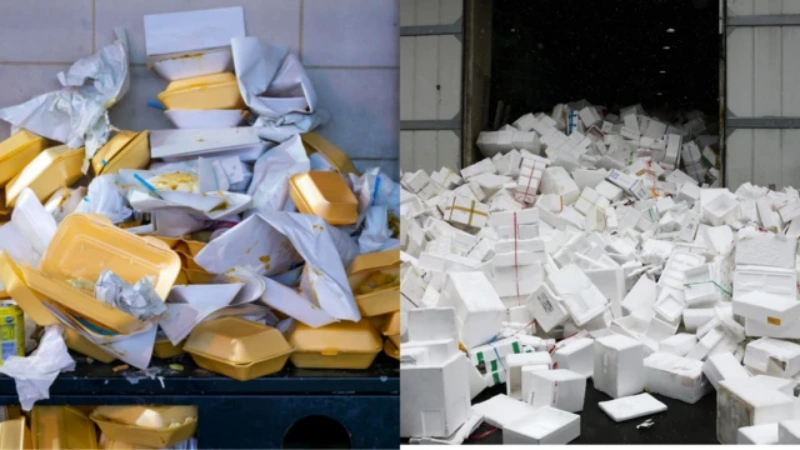

Ghana’s leading doctors’ body has told the government that banning Styrofoam alone will not solve the country’s plastic waste crisis, and that a ban on single-use plastics must go much further.
Professor Dr Ernest Yorke, President of the Ghana Medical Association, made the call at the association’s 26th Annual Public Lecture in Koforidua on Friday, 24 July. He said the planned phase-out of Styrofoam should be widened to capture all single-use plastics, not just food containers.
Speaking on the theme “Food Safety in Contemporary Ghana: Public Health Concerns for the Consumer,” Professor Yorke said choked drains and worsening floods in Ghanaian cities can be traced directly to plastic waste. “Plastic waste is a major contributor to choked drains, and this is obvious for all to see,” he told the Koforidua audience, according to the Ghanaian Times.
He argued that a wider ban would give Ghana a more complete answer to a waste management problem that has outgrown Styrofoam alone. The Ghana Medical Association now plans to petition the Minister of Environment, Science and Technology to press the case for expanding the restriction, GhanaWeb reported.
Ghana’s Environmental Protection Authority has already set January 2027 as the date for a nationwide Styrofoam ban, covering the production, importation, distribution, sale and use of foam takeaway packs, disposable cups and similar polystyrene products. Professor Yorke wants single-use plastics of every kind folded into that same timeline.
He also raised concern about thin plastic bags commonly used to serve hot food to Ghanaian consumers, warning that this packaging habit carries its own health risks alongside the wider environmental damage caused by plastic waste.
Beyond the ban itself, Professor Yorke called for stronger waste collection, wider recycling and tougher enforcement of environmental rules, saying any restriction on foam and plastic packaging only works if it is backed by systems that help people comply. He described food safety as a shared duty that stretches from farmers and food vendors to regulators and ordinary consumers, and said the same collective approach should apply to how the country handles its plastic waste.
Ghana’s move mirrors a broader continental shift away from single-use plastics. Ethiopia has already banned single-use plastic bags nationwide, while Egypt has extended its own plastic waste reduction programme, pushing full implementation into 2027, according to a report by Packaging Insights.
For Professor Yorke, the message to policymakers in Accra is straightforward. A partial ban limited to Styrofoam leaves too many single-use plastics untouched, and Ghana’s flooding and sanitation problems will persist until that gap is closed.


