



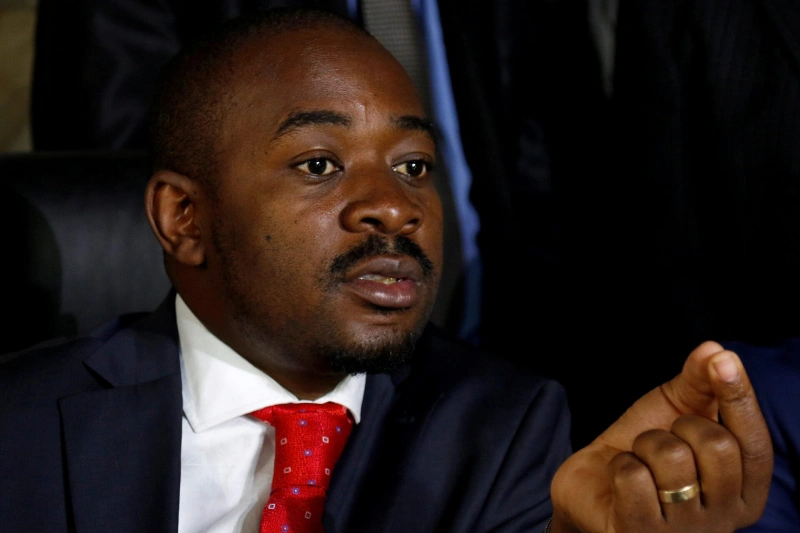

Former Citizens Coalition for Change leader Nelson Chamisa has dismissed the Chamisa bribery claims alleging he was paid by Zanu-PF to stay quiet on the Constitutional Amendment Bill No. 3, the law that has extended President Emmerson Mnangagwa’s rule to 2030.
Chamisa made the denial in an interview with Zimbabwean journalist Blessed Mhlanga, published this week during the opposition figure’s visit to the United Kingdom. He said the Chamisa bribery claims were manufactured by detractors trying to separate him from his supporters.
“Who has been fighting against its enactment, and to what extent did they succeed? And how have I fought them?” Chamisa said, referring to his opposition to the constitutional changes. He added that people should be wary of what he called failed politicians selling “soiled propaganda” about him.
The Chamisa bribery claims are not new. Critics, including activist Jealousy Mawarire, have for months suggested that Mnangagwa’s administration compromised Chamisa and that his relative silence on CAB3 pointed to a quiet understanding with Zanu-PF. Chamisa’s former spokesperson, Nkululeko Sibanda, dismissed those claims in May as speculative and unsupported by evidence.
Chamisa used the interview to challenge anyone to name an opposition figure who has defeated Mnangagwa more convincingly than he has. He pointed to his showing against the incumbent in the 2018 and 2023 elections, arguing that his record makes the Chamisa bribery claims illogical.
Political observers in Harare say the Chamisa bribery claims reflect wider tension inside the opposition over how to respond to CAB3, rather than confirmed evidence of any payoff.
“And the man I defeated, and the man who has taken everything away from me, is the man I have sold out to?” he said. “My record speaks for itself. That’s why people have confidence in us. They know that we are consistent.”
He also invoked a Shona idiom to stress that any payoff from the ruling party would not stay hidden. “Zanu haidyirwi musaga seshuga,” he said, meaning Zanu-PF does not reward loyalty quietly. “When Zanu bribes you, they will advertise you.”
CAB3 cleared the National Assembly on 18 June by 216 votes to 42, comfortably above the two-thirds threshold, before the Senate passed it on 24 June by 75 votes to four. Mnangagwa recalled Parliament from recess for an extraordinary sitting on 30 June, where MPs adopted the Senate’s amendments by 226 votes to 41. He assented to the Bill on 7 July, and it was gazetted as Act No. 6 of 2026.
The law replaces the direct election of the president with a vote by Parliament sitting jointly with the Senate. It also extends presidential, parliamentary and local authority terms from five to seven years, pushing Mnangagwa’s exit from the scheduled 2028 to 2030.
Government ministers have defended the changes as a way to reduce what they describe as election-related toxicity and to give development programmes more time to mature. Opposition parties, civil society groups and some constitutional lawyers argued that altering presidential term limits touches entrenched clauses that require a referendum under section 328 of the Constitution, a position the Attorney-General’s office rejected.
Chamisa has publicly opposed CAB3 at various points, describing it in June as something Zimbabweans, not Parliament, would ultimately decide on. Even so, 35 opposition MPs voted alongside Zanu-PF to help the Bill through its first major hurdle in the National Assembly, a fact critics have cited when renewing the Chamisa bribery claims and questioning the coherence of opposition resistance to the amendment.
Zanu-PF figure Killer Zivhu also weighed in earlier this year, rejecting the Chamisa bribery claims and describing Chamisa as financially self-reliant. Zivhu said Chamisa runs his own business and had no reason to accept favours from the party he has spent years opposing.
The latest denial comes as opposition circles continue to debate strategy following CAB3’s passage into law. Chamisa’s supporters argue that his three decades of resistance to Zanu-PF, including two presidential election defeats of Mnangagwa, undercut the Chamisa bribery claims levelled against him during the most consequential legislative fight of Mnangagwa’s second term.


