



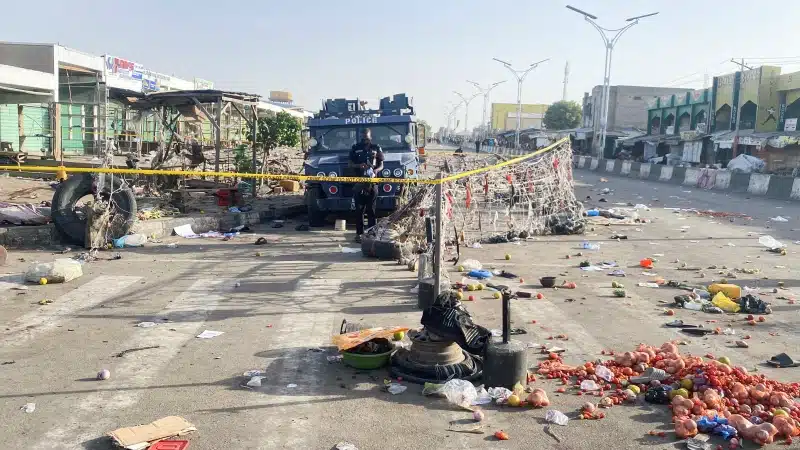

Civilian casualties mount as coordinated blasts expose gaps in city security
A new briefing from Human Rights Watch is drawing attention to the growing impact of the recent Maiduguri bombing, where the death toll has now risen to at least 27, with more than 140 people injured.
The attack, which took place on March 16, has unsettled what many residents had begun to see as a period of relative calm in Maiduguri. The most significant thing about the attack is not just the number of casualties, but how the incident unfolded.
Blasts Hit Crowded Civilian Areas
Witness accounts and emergency reports point to explosions occurring within minutes of each other at three busy locations:
- University of Maiduguri Teaching Hospital entrance
- Monday Market Maiduguri
- Post Office Flyover Maiduguri
The timing was difficult to ignore. It was around Iftar, when people were gathering to break their fast and traders were closing for the evening.
That detail alone suggests the attackers were not acting randomly. The goal appears to have been to catch civilians at their most exposed moment.
A Pattern That Is Hard to Dismiss
For some time, large attacks inside Maiduguri had become less frequent, even though insecurity never fully disappeared from the wider region.
This latest Maiduguri bombing is now being seen alongside a December 2025 explosion at Gamboru Market. Taken together, the incidents are starting to look less like isolated events and more like a gradual return to city-based attacks.
There are also growing concerns that those behind the violence have found ways to move back into urban areas without drawing early detection.
Civilian Safety Back in Focus
In its assessment, Human Rights Watch described the attack as indiscriminate and warned that civilians remain highly vulnerable.
Researcher Anietie Ewang noted that official claims about the insurgency being under control do not fully reflect conditions on the ground. For many residents, the sense of safety appears fragile.
The group is calling for more practical steps, including better communication with communities and stronger safeguards around places where civilians gather daily.
Signs of Renewed Capability
Attention has also turned to the group believed to be behind the attack, Boko Haram.
Security observers say a faction linked to Jama’atu Ahlis Sunna Lidda’awati wal-Jihad may be regaining operational rhythm. Striking several locations within minutes is hard to pull off without some level of coordination. It suggests planning, timing, and a degree of familiarity with the city that goes beyond guesswork.
Government Response Under Watch
In the aftermath, Bola Tinubu directed senior security officials to move to Maiduguri and oversee the response.
The move shows urgency, but it also brings up familiar questions about how fast these directives actually translate into visible changes.
For many residents, this kind of response is not new, and past experiences have been mixed.
Pressure on an Already Fragile Situation
Beyond the immediate damage, the Maiduguri bombing is likely to add to the challenges people are already facing across the northeast.
Millions of people in the region already depend on humanitarian support, and renewed attacks in urban areas could make aid delivery more complicated and unpredictable.
For families already living on the edge, even small disruptions can have lasting effects.
A Conflict Evolving, Not Ending
The Maiduguri bombing does not fit neatly into the idea of a conflict that is winding down.
If anything, it suggests something more fluid.
Looking at the scale of the attack, the locations targeted, and the timing, it feels less like a group fading out and more like one adjusting how it operates.
For now, the bigger concern is whether this remains a single incident or the start of a wider return to urban attacks.


