




By AfricanQuarters Newsdesk
A global energy shock triggered by escalating tensions involving Iran is beginning to reshape Africa’s economic outlook in ways that go far beyond fuel prices. What is now emerging is a full-scale Africa food security crisis, as disruptions in energy supply begin to affect agriculture, food production and household stability across the continent.
At the centre of this unfolding risk is the disruption of energy flows through the Strait of Hormuz, a critical artery for both oil and fertiliser exports. According to the International Energy Agency, the current situation represents one of the most severe energy security challenges in modern history. For Africa, the implications are increasingly visible in food systems.
The Link Between Energy Shock and Africa Food Security Crisis
The connection between fuel and food is often underestimated. Modern agriculture depends heavily on energy at nearly every stage of production.
Fertiliser production, especially nitrogen-based inputs, depends heavily on natural gas. When energy supply is disrupted, prices tend to rise quickly. In the current crisis, global fertiliser costs have already climbed by more than 30 percent, with supply chains tightening due to reduced exports from the Persian Gulf.
For African economies, this presents a structural vulnerability. Many countries depend on imported fertilisers, and even modest price increases can significantly reduce usage among farmers. This is how an energy disruption evolves into an Africa food security crisis.
The chain reaction is clear. Energy disruption leads to fertiliser shortages. Fertiliser shortages reduce agricultural output. Lower output drives food inflation across both rural and urban markets.
Why Africa Is Highly Exposed
Africa’s exposure to this crisis is shaped by three key factors.
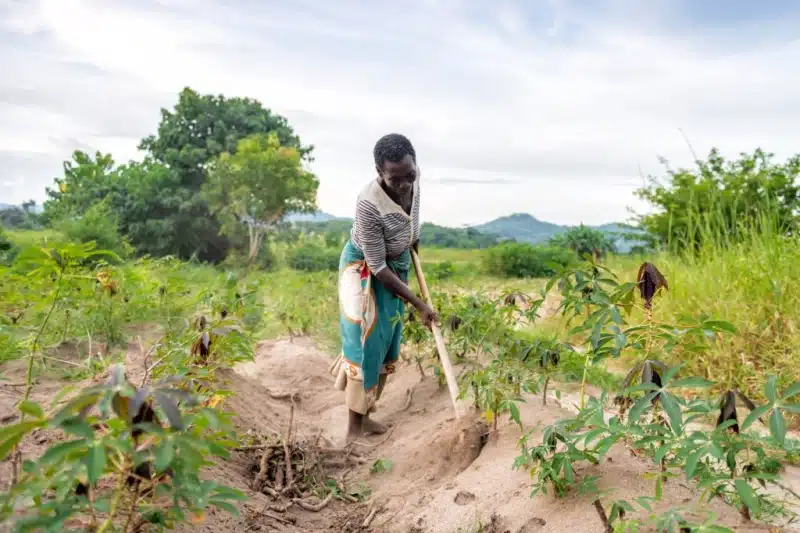
Fertiliser imports still carry much of the burden across the continent, with local production unable to close the gap and distribution systems often under strain. For many smallholder farmers, rising input costs are already leading to lower fertiliser use. When prices increase, fertiliser is often one of the first inputs to be reduced.
Government support provides only partial relief. With tight fiscal space, subsidies are difficult to maintain when prices climb. As a result, external shocks are already showing up in local markets, adding pressure to what is becoming an Africa food security crisis.
Early Warning Signs Across Regions
Across East Africa, fuel is being rationed in countries such as Kenya and Ethiopia, with supplies directed toward essential services. That has helped avoid immediate disruption, but it is also leaving gaps elsewhere, including in agricultural supply chains.
Elsewhere in the Horn of Africa, higher transport costs are raising the price of moving food from rural areas into cities. The impact is showing up in market prices, where basic staples are becoming more expensive.
West Africa presents a different picture. In Nigeria, higher crude prices have not translated into relief at home, as the cost of imported refined fuel continues to rise. According to PwC, this dynamic could impact on economic growth and add further pressure to food prices.
The Fertiliser Bottleneck and Timing Risk
One of the most critical risks lies in fertiliser supply disruption linked to the Gulf region. About 20 percent of global fertiliser exports move through this corridor, so any prolonged disruption would have far-reaching effects.
For African farmers, timing is critical. If fertiliser becomes too expensive or unavailable during key planting periods, the effects will be seen later in 2026 during harvest.
By that stage, lower yields and reduced supply may already be in place, adding pressure to the Africa food security crisis.
Inflation and Household Pressure
The Africa food security crisis is also tied to rising inflation.
Higher fuel prices are pushing up transport costs, and that is feeding directly into food prices across supply chains. Urban households, which depend largely on market purchases, are feeling the impact first.
In many cities, the combined rise in fuel and food costs is already reducing purchasing power. Thus, adding pressure on household budgets and increasing the risk of social tension in vulnerable areas.
A Crisis Still Unfolding
How this develops will be shaped by the duration of disruptions in global energy supply.
If constraints linked to the Gulf extend into the second quarter of 2026, pressure on fertiliser supply, agricultural output and food prices will increase.
For Africa, the current fuel shock is only one part of a broader economic strain.
Rethinking Food and Energy Systems
The crisis is also pushing a stronger focus on resilience.
In several countries, attention is turning to local fertiliser production and more reliable supply chains, as dependence on imports becomes harder to sustain.
Higher diesel costs are also pushing some farmers and businesses to look at alternatives such as solar-powered irrigation and processing.
These adjustments may help over time, but they do little to ease the immediate pressure linked to the Africa food security crisis.
The current global energy disruption is no longer just a fuel story. It is evolving into a full-scale Africa food security crisis with far-reaching implications.
The pressure on petrol prices is only the first layer. Beneath it lies a deeper challenge affecting agriculture, food supply and household stability across the continent.
As the situation develops, the key issue is not only how long the energy shock will last, but how deeply it will reshape Africa’s food systems in the months ahead.


