



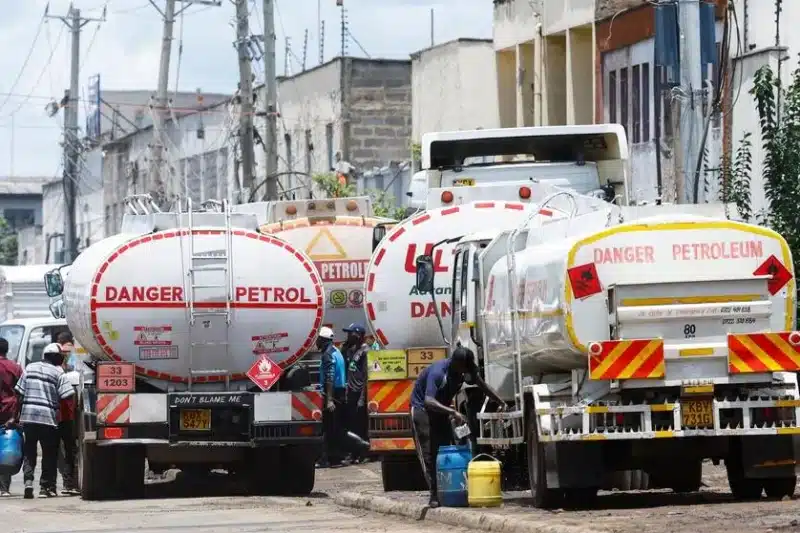

Kenya’s government has extended the 8% VAT on petroleum products for a further three months, pushing the reduced rate’s expiry from 14 July to 14 October 2026. Energy and Petroleum Cabinet Secretary Opiyo Wandayi announced the extension on Tuesday, saying the decision followed consultations with the National Treasury.
Opiyo Wandayi said the extension is meant to shield households, businesses and the wider economy from volatility linked to the Middle East, where disruptions in the Gulf region have unsettled international oil markets, according to a ministry statement reported by CNBC Africa.
Alongside the 8% VAT on petroleum products, the government will deploy KSh945 million (about $7.31 million) from the Petroleum Development Levy during the July to August 2026 pricing cycle to help sustain current pump prices, Wandayi said, as reported by The Kenya Times.
The reduced rate was first introduced in April 2026, when the government cut VAT on petrol, diesel and kerosene from 16% to 8% after crude oil prices surged during the conflict involving the United States, Israel and Iran, Reuters reported. Kenya sources almost all its petroleum through government-to-government supply agreements with Gulf countries, which leaves domestic pump prices highly exposed to shocks in that region, the ministry noted.
According to a report by The Star, continuing disruptions in the Gulf, including attacks on commercial vessels and reduced tanker traffic through the Strait of Hormuz, have unsettled global energy markets and pushed up freight and insurance costs for importers relying on open tenders. Kenya’s G2G arrangement, Wandayi said, has allowed the country to keep paying fixed freight and premium costs, helping to keep landed fuel costs under control even as benchmark prices fluctuate.
Under Kenya’s VAT Act, the Treasury Cabinet Secretary has the legal discretion to extend the 8% VAT on petroleum products for a further 90 days where fuel prices remain unfavourable at the expiry of the initial window, according to an analysis by Grant Thornton Kenya. That built-in extension mechanism is what has allowed Tuesday’s move without fresh parliamentary approval.
The Star also reported that the government has hinted at possible fuel price hikes in upcoming pricing reviews, even as it works to cushion consumers through the extended 8% VAT on petroleum products and the fresh subsidy. Wandayi maintained that fuel supplies across the country remain stable and that motorists, public transport operators, manufacturers, farmers and businesses can expect continued availability despite the external pressures.
The extension of the 8% VAT on petroleum products keeps Kenya’s fuel tax relief in place for a second consecutive quarter, underlining how exposed the country’s pump prices remain to events far beyond its borders.


