




Three people are dead. Nearly 150 passengers and crew remain trapped at sea as the Hantavirus Cruise Ship crisis leaves the vessel stranded off West Africa, exposing a deep medical emergency and a regional response gap.
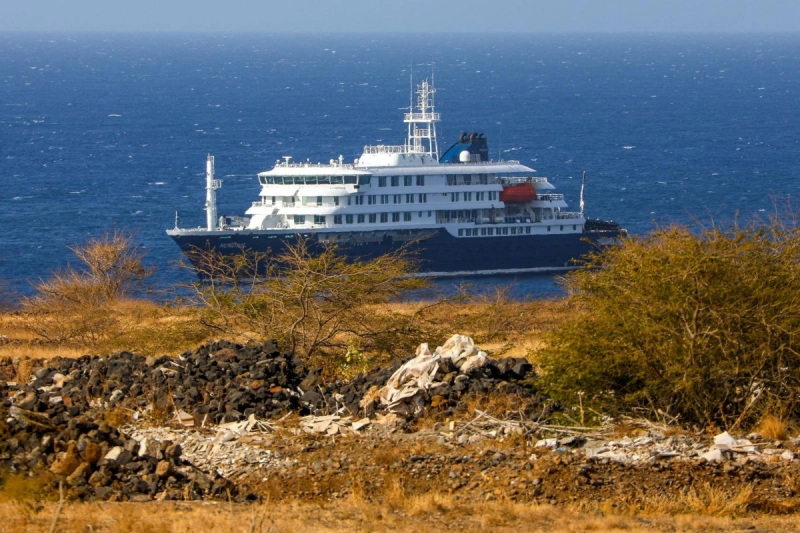
The MV Hondius, a Dutch-flagged expedition vessel operated by tour company Oceanwide Expeditions, sits anchored off Praia, the capital of Cape Verde, unable to dock and unable to leave. What began as a luxury Antarctic cruise has become a slow-motion medical catastrophe playing out in full view of the world.
Hantavirus Cruise Ship Crisis: How a Dream Voyage Turned Into a Nightmare
The MV Hondius left Ushuaia, Argentina, last month on a journey through remote parts of the Atlantic Ocean. Along the way, several passengers became sick with a rapidly progressing respiratory illness.
The cruise visited the Antarctic peninsula and South Georgia and Tristan da Cunha, some of the remotest islands on the planet. The voyage was marketed as an Antarctic nature expedition, with berth prices ranging from €14,000 to €22,000.
Nobody expected a virus to come along for the ride.
The first suspected case was a 70-year-old Dutchman who fell ill with fever, headache, abdominal pain and diarrhoea. He died on board on 11 April after going into respiratory distress marking the beginning of the Hantavirus Cruise Ship crisis. His wife, aged 69, was taken to South Africa, where she collapsed at an airport and died on 26 April. She tested positive for a variant of hantavirus.
Dutch charity Namens de Familie conveyed the family’s words: “The beautiful journey they experienced together was abruptly and permanently cut short.”
What Hantavirus Does to the Human Body
Hantavirus is not a household name. That is partly why this hantavirus cruise ship crisis has shocked the medical world.
Humans most commonly become infected through contact with rodents such as rats and mice, especially with their urine, droppings and saliva, according to the Centers for Disease Control and Prevention.
The infection leads blood vessels to become leaky, causing the lungs to fill with fluid and the heart to lose its capacity to pump enough blood through the body. There is no cure. Only supportive care can improve a patient’s chances.
What makes this outbreak particularly unsettling is the ship’s point of origin. Just one type of hantavirus, the Andes virus, is known to be able to transmit from person to person, though it remains rare. It is primarily found in Chile and Argentina, where the ship originated.
The Numbers: Seven Cases, Three Dead
On 2 May 2026, a cluster of passengers with severe respiratory illness aboard the vessel was reported to the World Health Organization. As of 4 May, seven cases had been identified, including two laboratory-confirmed cases of hantavirus and five suspected cases, three deaths, one critically ill patient and three individuals reporting mild symptoms.
One person, a British national, is in an intensive care unit in Johannesburg, South Africa. South Africa’s National Institute for Communicable Diseases confirmed his infection through PCR testing.
The WHO’s Dr Maria Van Kerkhove, director for epidemic and pandemic preparedness, flagged the possibility of human-to-human spread. She told reporters: “We do know that some of the cases had very close contact with each other and certainly human-to-human transmission can’t be ruled out, so as a precaution this is what we are assuming.”
Yet she was equally clear that the wider public faced no danger. “This is not a virus that spreads like flu or like COVID. It’s quite different,” she said.
Cape Verde’s Dilemma: Compassion vs. Capacity
When the hantavirus cruise ship reached Cape Verde, it found a country facing an impossible choice.
Cape Verde said it had decided not to let the vessel dock at the port of Praia as a precautionary measure.
The WHO made the limitations plain. Cape Verde “lacks the capacity to carry out this operation,” the WHO said, noting that the Canary Islands were the closest location with the necessary capabilities.
That sentence should prompt deep discomfort across the continent.
Cape Verde is not unique in its predicament. Africa’s health sector is facing an unprecedented financing crisis, driven by a sharp decline of 70% in Official Development Assistance from 2021 to 2025 and deep-rooted structural vulnerabilities, according to Africa CDC. Those cuts carry real consequences when emergencies arrive unannounced off a coastline.
Spain Steps In Where Africa Could Not
The Spanish government said Tuesday that it would receive the cruise ship at one of its ports in the Canary Islands, with the vessel and those on board beginning a three to four-day journey there.
The Spanish Health Ministry explained its reasoning bluntly. Spain had “a moral and legal obligation to assist these people, among whom are several Spanish citizens,” it said.
The Spanish Health Ministry said it had been asked by the World Health Organization and the European Union to take the MV Hondius “in accordance with international law and humanitarian principles.”
Cape Verde’s National Director of Health Angela Gomes said evacuations would happen “in the coming hours,” with two air ambulances arranged to assist. Three patients were to be flown to the Netherlands for specialised care, while the remaining passengers would sail on to the Canary Islands aboard the hantavirus cruise ship.
Africa CDC Is Watching. But Watching Is Not Enough
The African Union’s public health arm has not been silent on the hantavirus cruise ship crisis.
Africa CDC said it was closely monitoring the Hantavirus Cruise Ship crisis, alongside reports of the hantavirus cluster among individuals travelling on the MV Hondius. It confirmed that laboratory analysis had been conducted at the National Institute for Communicable Diseases in South Africa, with further analyses including serology, sequencing and metagenomics ongoing.
Africa CDC noted that the clustering of cases among travellers in a confined environment warranted heightened vigilance and further investigation to determine the source and mode of exposure.
Yet monitoring is not the same as responding. European governments coordinated the evacuation. European aircraft carried the ill. A European port will receive the ship. That sequence reflects a capacity gap no press statement from Addis Ababa can paper over.
The Human Cost: Voices From Inside
Passengers on the hantavirus cruise ship crisis have not stayed quiet. Travel vlogger Jake Rosmarin, speaking from quarantine aboard the ship, posted a video on Instagram that put a human face on the standoff.
“All we want right now is to feel safe, to have clarity, and to get home,” he said.
In a separate message he added: “We’re people, people with families, with lives, with people waiting for us at home. There’s a lot of uncertainty, and that’s the hardest part.”
The WHO’s Ann Lindstrand, its representative in Cape Verde, told CBS News she was in touch with a volunteer doctor on board who reported that passengers were “coping surprisingly well,” though they were anxious to know their next port of call.
She also cautioned that if full quarantine were required, it could stretch as long as two months, given that the incubation period for hantavirus runs from one to eight weeks.
A Mirror Held Up to the Continent
The hantavirus cruise ship crisis story is not just a maritime emergency. It is a mirror held up to Africa’s structural vulnerabilities and the brutal arithmetic of health financing on a continent still dependent on outside goodwill.
Researchers note there is no established protocol for people who have been exposed to hantavirus, raising complex questions about how long to quarantine passengers and crew.
WHO Regional Director for Europe Hans Kluge said there was “no need for panic or travel restrictions.”
That may settle nerves in European capitals. On Africa’s western edge, where a nation watched a plague ship anchor off its shores and had no choice but to turn it away, the unease runs deeper.
It is less about the virus and more about what this moment reveals: that when disaster like the Hantavirus Cruise Ship crisis calls, Africa still reaches for someone else’s telephone.
This report draws on statements from the World Health Organization, Africa CDC, Oceanwide Expeditions, Spain’s Health Ministry and the Dutch charity Namens de Familie.


