




The Republic of Congo will scrap visa requirements for every African national from 1 January 2027, in one of the most pointed calls yet for the continent to get serious about free movement.
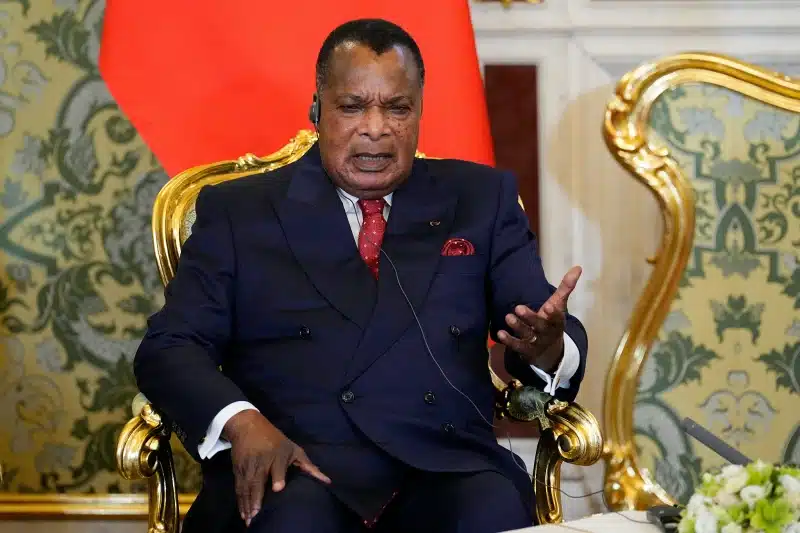
President Denis Sassou Nguesso made the declaration on 25 May during the 2026 Annual Meetings of the African Development Bank, held in Brazzaville to coincide with Africa Day celebrations, describing visa-free travel in Africa as essential to the continent’s economic future.
“Entry into the Republic of Congo will no longer require a visa for all African nationals,” Sassou Nguesso told African heads of state and delegates gathered at the summit.
He urged governments across the continent to move beyond what he called “selfishness and narrow nationalism.” He framed visa-free travel in Africa as inseparable from the goals of the African Continental Free Trade Area, known as AfCFTA, describing it as one of the key pillars for accelerating economic integration and intra-African exchange.
The AfCFTA aims to bind 54 countries into a single market of more than 1.4 billion people. But analysts have long argued the project cannot reach its potential while Africans struggle to move freely within their own continent.
According to the African Development Bank’s Africa Visa Openness Index, only 28.2 per cent of intra-African travel routes were visa-free by the end of 2025.
A High-Level Symposium co-convened by the African Development Bank and the African Union Commission earlier this year found that more than half of intra-African travel still requires visas before departure, a situation participants described as a significant drag on intra-continental commerce.
Participants at that symposium framed mobility as the missing link in Africa’s integration agenda. Arguing that while tariffs are falling under AfCFTA, restrictive visa regimes continue to limit trade in services, investment flows, tourism, and labour mobility.
Analysts say visa-free travel in Africa could become one of the defining economic reforms of the AfCFTA era if governments follow through on implementation.
For decades, the contradiction has been glaring. Restrictive visa regimes have been one of the biggest barriers to mobility within Africa, often making it easier for Africans to travel to Europe than to neighbouring countries.
That reality has made visa-free travel in Africa a political test as much as a policy question. Countries that act are increasingly seen as serious about integration. Those that do not are becoming harder to defend at continental forums.
Congo’s announcement adds Brazzaville to a small but growing list of countries betting that openness pays off.
Congo follows the path already taken by Benin, Togo, Rwanda, Ghana, Seychelles and The Gambia, all of which have adopted policies allowing Africans to enter without visas.
Rwanda’s open-door policies have served as an influential model, boosting tourism revenues substantially despite the country being landlocked. Ghana’s Trade and Industry Minister Elizabeth Ofosu-Adjare has also reported early gains from her country’s reforms, citing increased business travel and heightened interest from investors across Africa.
The push for visa-free travel in Africa has been gathering pace at the institutional level too. Former African Union Commission Chairperson Nkosazana Dlamini-Zuma has reiterated that free movement is central to the African Union’s long-term blueprint, Agenda 2063.
Ethiopian Airlines chief executive Mesfin Bekele has called for full implementation of the Single African Air Transport Market alongside visa liberalisation, arguing that aviation connectivity and open borders must advance together to enable seamless travel.
Congo’s geographic position in Central Africa, a region that has historically lagged behind East Africa in integration efforts, gives the announcement added weight. A genuine opening of Brazzaville and Pointe-Noire could pull Central Africa into a continental trend its neighbours have been slow to join.
The announcement also lands at a moment when the case for visa-free travel in Africa is being made in hard numbers. Intra-African trade currently accounts for only 13 per cent of the continent’s total trade, a figure analysts say will remain stubbornly low without freer movement of the people who conduct it.
Whether Congo’s policy lives up to its billing will depend entirely on execution. Achieving a visa-free Africa will require aligned migration policies, digital identity systems, stronger border infrastructure, and sustained political commitment, participants at this year’s symposium concluded.
Even countries that announce open-border policies sometimes retain expensive electronic authorisations or drawn-out airport procedures that defeat the purpose. Congo will need to close that gap.
The real test of visa-free travel in Africa has never been the announcement. It has always been what happens at the border.


