



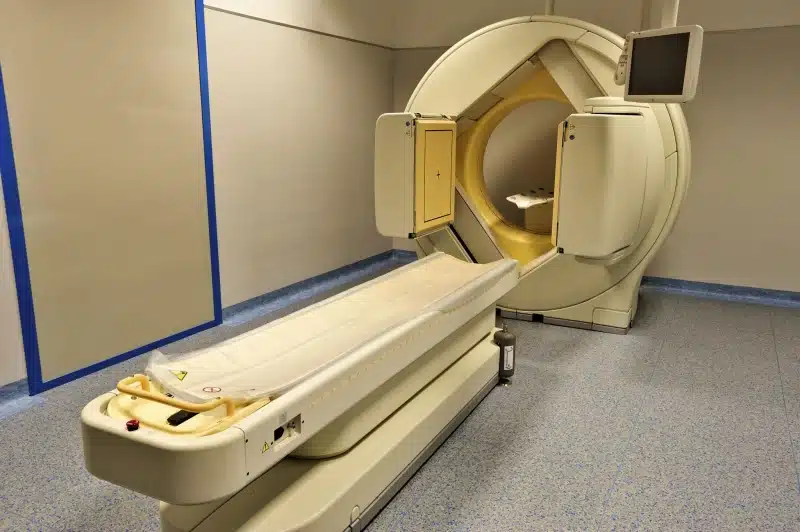

Abidjan has inaugurated a landmark oncology facility, raising hopes that patients across the sub-region will no longer have to travel to Europe for cancer diagnosis
Côte d’Ivoire has opened what is being described as West Africa’s first fully equipped nuclear medicine centre, positioning the new West Africa nuclear medicine centre as a major shift. A development that medical officials say could fundamentally reshape how cancer is detected and treated across the sub-region.
The facility, located in Abidjan and developed in partnership with the European Cancer Institute, brings together positron emission tomography (PET) imaging and cyclotron technology under one roof. It is the first time such a combination has existed anywhere in West Africa, according to project officials involved in the launch.
For years, patients across the region requiring advanced oncology diagnostics have had little choice but to travel abroad, most often to Europe or North America, at considerable personal expense. The new West Africa nuclear medicine centre is designed specifically to break that cycle.
“This facility isn’t just about Côte d’Ivoire; it’s about regional sovereignty in healthcare,” officials stated during proceedings that included the participation of First Lady Dominique Ouattara.
What the technology actually does
At the core of the centre is a cyclotron, a particle accelerator that produces radioactive isotopes on-site. Many of these isotopes have half-lives measured in minutes, making importation from abroad essentially impractical. Producing them locally is therefore not a technical preference but an operational necessity.
Paired with the cyclotron is a PET scanner, widely regarded as the gold standard for detecting cancer at the molecular level. PET imaging can identify tumours before they become visible on conventional CT or MRI scans, giving clinicians a critical early-detection advantage, particularly for breast, prostate, and lung cancers.
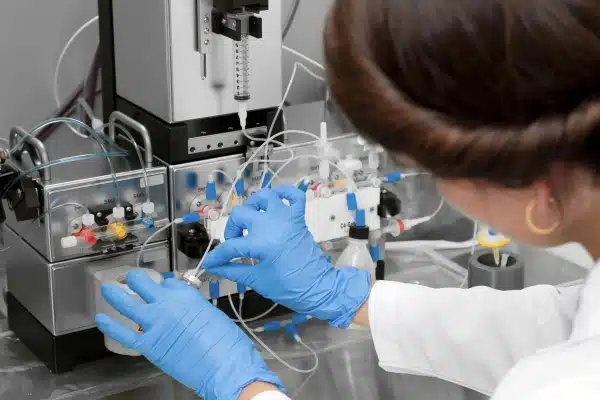
The West Africa nuclear medicine centre also sits alongside the existing Alassane Ouattara National Radiotherapy Center (CNRAO), creating what amounts to a complete oncology pipeline in Abidjan: diagnosis, staging, and treatment within a single integrated system.
A decade in the making
The launch did not come without groundwork. Côte d’Ivoire’s investment in nuclear medicine stretches back nearly a decade, with a trajectory that tracks closely with frameworks supported by the International Atomic Energy Agency (IAEA).
The country opened its first radiotherapy centre in 2017. In 2024, it launched the Abidjan Institute of Nuclear Medicine (IMENA), which recorded more than 500 scintigraphy examinations within its first six months of operation. The 2026 integration of PET and cyclotron technology represents the third and most advanced phase of that strategy.
Regional ambitions of the West Africa nuclear medicine centre
Officials say the West Africa nuclear medicine centre is not intended to serve Côte d’Ivoire alone. Abidjan is being positioned as a potential referral destination for patients from neighbouring countries, including Ghana, Burkina Faso, Mali, Guinea, Liberia, and Sierra Leone, all of which currently lack equivalent infrastructure.
The economic logic runs in two directions. For patients, localising advanced diagnostics sharply reduces the cost of care compared with overseas treatment. For Côte d’Ivoire, attracting medical visitors from across the sub-region represents a reversal of the long-standing trend of exporting patients and foreign currency abroad.
The facility will also require a specialised workforce, including nuclear physicians, medical physicists, and radiopharmacists, creating a category of high-skill employment that has not previously existed at scale in the country.
Challenges that remain
Officials and observers have been candid about the obstacles ahead. Staffing the West Africa nuclear medicine centre with trained specialists will take time; the pipeline for nuclear medicine professionals across the continent remains thin. Equipment maintenance costs are high, and the regulatory requirements around radioactive materials are exacting. There are also legitimate questions about how accessible the facility will be to patients outside the upper-income bracket.
Those questions will determine whether the centre proves to be a transformational shift in regional healthcare or a well-intentioned but narrow service for the few.
What is not in question is the scale of what has been built. As the first West Africa nuclear medicine centre of its kind, Abidjan now holds a position no other city in the sub-region has held before.


