



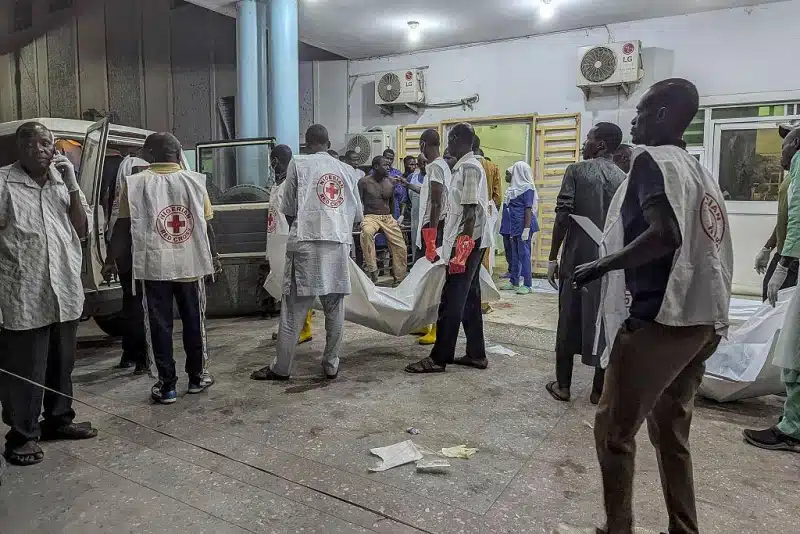

The Borno-Yobe Border Market Bombing has left dozens of civilians dead after a Nigerian Air Force airstrike struck a weekly market in northeast Nigeria, according to local officials and eyewitness accounts.
The incident occurred on Saturday, April 11, 2026, at the Jilli weekly market in Fichimaram Ward, a rural trading centre connecting communities in Gubio Local Government Area of Borno State and Geidam Local Government Area of Yobe State.
Strike Hits Market at Peak Trading Hours
Residents say the market was at its busiest when the strike occurred at about 2:46 p.m., with traders arriving from surrounding areas including Benisheikh, Chiweram, and Gurokayeya.
Multiple eyewitnesses told Daily Trust that fighter jets flew over the area before bombs were dropped on the market.
One witness said:
“We were in the market buying and selling when we heard the sound of aircraft. Before we could react, bombs started falling. Many people died instantly.”
Another resident who helped with rescue efforts said he personally counted dozens of bodies at the scene:
“I counted 56 bodies myself while helping to move the injured.”
Survivors described confusion as people tried to leave the area, with some reporting additional strikes after the initial explosion.
Target Was Insurgents, but Civilians Were Hit
The Borno-Yobe Border Market Bombing is believed to have resulted from an airstrike targeting fighters linked to Boko Haram and ISWAP.
Security sources and local officials say intelligence indicated that armed groups were operating in or around the market area, possibly collecting levies from traders or regrouping after earlier engagements.
The strike formed part of ongoing military operations under Operation Hadin Kai, which focuses on air and ground activity across the Lake Chad region.
Local accounts indicate the strike did not hit its intended location and instead impacted the market area.
Casualty Figures Remain Uncertain
The full scale of the Borno-Yobe Border Market Bombing is still emerging, with casualty figures varying across sources.
- An eyewitness cited by Daily Trust reported at least 56 people killed
- Local councillor Lawan Zannah confirmed more than 30 deaths and over 20 injured
- In comments reported by Reuters, Zannah described the incident as “very devastating” and said more than 200 people were feared dead.
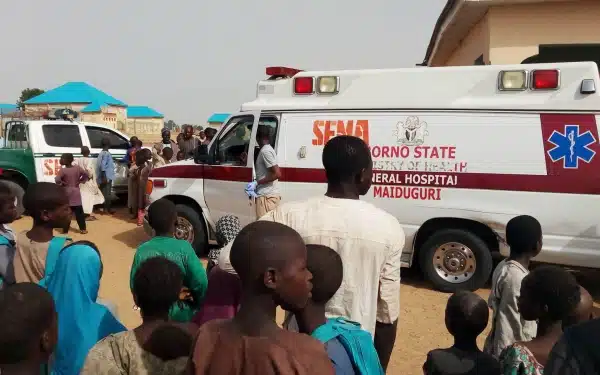
Several of the injured were taken to Geidam Specialist Hospital, while others were referred to facilities in Damaturu. Medical workers reported that some later died from their injuries.
At this stage, only partial counts have been verified, and recovery efforts are ongoing.
Military Confirms Operation
The Nigerian Air Force acknowledged carrying out operations in the Jilli axis but did not confirm civilian casualties linked to the Borno-Yobe Border Market Bombing.
NAF spokesperson Ehimen Ejodame said the mission was based on credible intelligence and targeted insurgents attempting to regroup after earlier engagements.
According to the statement, the operation neutralised fighters, destroyed suspected hideouts, and disrupted movement in the area.
There was no direct mention of the market strike or civilian deaths.
Yobe State authorities confirmed that traders from Geidam LGA were affected and that emergency services were deployed, but they deferred further clarification to Borno State officials, since the market lies within Borno territory.
Growing Calls for Accountability
The Borno-Yobe Border Market Bombing has triggered public reaction and renewed scrutiny of Nigeria’s air operations in civilian areas.
Former Vice President Atiku Abubakar and several civil society groups have called for a full investigation into the incident, as well as improved accountability in military operations.
For many residents, the incident reflects ongoing concerns about operating in areas where security activity and civilian life intersect.
A Recurring Risk in the Northeast
The situation in northeast Nigeria has persisted for over a decade, with air operations used more frequently in recent years.
The Borno-Yobe Border Market Bombing has brought attention to challenges associated with identifying groups in shared spaces, working with time-sensitive information, and managing activity around local economic centres.
In communities such as Jilli, local markets remain a central part of daily life.
As of the time of reporting, casualty figures and details of how the operation unfolded remain incomplete.
The Borno-Yobe Border Market Bombing is still developing.


