




Artificial intelligence is now driving more than half of all cybercrime recorded across Africa, according to a new report by INTERPOL. The African Cyberthreat Assessment Report 2026, released this week, found that AI-driven cybercrime accounts for 55 per cent of reported cases on the continent.
The 40-page assessment draws on survey data from 36 African member countries, INTERPOL said. It described a shift from isolated incidents to an industrialised, borderless criminal ecosystem.
Africa recorded more than 1.1 billion mobile subscribers in 2025. That rapid digital growth has widened the space for AI-driven cybercrime to thrive, even as cybercrime laws across the continent remain fragmented, the report noted.
Financial losses tied to cybercrime have more than doubled since 2024. INTERPOL said losses climbed from 192 million dollars to 484 million dollars, driven mainly by AI-facilitated scams, credential harvesting and automated social engineering.
East Africa has become a hotspot for AI-driven cybercrime targeting mobile money platforms, the report found. INTERPOL linked the region to a surge in mobile money fraud and ransomware attacks aimed at infrastructure.
Central and West Africa saw high rates of business email compromise and romance scams, according to the report. Southern Africa’s strong connectivity has also made it attractive to global threat actors seeking maximum disruption, INTERPOL said.
Online scams remained the most reported form of cybercrime in 2025. Criminals used mobile money platforms, social media and artificial intelligence to reach victims, the report stated. Scam centres were confirmed in 72 per cent of surveyed countries, with the highest concentration recorded in Southern and West Africa. Analysts say the scale of AI-driven cybercrime is now outpacing the capacity of many national cyber units to respond.
AI-driven cybercrime has also fuelled a rise in digital sextortion and online harassment. TrendAI, one of INTERPOL’s private sector partners, recorded around 600,000 sextortion detections linked to AI-generated deepfakes and synthetic media, the report said.
Business email compromise schemes have grown more convincing as criminals use AI to draft persuasive correspondence, INTERPOL found. Africa-based actors have used this tactic to target victims in Europe and North America, running infrastructure across multiple jurisdictions.
The report flagged a lack of real-time data sharing between banks, telecoms and law enforcement as a major weakness. This gap has allowed criminals to move beyond stealing credentials toward building entirely synthetic identities, INTERPOL said. These identities blend real personal data with fabricated details and can bypass biometric checks, allowing criminals to open bank accounts, secure mobile loans and register SIM cards under false names.
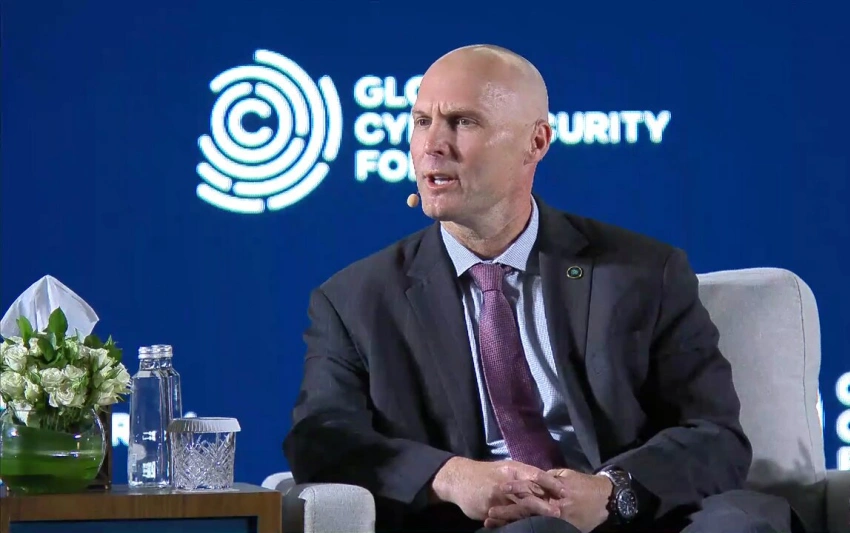
Neal Jetton, Director of INTERPOL’s Cybercrime unit, said cybercrime has become one of the most significant criminal threats facing the region. He said AI is automating every stage of an attack, from reconnaissance and phishing to extortion and evasion. He added that coordinated action between countries has helped identify, disrupt and dismantle cybercriminal infrastructure.
Some progress has been made against AI-driven cybercrime in the past year. INTERPOL said 17 African countries enacted or amended cybercrime legislation in 2025. Senegal launched an online reporting platform aimed at tackling violations against children. Officials say curbing AI-driven cybercrime will require faster legislative reform and closer coordination between regulators across borders.
Four coordinated INTERPOL operations, including Operation Serengeti 2.0, Operation Contender 3.0, Operation Sentinel and Operation Red Card 2.0, led to more than 1,500 arrests across the continent. These operations also recovered more than 100 million dollars and led to the seizure of hundreds of devices, INTERPOL confirmed.
The report called for standardised digital forensic capabilities across the continent. It also urged stronger cross-border cooperation, more investment in AI literacy among law enforcement officers and formal public-private partnerships to support prevention and response efforts.
INTERPOL’s Africa Cyberthreat Assessment forms part of its African Joint Operation against Cybercrime initiative, which is funded by the United Kingdom’s Foreign, Commonwealth and Development Office. The assessment drew on data from private partners including Fortinet, Mastercard, the Shadowserver Foundation, S2W and TrendAI.
As AI tools become cheaper and more accessible, analysts expect AI-driven cybercrime to keep evolving faster than many African institutions can respond. INTERPOL’s report suggests that closing the region’s legislative and technical gaps will be critical to reversing the trend.


