




ABUJA – Nigerian health and water officials warned on Friday that handwashing is failing as an outbreak defence, not because people are unaware of it, but because the water, soap and money needed to sustain it keep running out.
These handwashing gaps in Nigeria are weakening efforts to prevent the spread of infectious diseases despite years of public awareness campaigns.
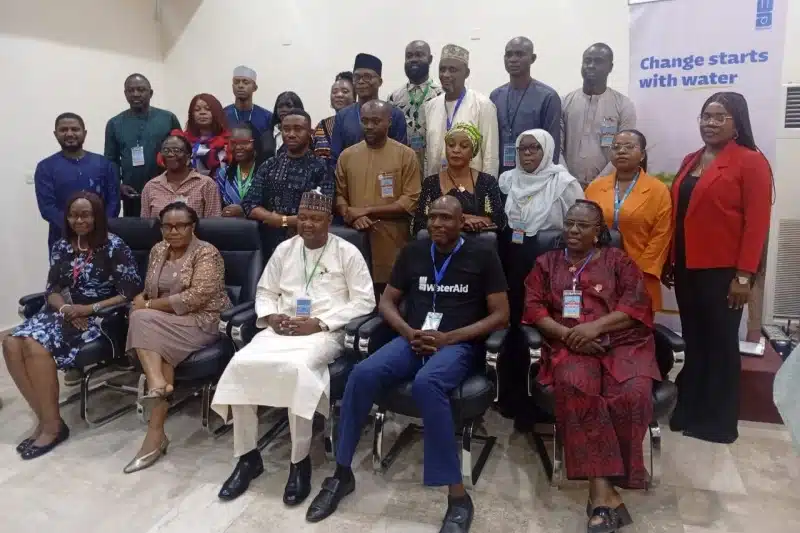
The warning came at a roundtable on handwashing for preparedness for infection prevention and control, held on 20 November 2026 at the Riez Continental Hotel in Abuja. WaterAid Nigeria convened it with the World Health Organization and the Federal Ministry of Water Resources and Sanitation, and it focused on Ebola, diphtheria and other communicable diseases.
Opening the event, WaterAid Nigeria Country Director Evelyn Mere cited the 2019 WASHNORM survey to show the gap between what Nigerians know and what they do. About 81% of household heads could name at least two critical times for handwashing, she said, yet only 10% demonstrated proper handwashing with soap under running water.
Mere said only 16% of households had basic hygiene services, while 14% of schools had basic water and sanitation services. The figure fell to 7% for healthcare facilities, she said, and stood at 14% for markets and motor parks. The figures illustrate the scale of handwashing gaps in Nigeria, particularly in places where access to basic hygiene services is essential to protecting public health.
She placed the figures against this year’s disease burden. Nigeria had recorded more than 10,000 confirmed diphtheria cases and over 65,000 suspected cholera cases across 35 states, Mere said, and a confirmed Ebola case in Abuja in October heightened concern about the country’s preparedness. The diphtheria and cholera figures were cited from an NCDC briefing in August and should not be read as a new tally for the day of the roundtable.
“The taps dried up, the soaps disappeared, behaviour relapsed and the investments were mostly lost,” Mere said, recalling how handwashing campaigns during the 2014 Ebola outbreak and the 2020 COVID-19 pandemic faded after the immediate threat passed.
Dr Muzzamil Gandanya, incident manager for the national diphtheria response at the Nigeria Centre for Disease Control and Prevention (NCDC), said Nigerian hospitals were falling short of basic hand hygiene standards. An assessment conducted before World Hand Hygiene Day on 5 May 2026 found average compliance with the five moments for hand hygiene at 26% in the facilities assessed, he said.
The assessment included tertiary hospitals, teaching hospitals and federal medical centres. The figure should not be treated as a representative national estimate without further information about its sample and methodology.
Gandanya said infrastructure and supplies were major obstacles to compliance. He described the frustration of a health worker who repeatedly finds a tap dry or sanitiser unavailable. “Some day, despite me being a good guy, some day I will just get tired and then I won’t do it again,” he said, explaining how even a committed worker could eventually become discouraged and stop following the required practice. The experience illustrates why handwashing gaps in Nigeria cannot be addressed by awareness campaigns alone when the facilities and supplies needed to practise hand hygiene are missing.
Gandanya said 53 healthcare workers were infected with Lassa fever by epidemiological week 30 of 2025, which he linked to a low index of suspicion when patients first present. The figure does not, by itself, establish that those infections resulted from poor hand hygiene.
He also cited international data indicating that about 67% of healthcare facilities in low- and middle-income countries had basic drinking water and 46% had basic sanitation. The figures reinforce the need to address handwashing gaps in Nigeria’s healthcare system, where inadequate facilities and weak infection prevention measures can leave both patients and health workers vulnerable.
On Ebola, Gandanya said the outbreak in the Democratic Republic of the Congo remained a regional concern and that Nigeria could not assume it was safe from importation. He referred to a case in Abuja on 28 October. However, the confirmed Nigerian case was officially reported on 20 October, and the NCDC’s subsequent update said the identified contacts had completed their 21-day follow-up. The distinction matters: Nigeria recorded a confirmed case, but the available update did not establish sustained local transmission.
The Director of Water Quality Control and Sanitation at the Federal Ministry of Water Resources and Sanitation set out five priorities: reliable water supply, functional WASH facilities in public institutions, integrated planning of water, sanitation and hygiene, financing and maintenance, and community behaviour change.
The director acknowledged that the National Roadmap to Hand Hygiene for All (2021 to 2025), launched in 2022, “was not costed or implemented within its intended period”. Mere made the same point in her remarks. The director said the ministry wanted the priorities reviewed and carried into the next planning cycle, and welcomed a proposed stakeholder position paper from the roundtable. Addressing handwashing gaps in Nigeria would require a revised roadmap with clear costs, funding sources, responsible institutions, implementation timelines and measurable targets.
During the panel session, a speaker said the first step towards institutionalising hand hygiene was to cost the roadmap, then fund, monitor and evaluate it. The moderator asked the UNICEF Nigeria representative whether she was committing the agency to that work.
The representative replied that UNICEF had always provided technical support and that she was “very sure” it was an area the agency would be happy to support. The moderator described this as a major outcome of the meeting: UNICEF support for the ministry to review the existing guideline and develop an implementation strategy with a costed plan. No timeline or budget was announced, and the exchange should be understood as an indication of willingness to provide technical assistance rather than a formal funding commitment.
Asked why handwashing dominates headlines only during outbreaks, an NCDC representative said outbreaks unlock partner and private-sector resources that fund messaging and action. He said the agency’s emergency operations centre works in three modes, watch, alert and response, and that risk perception among the public and health workers peaks once an outbreak is declared. “Follow the money,” he said, urging reporters to track budget implementation to understand why the practice is difficult to sustain.
He said NCDC Director General Dr Jide Idris had prioritised prevention and created a Department of Disease Prevention and Health Promotion. He described the agency’s Turn a Community Orange initiative, piloted in Ebonyi State for Lassa fever, as having demonstrated the potential of community ownership, with sustainability the next test.
He said a WASH component could be included in NCDC’s infection prevention and control side event at the antimicrobial resistance summit scheduled for the following month. He stopped short of confirming a dedicated session, saying invitations and registration would need separate approval. On a moderator’s suggestion that telecommunications companies carry short handwashing messages as caller tunes, he said advocacy with the networks was needed.
A representative of the Network of Water, Sanitation and Hygiene Actors in Nigeria (NEWSAN) Benson Attah said messages fail when the messenger does not practise them. She recalled that handwashing stations installed during COVID-19 stopped working within a week in some places, leaving citizens to see the intervention as a scam. he urged communities to use affordable soap, adding that “soap is soap”, and called for traditional leaders to be held accountable for follow-up. His account highlighted another dimension of handwashing gaps in Nigeria: public trust is undermined when facilities provided during campaigns quickly become unusable.
A representative of the Nigerian Environmental Summit Group said the organisation would draw up an action plan and place women-led organisations at the centre of advocacy. The moderator said stakeholders would be expected to report progress at a similar meeting next year, while a WhatsApp group led by the ministry was suggested for follow-up.
Another panellist argued that handwashing must become a national priority beyond Global Handwashing Day. The speaker called for handwashing stands in restaurants and workplaces, sanctions for those without them, and for health facilities to serve as models.
Beyond public awareness, closing handwashing gaps in Nigeria will depend on whether institutions can maintain functional facilities, provide essential supplies and make hand hygiene part of routine practice.
The roundtable ended with proposals for continued collaboration, but the central test will be whether the government and its partners translate the discussion into a costed plan, dedicated budget lines, reliable supplies and public reporting on implementation. Until these changes take hold, handwashing gaps in Nigeria will continue to undermine preparedness for disease outbreaks. The country’s national hand hygiene roadmap has already passed its original deadline. Without clear responsibilities and sustained investment, Nigeria risks repeating the cycle of emergency campaigns followed by neglected facilities when public attention moves elsewhere.


