



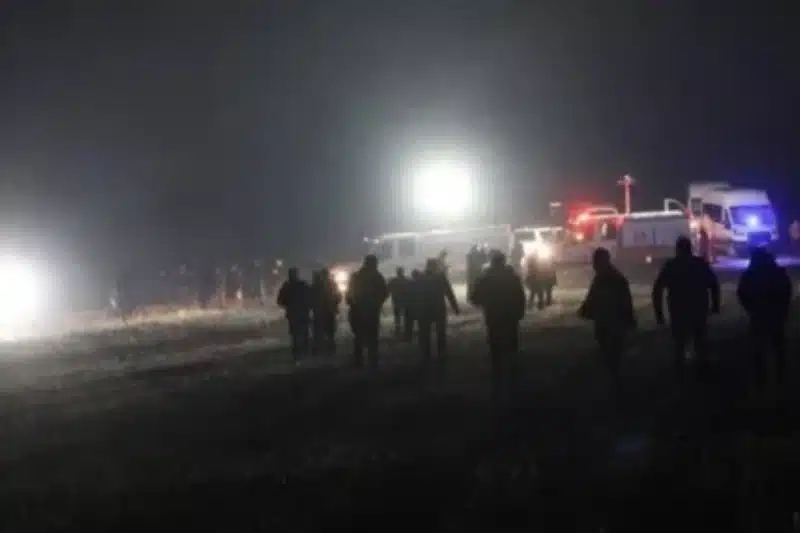

By Sunday night, the impact of the explosion was being felt beyond the camp. Hospitals in Zawiya were appealing to residents to donate blood, with supplies already running short as the injured were brought in.
The Zawiya mortar blast killed at least eight people and injured eight more on Sunday, 18 October, Xinhua reported, citing local media. The explosion occurred at a camp linked to the Security Threats Combatting Agency in Al-Harsha, a coastal area west of Tripoli.
The explosion took place at a camp linked to the Security Threats Combatting Agency, local reports said. Libyan television, citing a medical source, said the dead and wounded were taken to Sorman General Hospital. Media sources warned that the toll could rise.
Few details of the Zawiya mortar blast have been confirmed. Nobody has explained what set off the shell. No official statement has been issued, and Xinhua’s account does not say whether it was fired or went off by accident.
An earlier report citing the same television channel put the death toll at six and described the incident as a training accident. AfricanQuarters could not independently confirm that account. The identities of those killed also remain unclear. The reports do not establish whether they were fighters, trainees, staff or civilians.
Xinhua links the agency to Mohamed Bahroun, known as Al-Far, and places it under the Interior Ministry of the Government of National Unity. Libya Herald describes him as deputy head of the agency, which it calls the Anti-Security Threat Agency. It also names him as one of three main security actors in the wider Zawiya and Surman area.
The Zawiya mortar blast is not the first time Al-Harsha has been hit. In September 2025, Libya Crimes Watch recorded the death of Anas Al-Mukhtar, aged 10. He died on 27 September, five days after shrapnel from a shell struck his family home there. The group said the shelling came during clashes involving the same agency.
This year, the violence returned. Clashes on 8 May in residential areas near the Zawiya refinery left at least 13 people dead, UN envoy Hanna Tetteh told the Security Council in June. The UN mission said that day the situation “risks wider destabilization”. By late May, it was already warning about continued mobilisation of armed groups and a rise in targeted killings.
In August, the mission said fighting in Zawiya and Surman had cost lives, left many injured, damaged the refinery and let prisoners escape. It urged the authorities to take heavy weapons out of populated areas.
Libya Herald reported in the same period that drone attacks on the refinery, a desalination plant and a power station were believed to be a contest among three commanders, Bahroun among them. The prize was control of the refinery. Bahroun called the attacks “an act of terrorism”.
So the trail of explosions the region is easy to follow. In 2025, shells landed on homes. In 2026, the fighting reached refineries, power stations and a prison.
Sunday’s explosion breaks that pattern in one important respect. It happened at a camp, not in a family home or at an oil facility. Whether it belongs to the same rivalry, or is something else entirely, is the question the authorities owe the public.
At the time of writing, AfricanQuarters had found no statement on the Zawiya mortar blast from the UN mission, which has warned about the city since May.
For now the summation is the Zawiya mortar blast has left a death toll, a hospital short of blood and no explanation. In Zawiya, unanswered questions have a habit of being followed by louder ones.


