




Three Nigerians died in South Africa in four days. The incidents have renewed concerns about the safety of Nigerians in South Africa and prompted fresh diplomatic engagement between Abuja and Pretoria.
The safety of Nigerians in South Africa is now a diplomatic question again.
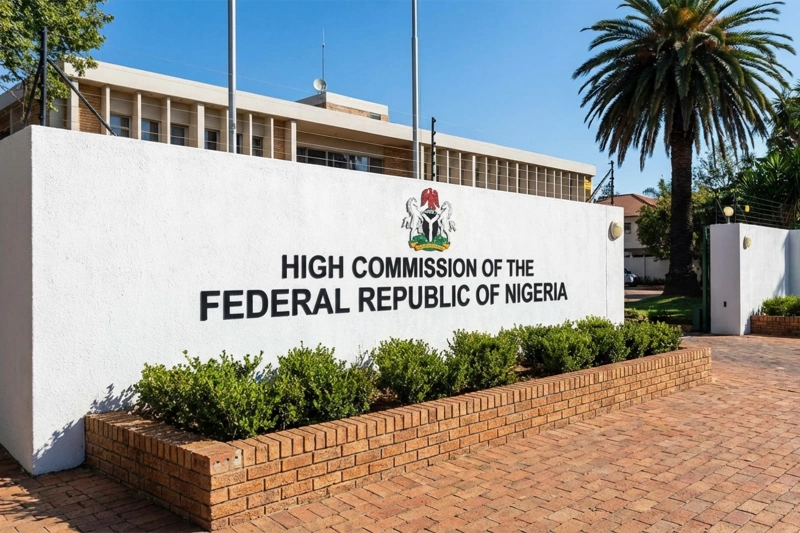
In a statement issued on Monday 28 September, Consul-General Ambassador Ninikanwa Okey-Uche asked South African authorities to establish how each man died. She asked that anyone found responsible face the law.
The Nigerian Consulate-General in Johannesburg named the dead as Kenechukwu Christopher Igwemmadu, Olaniyi Olaleye Olatunde and Christian Hillary Nnaemeka.
According to the consulate, Igwemmadu died on 18 September in Bloemfontein. The consulate said he jumped from a building at Kenlin Court, on Douglas Street, while trying to escape alleged police harassment and brutality. That account has not been independently established.
Two days later, on 20 September, Olatunde, a security guard, was allegedly shot at the Spanata Bar and Grills nightclub in Mamelodi East, Pretoria. The consulate said the shooting followed an argument over a cup belonging to the club. He died in Mamelodi Hospital on 21 September. The alleged gunman, it said, returned to the club, threatened witnesses and left.
Nnaemeka’s case carries the most political weight. The consulate said he died on 21 September after an alleged encounter with Xolani Khumalo and members of his Sizok’thola television team in Primrose, Ekurhuleni. It alleged that he was assaulted and tortured, tried to escape, collapsed and was pronounced dead after being taken to hospital.
The Nigerian Union South Africa (NUSA) put the time at about 8pm on Willow and Filbert Streets. It said Nnaemeka was 34, from Enugu-Ezike in Enugu State, and married with a three-year-old son.
The union asked for everyone connected to the incident to be identified and investigated, “regardless of position, influence or affiliation”. It also asked whether the alleged attack was part of an authorised operation.
Position is the sensitive part. Khumalo is a television personality and ActionSA’s candidate for mayor of Ekurhuleni. South Africans vote in local elections on 4 November, according to the Electoral Commission, just over five weeks from now. The campaign is under way while Nigerians in South Africa wait for answers.
No allegation against him has been tested in court, and the consulate itself says suspects must be presumed innocent. At the time of publication, no public response from Khumalo or the South African Police Service to the consulate’s account could be found.
There is a precedent, and it is not encouraging. In February, Emeka Clement Uzor, another of the Nigerians in South Africa to die this year, was fatally shot in Windsor East, Randburg, while a Sizok’thola crew filmed an anti-drug operation. Gauteng police told IOL at the time that the production team’s security had allegedly fired the shots and that a murder case had been opened.
ActionSA said the man was suspected of drug trafficking. Police said they had not confirmed his nationality or any criminal involvement. The consulate says no arrest has been made. That is more than seven months.
The deaths come against a backdrop of periodic tensions between Nigeria and South Africa over attacks on foreign nationals. Previous outbreaks of anti-migrant violence have triggered diplomatic protests, citizen evacuations and calls for stronger protection of African migrants living in South Africa.
The wider mood towards Nigerians in South Africa has been hostile for months. Al Jazeera reported in June that anti-migrant protests, ignited in late April by the March and March group, had brought thousands onto the streets in Johannesburg, Pretoria and Durban. Nigeria was repatriating citizens, and its foreign minister said retaliatory measures were being considered.
Okey-Uche said the latest deaths raise concerns about the treatment and security of Nigerians in South Africa, and of other Africans, in what she called “xenophobic and Afrophobic attacks”. Yet the consulate’s account does not show that the three cases are linked, or that nationality drove any of them. Only proper investigations can say whether Nigerians in South Africa are being singled out.
“All lives matter,” she said. She urged Nigerians in South Africa to stay calm, law-abiding and security-conscious.
Consulates can demand justice. Only investigators and courts can deliver it. For Nigerians in South Africa, the February case is the measure. Seven months on, it has no arrest, and three more names now sit beside Uzor’s.


