



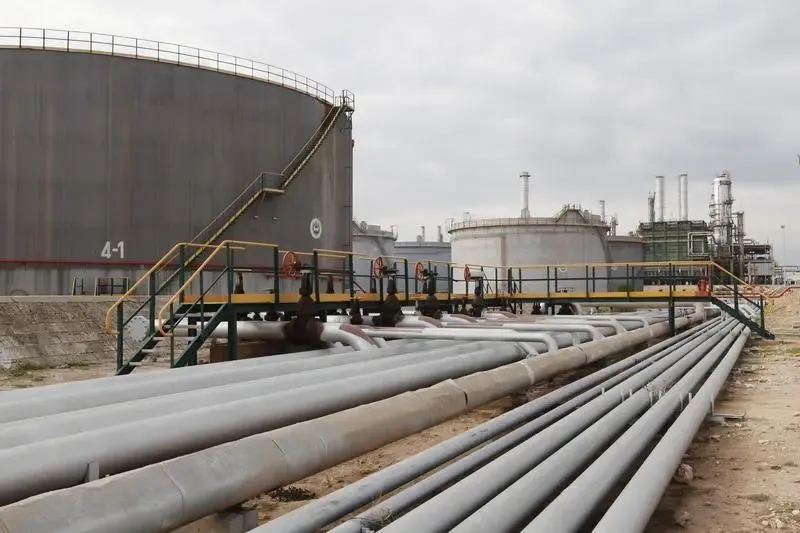

A single valve, turned by unidentified hands in Libya’s southern desert, has cut national oil output by roughly a fifth. The Sharara pipeline shutdown has also reopened one of the country’s oldest arguments: who actually benefits from Fezzan’s crude.
The Sharara pipeline shutdown began on the morning of Monday, 21 September. An armed group closed Valve No. 7 on the line running from the Sharara oil field to the Zawiya export terminal on the Mediterranean coast. Libya’s National Oil Corporation said the closure built up pressure inside the pipeline. That forced a sharp reduction in flow from the country’s largest field.
Pipeline valves regulate pressure and flow along export routes. Closing a strategically placed valve can effectively halt production from oil fields hundreds of kilometres away.
Sharara sits deep in the Murzuq Basin, roughly 900 kilometres south of Tripoli, in the historic Fezzan region. It is operated by Akakus Oil Operations, a joint venture pairing the state oil company with Spain’s Repsol, France’s TotalEnergies, Austria’s OMV and Norway’s Equinor. The field normally produces between 300,000 and 335,000 barrels a day. Reuters reported that the Sharara pipeline shutdown had cut production by around 200,000 barrels a day, leaving the field running at little more than a third of capacity.
Technical crews sent to reopen the line have not been able to reach valves 6 and 7 since the Sharara pipeline shutdown began. The National Oil Corporation said efforts by the Southwest Oil Facilities Security Department to secure access had so far failed. It stopped short of naming the group holding the valve.
That silence matters. Unlike earlier disruptions at Sharara, this shutdown arrived without a public claim or an attached list of demands. But the Sharara pipeline shutdown did not come out of nowhere.
Six days before the closure, on 15 September, members of the Petroleum Facilities Guard’s southwestern branch shut a separate valve on the Hamada to Zawiya line. That closure halted the Hamada field, the Al-Tahara field and a pumping station known as NC5. The branch answers to Brigadier General Abdulrazak Mohamed Al-Khormani. Its grievances are specific: unpaid wages, an unresolved administrative status, and a demand to sit financially and administratively under the National Oil Corporation while remaining under the defence ministry for technical command.
Two days before that, the same guards had blocked the gate to the Zawiya refinery. It processes around 120,000 barrels a day and supplies fuel across western Libya. By 16 September the guards were threatening to close seven fields altogether, Sharara and El Feel among them, within a week if their demands went unmet.
Viewed together, the pattern behind the Sharara pipeline shutdown is hard to miss. A security force paid to guard Libya’s oil infrastructure has instead become one of the few groups with the physical means to interrupt it. Whoever holds a valve gains leverage that no ministry meeting can match.
None of this is new to Fezzan.
In January 2024, protesters from the region shut Sharara over demands for cheaper fuel and better jobs. That prompted a force majeure which was lifted only days later. That August, a fresh shutdown followed the arrest warrant issued in Spain for Saddam Haftar, son of military commander Khalifa Haftar.
Further back, in 2018, a group calling itself the Fezzan Anger Movement occupied the field. It demanded a hospital be built for Ubari, arguing that a region sitting on Africa’s largest proven oil reserves could not even guarantee its own healthcare.
The contradiction sits at the heart of every Sharara pipeline shutdown. Libya’s production climbed above 1.4 million barrels a day in June, a 13-year high. Petroleum still accounts for close to nine-tenths of state revenue, making Libya one of the world’s most oil-dependent economies. Yet the communities nearest to the wellheads queue for fuel, wait months for wages and watch the money move north towards Tripoli and the coast.
The National Oil Corporation has warned that it may declare force majeure if the closure continues. That step would suspend its contractual duty to deliver crude and shift the financial risk onto the state rather than its buyers. A similar warning followed an earlier armed valve closure at Sharara in July 2019.
The lost output severely disrupts power supply to the grid and continued funding of basic services.
— Mustafa Sanalla, former chairman of Libya’s National Oil Corporation, July 2019
Sanalla added that the impact was “most acutely felt by communities in the South”. Seven years on, that description still fits the current Sharara pipeline shutdown almost exactly.
A prolonged closure at Zawiya would push Libya further towards importing the very fuel it exports as crude. That adds pressure to a budget which already leans on oil money for survival. For a country split between rival governments in Tripoli and the east, a closed valve in the desert has again proved a sharper political tool than any parliament session.
Until Valve No. 7 turns again, the Sharara pipeline shutdown will keep Libya’s largest oil field hostage to the same question that has shadowed Fezzan for decades: how long can the region supply the country’s wealth while seeing so little of it returned?


