



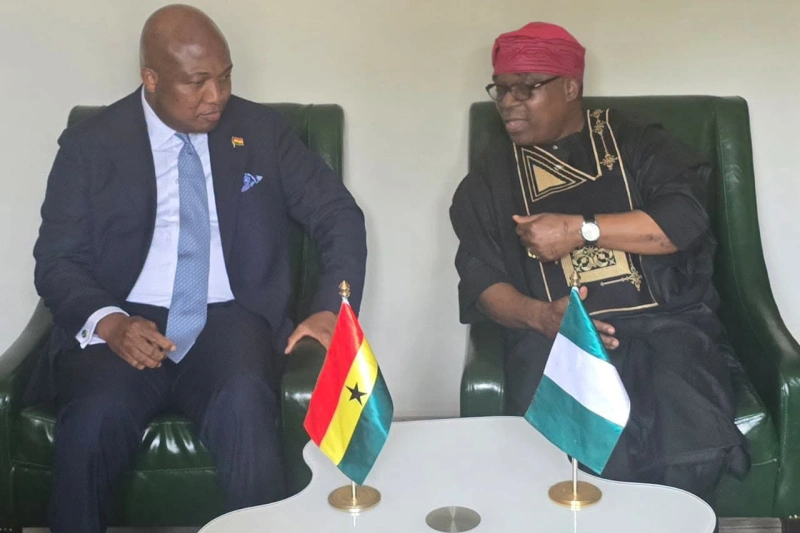

Nigeria and Ghana have agreed to formally raise Afrophobia in South Africa at the next African Union Summit, following a bilateral meeting on the sidelines of the ECOWAS Mid-Year Summit in Freetown, Sierra Leone.
The agreement was reached between Nigeria’s Minister of State for Foreign Affairs, Ambassador Sola Enikanolaiye, and Ghana’s Foreign Affairs Minister, Samuel Okudzeto Ablakwa, according to a statement issued by the Ministry’s spokesperson, Kimiebi Imomotimi Ebienfa. Both ministers condemned Afrophobia in South Africa, describing the recent wave of attacks on African nationals as a direct contradiction of Pan-Africanism and the goals of the African Continental Free Trade Area.
The two countries pledged closer cooperation to push for stronger continental mechanisms, including early warning systems and preventive diplomacy, to be built into the African Union’s response to xenophobic violence. They also agreed to work with other member states to ensure the issue is not sidelined at the next summit.
This is not the first time Ghana has raised the alarm. Accra had already petitioned the African Union earlier in the year to place xenophobia and Afrophobia in South Africa on the agenda of its mid-year coordination meeting in Egypt, a move Ablakwa referenced when he addressed the 3i Africa Summit in Accra and compared the treatment of African migrants unfavourably with the welcome extended to Ukrainians displaced by war in Europe.
The Freetown meeting comes at a tense moment for South Africa’s regional standing. Thousands of demonstrators massed across South African cities on 30 June, with police mounting a major operation to head off looting and violence that has already claimed several lives. The unrest followed weeks of protests by minor political parties and vigilante groups who had set an unofficial deadline for undocumented foreign nationals to leave.
Analysts tracking the fallout argue that the failure of local law enforcement to rein in vigilante activity is beginning to translate into diplomatic friction, even within the Southern African Development Community bloc that South Africa itself leads. A recent dispute over a postponed presidential meeting between South Africa and Ghana, reported by Business Day, underscored how sensitive the issue has become, even though both governments publicly denied that Afrophobia in South Africa was the reason for the delay.
The Institute for Justice and Reconciliation has separately warned that South Africa’s continental leadership through the African Union, SADC and AfCFTA negotiations depends heavily on the goodwill of its neighbours, and that xenophobic attacks on nationals from SADC member states have already provoked formal diplomatic protests and travel advisories.
The economic stakes are significant. AfCFTA Secretary-General Wamkele Mene has previously cautioned that Afrophobia in South Africa threaten Africa’s integration drive, a warning that carries particular weight given South Africa accounts for a substantial share of intra-African trade. Analysts at the FW de Klerk Foundation have gone further, arguing that xenophobic violence is no longer purely a law-and-order issue but a trade policy problem, capable of disrupting billions of dollars in regional commerce through consumer backlash and declining trust.
For Nigeria, the Freetown meeting builds on weeks of diplomatic pressure. Enikanolaiye had earlier called on the ECOWAS Mediation and Security Council to adopt a firm, collective position on Afrophobia in South Africa, to be submitted to the African Union as Ghana had proposed. He described mob attacks on African nationals in South Africa as unacceptable and called for a coordinated regional response.
Whether the African Union follows through with concrete measures remains uncertain. Previous petitions from Ghana have raised the profile of the issue without producing binding continental action, and South Africa’s government has yet to respond publicly to the latest push from Abuja and Accra. The upcoming AU Summit will provide an important test of how far African governments are prepared to go in addressing concerns about Afrophobia in South Africa and protecting the rights of African nationals.


