



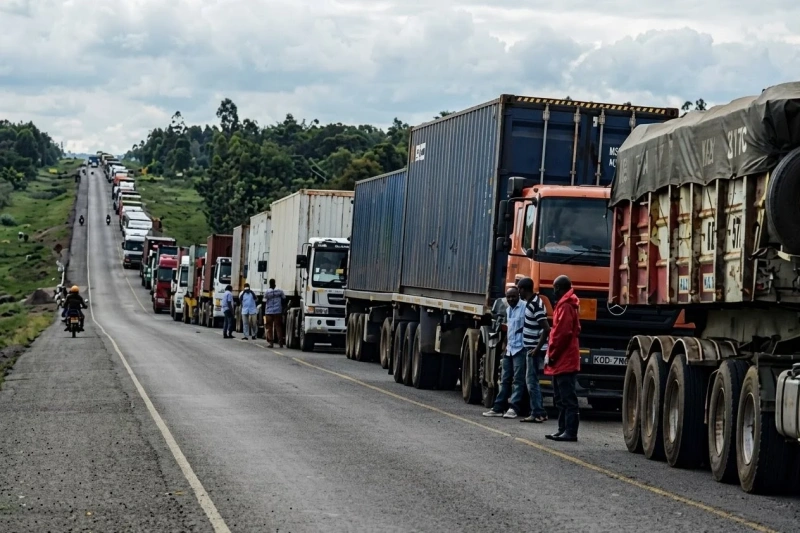

East African Community states face a self-imposed test of credibility today, as the bloc’s deadline to eliminate non-tariff barriers between member economies officially expires.
Heads of state set the 30 June 2026 cut-off at the 25th Ordinary EAC Summit in Arusha in March, directing partner states to clear every outstanding obstacle slowing the movement of goods across the region, according to the EAC Secretariat. The directive covers bureaucratic border delays, inconsistent customs rules and complex licensing regimes that have long frustrated traders moving products between Kenya, Uganda, Tanzania, Rwanda, Burundi, South Sudan, the Democratic Republic of Congo and Somalia.
Non-tariff barriers differ from customs duties. They include duplicated inspections, mismatched health and safety standards, delayed import permits and extra transit levies, as detailed by TradeMark Africa, the regional trade facilitation body. These frictions raise costs and create uncertainty for businesses, particularly small and medium enterprises that lack the resources to navigate overlapping regulations.
The EAC Secretariat reports that 274 non-tariff barriers have been resolved since 2007, with the outgoing Summit Chair noting that reported cases fell by roughly 56 per cent, from 61 in 2024 to 27 in 2025, the East African Business Council said. Officials point to that decline as evidence the bloc can still meet ambitious targets when political will aligns.
Despite that progress, intra-regional trade remains a modest share of the bloc’s overall commerce. Intra-EAC trade reached 4.8 billion US dollars in the third quarter of 2025, up 15 per cent from the same period the previous year, EAC Secretariat figures cited by TradeMark Africa show. Even so, that volume represents only about 15 per cent of total trade conducted by the bloc’s eight member states, while trade with the rest of Africa stood at 10.1 billion US dollars, or 32.2 per cent of the total.
The gap suggests businesses across the region still find it easier to trade beyond their own neighbourhood than within it. Analysts argue that reducing non-tariff barriers remains essential if the bloc hopes to increase trade among member states.
Where governments have acted, results have followed. One-Stop Border Posts have cut crossing times by up to 70 per cent and generated annual savings exceeding 63 million US dollars, the East African Business Council reports. Under the Single Customs Territory, the time needed to move goods from the ports of Dar es Salaam and Mombasa fell from 21 and 18 days to seven and four days respectively, with costs dropping from 3,100 to 1,025 US dollars.
Lingering bilateral disputes show how fragile that progress can be. Persistent restrictions on Ugandan dairy products entering Kenya, including blockages and delays tied to import permits, disrupted supply chains throughout 2025, according to Ecofin Agency. The disruptions hit a sector with around 168 processing units and close to four million litres of daily milk production in Uganda. Facing limited access to the Kenyan market, Ugandan exporters have pursued alternative buyers outside the bloc, including a proposed deal to supply Nigeria with up to 200,000 metric tonnes of powdered milk worth more than one billion US dollars, TradeMark Africa reported.
Kenyan President William Ruto and Tanzanian President Samia Suluhu Hassan set a stricter 31 May 2026 deadline to resolve bilateral non-tariff barriers between their two economies, The EastAfrican newspaper reported, signalling that some leaders see faster, narrower deals as more realistic than bloc-wide consensus. Ruto told Tanzania’s Parliament that regional relations had too often been shaped by competition and rivalry rather than cooperation, language that captured the summit’s broader push to recast neighbours as partners rather than competitors.
The EAC Heads of State have set a separate target of raising intra-regional trade from roughly 15 per cent to 40 per cent of total commerce by 2030, the East African Business Council noted, a goal that depends heavily on whether today’s deadline produces lasting change rather than another missed target. The bloc groups more than 300 million people, and analysts have described it as a template for the wider continental free trade project, meaning a credible resolution of remaining non-tariff barriers would carry weight well beyond East Africa’s borders.
Businesses across the region will judge success by whether non-tariff barriers disappear in practice rather than on paper. For now, the question facing traders, regulators and investors is whether 30 June 2026 marks a genuine turning point or simply another date that slips quietly into the bloc’s long history of delayed promises.


