



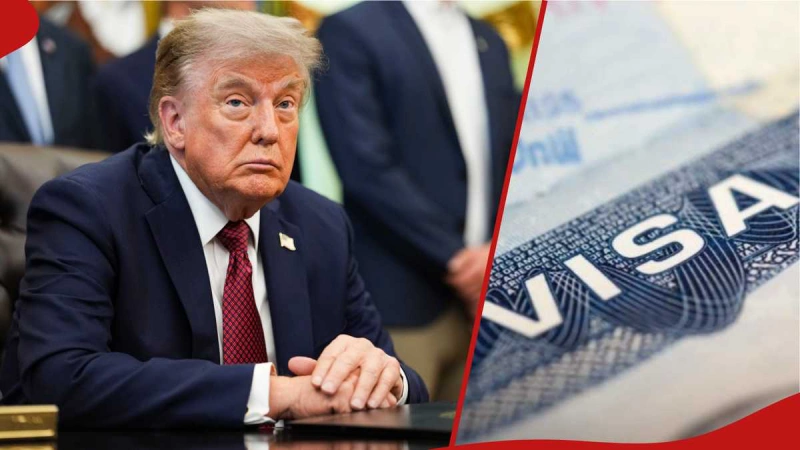

Nigeria is one of 30 African countries now caught up in the newly permanent US visa bond programme, which can require deposits of up to $20,000 for US travel.
The United States Department of State confirmed on Friday that it is making its visa bond programme permanent. Consular officers can now demand security deposits of $10,000, $15,000 or $20,000 from applicants in 50 countries, 30 of them African, according to a federal notice cited by Reuters.
The rule takes effect on 3 August 2026. It applies to B-1 and B-2 visas, which cover business trips and holidays to the United States.
Nigeria sits on the list alongside Ethiopia, Senegal, Tanzania, Uganda, Zambia and Zimbabwe. The Gambia is also included, along with 23 other African nations named in the State Department notice.
Consular officers will typically set bonds at $15,000 under the US visa bond programme. They can lower that figure to $10,000 if an applicant cannot afford the standard amount but can still fund the trip itself. They can raise it to $20,000 if an applicant’s ties to the United States suggest a smaller bond will not guarantee a timely departure, Newsweek reported.
Officers will weigh the purpose of each trip before setting a figure. They will also look at an applicant’s job, income, skills and education, per the State Department notice.
Nationality alone will not fix the bond amount. Coverage under the US visa bond programme depends on the passport an applicant holds, not on where the application is filed, the department said.
The bond is refundable in principle. Travellers get their deposit back once they leave the United States within the terms of their visa. Refunds also apply if a visa holder never travels before the visa expires, or if they are refused entry at the border.
Forfeiture works differently. The entire bond can be lost after a serious breach, the State Department said. That includes overstaying, filing a late extension or change of status request, or failing to leave within ten days of a denied application, Traveler’s Today reported.
Filing Form I-589 for asylum while under a bond also counts as a breach, the outlet added.
The permanent US visa bond programme builds on a pilot scheme launched in August 2025. Under that trial, bonds were capped at $5,000, $10,000 or $15,000. The finalised rule scraps the lowest tier and raises the ceiling to $20,000.
The State Department says the pilot delivered results. Overstays among covered travellers fell from more than 45,000 in the 2024 financial year to fewer than 50 during the trial’s first ten months, Newsweek reported.
Visa issuance to nationals of the affected countries also fell by 83 per cent over the same period, according to Skift’s review of the final rule. Much of that drop came because many eligible applicants simply did not pay the bond.
For Nigerian travellers, the US visa bond programme adds a steep financial barrier to any business trip or family visit to America. A $15,000 deposit is beyond what most applicants can raise on short notice, even those who fully intend to return home on schedule.
Small business owners face the sharpest impact from the US visa bond programme. Unlike large corporations, many entrepreneurs cannot tie up thousands of dollars simply to attend a trade fair or close a single deal in the United States, eTurboNews noted in its assessment of the rule.
The State Department can add or remove countries from the list at any time. New additions require at least fifteen days’ notice, while a removal can take effect immediately under the US visa bond programme.
Applicants should check directly with the nearest US embassy or consulate before booking travel. Consular officers, not the country list alone, decide whether a bond applies in each individual case.
The bond earns no interest while it is held, and the payer bears any exchange rate losses or bank charges on the refund, according to Traveler’s Today. That detail means even a fully compliant traveller can face real costs simply for taking part in the US visa bond programme.


