



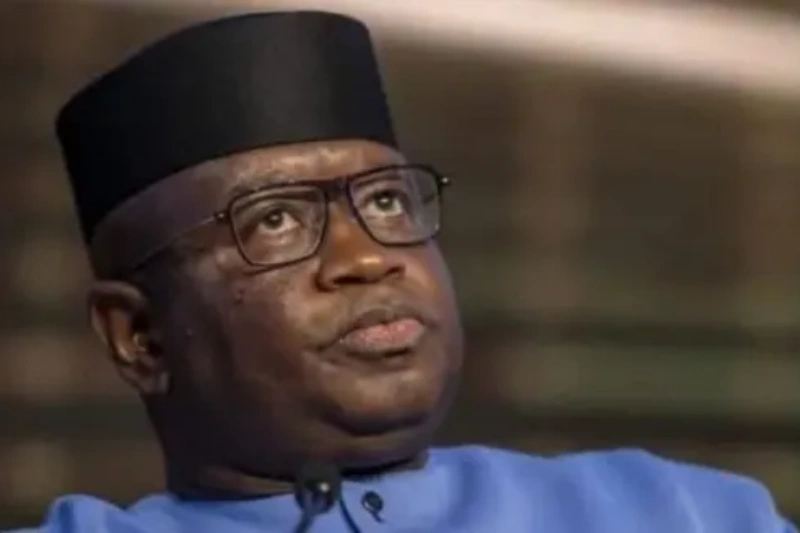

The Dutch say one fugitive has just cost Sierra Leone €18 million.
Freetown says that is not the story at all.
The Sierra Leone aid freeze became public on Thursday 1 October, when Dutch justice minister David van Weel said the European Commission had suspended the payment. Reuters carried his claim from Amsterdam.
The money behind the Sierra Leone aid freeze was promised for this year. It was meant for education, food programmes and infrastructure.
Van Weel’s target is Jos Leijdekkers, a Dutchman from Breda better known as ‘Bolle Jos’. A Rotterdam court sentenced him in his absence on 25 June 2024. The verdict was 24 years for smuggling more than seven tonnes of cocaine and ordering a killing.
Belgian courts have piled on more. In May this year, a court in Dendermonde added eight years over an 11-tonne shipment that travelled from Sierra Leone to Antwerp.
Van Weel told Dutch media he was ‘very happy with this step’. He also warned that another €22.5 million promised for 2027 could go the same way if Freetown keeps refusing to cooperate.
The Sierra Leone aid freeze did not appear overnight. Leijdekkers has been on Dutch and Europol wanted lists since 2022. Reuters says he has lived under high-level protection in Sierra Leone since at least 2023.
Then came New Year’s Day 2025. The first lady posted footage of a church service the president attended. A man in it looked like Leijdekkers. Police later named him as the fugitive, gave his alias as ‘Omar Sheriff’ and said they were hunting him.
The government said the president had no knowledge of who the man was. In March 2025, it sacked its immigration chief after video showed him with the fugitive. Dutch media have since reported that Leijdekkers has a child with the president’s daughter.
That history makes September look odd. Chief minister David Moinina Sengeh, the president’s most senior official, took part in a televised exchange with Van Weel. He said: ‘Hand on heart, our security intelligence does not know where Leijdekkers is.’
Police had named the man and announced a manhunt. Now the most senior official in the country says nobody knows where he is.
Sengeh also accused the Netherlands of neo-colonial pressure. Sierra Leone, he said, does not live on European money.
Van Weel called that charge ridiculous. The angry reaction, he said, showed his strategy was working. For the Dutch, the Sierra Leone aid freeze is proof that pressure pays.
Information minister Chernor Bah offers a different reading of the Sierra Leone aid freeze. He says the 2026 budget support was held up by an amended financing agreement, not by talks with the Netherlands or any single case. Payments are now proposed for 2027 and 2028.
Reports linking the July decision to one person, Bah said, ‘do not reflect the reasons formally communicated to the government’.
The two explanations are not necessarily mutually exclusive. Administrative delays can affect funding schedules, while political considerations can influence decisions about when support is released. The Commission had not replied to requests for comment when Reuters published, so Brussels has not settled the argument.
Recent developments suggest the dispute is expanding beyond a single extradition case. Van Weel asked Brussels to cut development aid in June, and other capitals were not yet convinced.
On 17 September the European Parliament voted 601 to four for closer judicial cooperation with West African states and a new sanctions regime. It would allow asset freezes and travel bans against trafficking networks.
On the day the Sierra Leone aid freeze emerged, EU justice ministers met in Luxembourg to discuss entry bans and asset freezes for criminals hiding outside Europe.
So the Sierra Leone aid freeze is about more than one man. It is a test of whether Europe will make host governments pay for the fugitives they shelter.
The bigger claims come from The Economist. Its investigation alleges that Leijdekkers has spent five years turning Sierra Leone into a transit point for Colombian cocaine, hidden in cargo such as rice and plantain chips. It also alleges that some proceeds from the trafficking network reached figures within Sierra Leone’s political establishment.
Those are allegations, not court findings. They do explain why Dutch ministers see the Sierra Leone aid freeze as overdue.
Will the Sierra Leone aid freeze last into 2027? That depends on a handover Freetown has so far refused.
Sierra Leone says it does not depend on European funding. Whether the suspended support is eventually released could affect programmes that were expected to benefit from it.


