



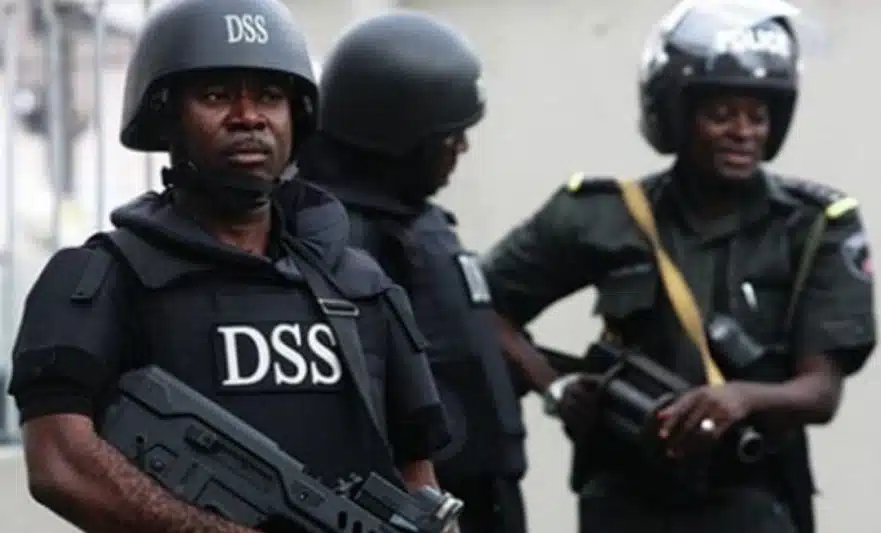

Nigeria’s Federal Capital Territory High Court has ordered the Socio-Economic Rights and Accountability Project to pay N100 million in damages to two officials of the Department of State Services, in a judgment that has rattled the country’s civil society community.
Justice Yusuf Halilu delivered the SERAP DSS defamation ruling on 5 May 2026 in Abuja. Within days, Amnesty International, senior lawyers, and a coalition of more than 50 civil society groups had publicly condemned it.
How the Case Began
The dispute traces back to 9 September 2024, when the Socio-Economic Rights and Accountability Project (SERAP) published a statement alleging that operatives of the Department of State Services (DSS) had unlawfully entered its Abuja office to intimidate staff.
According to SERAP, the visit came shortly after the organisation called on President Bola Tinubu to investigate alleged corruption at the Nigerian National Petroleum Company Limited (NNPCL) and reverse fuel price increases.
SERAP said the DSS officials demanded to see its incorporation documents, questioned staff, and that unmarked vehicles were stationed outside the premises throughout the encounter.
The DSS denied that any unlawful conduct had taken place. Two of its operatives, Sarah John and Gabriel Ogundele, then filed a defamation suit against SERAP, initially seeking N5.5 billion in damages.
What the Court Decided
Justice Halilu held that SERAP’s publication put the DSS operatives in a false light before the public. On the question of proof, the judge noted that SERAP did not challenge the oath evidence the DSS officials placed before the court, and found that the publication met the legal threshold for libel once it was shown to have been capable of damaging the claimants’ reputations.
Although the DSS officials had initially sought N5 billion in damages, the court awarded N100 million, with Justice Halilu describing even that sum as “a paltry sum.
Beyond damages, the court also ordered SERAP to publish apologies in newspapers, on television stations, and on its social media platforms, pay N1 million in litigation costs, and carry a 10 per cent annual post-judgment interest on the award until fully settled.
The SERAP DSS defamation ruling became a flashpoint almost immediately after it was announced.
SERAP Rejects the Judgment
SERAP’s Deputy Director, Kolawole Oluwadare, described the judgment as “totally unacceptable,” calling it “a travesty and a serious blow to civic space in Nigeria.”
The organisation instructed senior lawyers Tayo Oyetibo (SAN) and Ebun-Olu Adegboruwa (SAN) to file an appeal. That appeal, filed on 8 May, is accompanied by an application seeking a stay of execution pending its determination.
SERAP argued that the judgment rests on fundamental legal and evidential errors and described the ruling as “perverse and a nullity.” The group also challenged the admissibility of a key witness statement, arguing that the first respondent admitted under cross-examination that her witness statement on oath was signed in her lawyer’s chambers rather than before a Commissioner for Oaths.
SERAP further argued that its publications never identified the claimants by name, rank, or photograph, and therefore could not have personally defamed them.
The organisation warned that enforcing the SERAP DSS defamation ruling would cripple its operations and leave it unable to meet financial obligations to staff, consultants, and implementing partners.
Rights Groups Sound the Alarm
The wider reaction to the SERAP DSS defamation ruling has been sharp.
Amnesty International Nigeria Director Isa Sanusi said the judgment “sends a deeply troubling signal about the state of civic freedoms in the country” and warned that it could embolden further use of similar lawsuits against activists, weakening public oversight and discouraging whistleblowing.
In a joint statement dated 11 May 2026, a coalition of 52 civil society organisations, including ActionAid Nigeria, BudgIT Foundation, Yiaga Africa, Media Rights Agenda, and the Centre for Democracy and Development, said the case raises serious concerns about judicial transparency, civic freedom, and constitutional democracy.
The coalition also raised procedural concerns, noting that neither the Certified True Copy nor the full text of the judgment had been publicly released at the time reactions and commentaries began circulating.
The 52 organisations said courts must not become instruments for shutting down accountability work, warning that civil society groups cannot do their jobs if public allegations against state agencies routinely end in multimillion-naira damages suits.
The Stakes at the Court of Appeal
The SERAP DSS defamation ruling did not emerge from nowhere. Nigeria has seen a steady stream of legal actions against journalists, bloggers, and civic groups in recent years, and rights lawyers say the pattern is deliberate.
The DSS officials told the court that SERAP’s statements damaged their professional standing and put them under disciplinary scrutiny within the agency, though they were eventually cleared. SERAP rejected that account, saying the publication targeted the DSS as an institution, not the individuals who walked into its office that September afternoon.
SERAP has described the case as a Strategic Lawsuit Against Public Participation, known as a SLAPP, designed to intimidate civil society and deter legitimate human rights advocacy.
The Court of Appeal in Abuja will now determine whether the SERAP DSS defamation ruling stands. If it is upheld, legal analysts say it could significantly raise the risks facing any civil society organisation that goes public with allegations against a state security agency. If it falls, it may strengthen constitutional protections for advocacy groups operating under increasing pressure in Nigeria.


