




The Oyo school kidnapping has taken a darker turn, with Nigeria’s Defence Minister confirming that the terrorists holding dozens of pupils and teachers have threatened to execute their captives if troops move any closer.
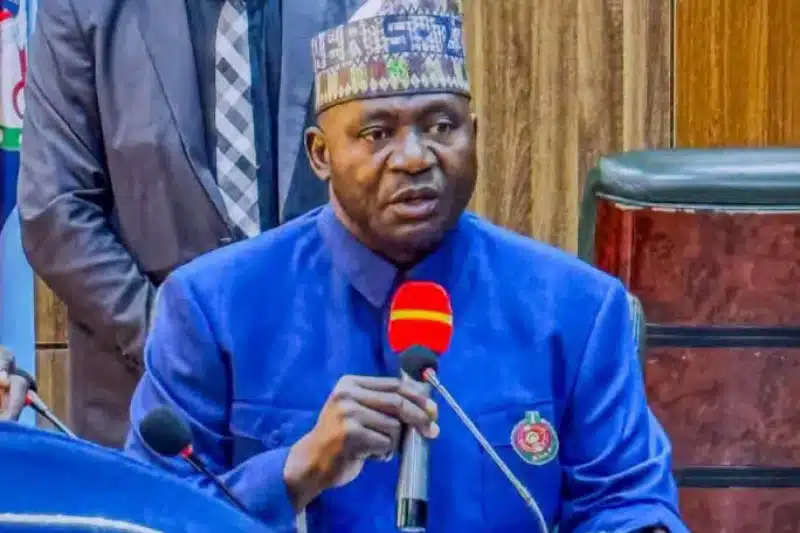
Christopher Musa disclosed this in a preview of an interview with News Central, released on Wednesday ahead of the programme’s full broadcast on Friday. According to the minister, the abductors are using the children purely as leverage to force the military into releasing commanders it currently holds in custody.
Musa explained that the gang believes holding the schoolchildren gives them bargaining power. He quoted the abductors as threatening that any advance by troops would result in the killing of every child still in captivity.
This marks a significant hardening of the Oyo school kidnapping saga, which began on 15 May when armed men on motorcycles stormed three schools in Esinele, Yawota and Alawusa communities within Oriire Local Government Area. Thirty nine pupils and seven teachers were taken, according to figures cited consistently across Nigerian outlets, though some early police counts put the total closer to 49 including a toddler.
Two days after the attack, the terrorists released a video showing the beheading of Michael Oyedokun, a mathematics teacher at Community High School, Ahoro Esinele. Governor Seyi Makinde later confirmed the killing, calling it painful for the state.
The group behind the Oyo school kidnapping has been identified by security agencies as members of Jama’atu Ansarul Muslimeena Fii Bilaadis Sudan, commonly known as Ansaru, a breakaway faction of Boko Haram. Their four original demands, as reported by Saturday PUNCH, included the release of two detained commanders, a ransom payment, two Hilux vehicles and the implementation of Sharia related provisions in the state.
The two commanders named are Mahmud Usman, also called Abu Bara’a, and his deputy Abubakar Abba, alias Isah Adam. Both men were arrested by the Department of State Services and are said to be facing terrorism related trials in Abuja, with Usman previously convicted in September 2025 over illegal mining linked to arms financing.
Security sources speaking to Vanguard this week indicated that a fresh intelligence breakthrough has narrowed down the abductors’ network and traced associates linked to the Oyo school kidnapping across the country. That pressure, sources say, has forced the gang to begin reconsidering some of its original demands, even as the commanders’ release remains the central sticking point.
Army chief Lieutenant General Waidi Shaibu told journalists in Port Harcourt at the weekend that troops were making tremendous progress in the rescue operation, describing the South West as otherwise one of Nigeria’s most peaceful regions.
The Oyo State Government has repeatedly declined to detail its negotiating position. Commissioner for Information Dotun Oyelade told Saturday PUNCH that disclosing strategy while rescue efforts continue would be unhelpful, and separately denied claims that any ransom had been paid, urging the public to rely only on official channels.
Retired military officers have warned that meeting the terrorists’ demands, particularly freeing convicted commanders, would embolden armed groups nationwide and risk funding further attacks. That warning has taken on added weight now that the Oyo school kidnapping has stretched close to two months, with the children’s continued safety hanging on a standoff neither side appears willing to break first.
The Nigeria Union of Teachers has maintained pressure on the federal government throughout, having earlier declared an indefinite strike demanding the pupils and teachers be freed. For families of the abducted children, each week without resolution deepens the anguish that has defined this crisis since May.
Security analysts note that the tactic being used in the Oyo school kidnapping mirrors a pattern from the 2022 Kaduna train attack, when a Boko Haram faction reportedly secured both ransom and prisoner releases through similar pressure. Whether the government resists that precedent this time will likely determine how the standoff ends. The outcome of the Oyo school kidnapping could also shape Nigeria’s future response to mass abductions involving schoolchildren.


