



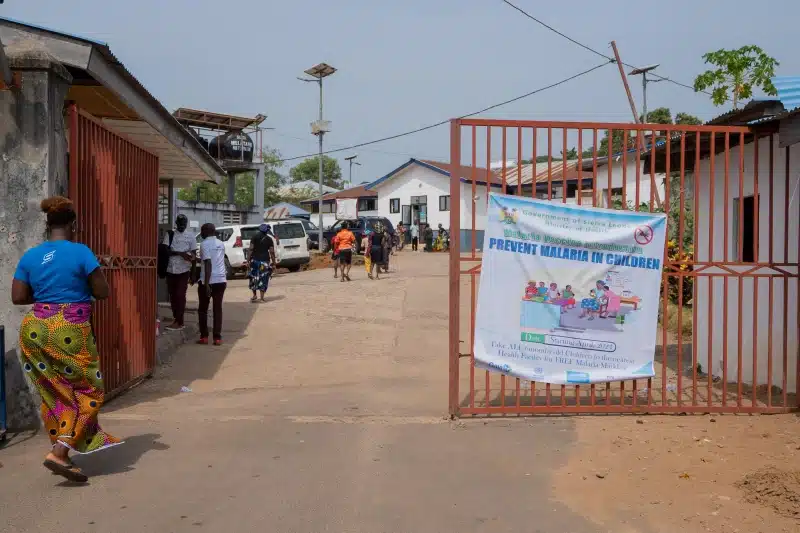

World Malaria Day summit in Freetown marks a strategic break from decades of fragmented response
Freetown, Sierra Leone – Something unusual is happening in the corridors of West African public health diplomacy as ECOWAS malaria elimination moves from ambition to active policy. The language has changed. Gone are the measured phrases about “reducing burden” and “improving coverage.” What health ministers gathering in Freetown this week are saying, plainly and deliberately, is this: malaria must end.
The 27th Ordinary Session of the ECOWAS Assembly of Health Ministers, running from 20 to 25 April 2026, has chosen no ordinary moment to convene. The closing date falls on World Malaria Day, observed under this year’s global theme – Driven to End Malaria: Now We Can. Now We Must – a phrase that carries more than symbolic weight when spoken in a region where the disease kills more than 310,000 people every year.
This shift signals that ECOWAS malaria elimination is no longer aspirational, it is now being treated as an achievable endgame.
Why This Summit Is Different
For those who track African public health policy, the summit represents something more substantive than the usual declarations.
ECOWAS malaria elimination has now become the formal political and operational target of the bloc, replacing the longstanding policy of control, which focused on reducing cases rather than removing the disease entirely. The distinction matters enormously in practical terms: control accepts perpetual spending, recurring outbreaks, and permanent vulnerability; elimination offers the possibility of ending those costs altogether.
The region’s own data makes the case for urgency. ECOWAS member states collectively report more than 112 million malaria cases annually. Children under five and pregnant women bear the heaviest toll.
What the ministers gathered in Freetown are confronting is not a shortage of tools. Mosquito nets exist. Medicines work. Vaccines are now available. The problem, as senior officials including Sierra Leone’s Health Minister Austin Demby and West African Health Organisation Director Melchior Aïssi have emphasised, is a failure of systems rather than a failure of science.
In effect, ECOWAS malaria elimination is replacing incremental progress with a results-driven timeline.
The Three Pillars of the New Approach
The strategy driving ECOWAS malaria elimination is built around three structural changes to how the region fights the disease.
The first is integration. For years, prevention programmes, treatment services, vaccine rollouts, and financing mechanisms have operated in separate silos, often duplicating effort and responding too slowly to outbreaks. The new framework seeks to bind these into a single coordinated architecture where each element reinforces the others.
The second is real-time data. Ministers are committing to live malaria tracking dashboards operating at regional level, with community-based reporting feeding into rapid-response systems. The ambition is to transform outbreak management from something that happens weeks after cases spike to something closer to operational intelligence.
The third, and perhaps the most significant departure from past practice, is multi-sectoral ownership. Under the model being advanced in Freetown, malaria is no longer the exclusive concern of health ministries. Finance ministries are being asked to drive domestic funding.
Environment and water agencies are being tasked with eliminating breeding sites. Education systems are being brought in to shift community behaviour. The phrase being used across the summit is “all-of-society,” and it marks a genuine departure from decades of medically-centred campaigns.
The Border Problem
Underpinning the entire strategy is a simple geographical reality that has defeated previous efforts: malaria does not stop at national borders.
A country that achieves strong control can have its progress reversed by weaker performance in a neighbouring state. Human movement and mosquito migration continuously reintroduce infections.
This is why the ECOWAS malaria elimination push is being designed as a regional endeavour, with cross-border policy alignment, shared surveillance systems, and mutual accountability mechanisms built into the architecture from the start.
The summit position is unambiguous on this point. Malaria is eliminated regionally, or it is not eliminated at all. Without this alignment, ECOWAS malaria elimination risks being undermined by uneven progress.
Money and Sovereignty
Financing sits at the heart of the political argument being made in Freetown.
For decades, malaria programmes across sub-Saharan Africa have depended heavily on external donors, including the Global Fund to Fight AIDS, Tuberculosis and Malaria. The summit is pushing member states to increase domestic budget allocations and develop regional funding mechanisms that reduce that reliance.
The argument being made is not purely fiscal. Who funds the fight, the argument runs, shapes how the fight is conducted. By building domestic investment, ECOWAS is seeking what several ministers have called health sovereignty: the capacity to design and sustain solutions that serve the region’s own priorities rather than donor timetables.
Sustained financing will determine whether ECOWAS malaria elimination remains a declaration or becomes a durable reality.
Vaccines: Useful, Not Sufficient
Two malaria vaccines, RTS,S and R21, have been rolled out across parts of West Africa and represent a genuine scientific breakthrough. But the summit’s position is clear-eyed about their limitations.
Protection is partial. Multiple doses are required. And vaccines, however effective, must complement rather than replace vector control, diagnostics, and treatment. The consensus from Freetown is that vaccines can change the trajectory of malaria in the region, but only a coordinated system can end it.
Learning from Countries That Have Done It
ECOWAS ministers have been studying precedents. Countries including the United States, India, and Libya have each eliminated malaria. The common factor across these cases, analysts note, is not geography or income level. It is governance: centralised coordination, sustained political commitment, and integrated national strategies maintained over time.
The message being drawn from those examples in Freetown is pointed. If others achieved it, so can West Africa.
What Could Go Wrong
The risks are real and they are being acknowledged.
Political follow-through is the most fundamental. Declarations produced at summits have a long history of failing to produce sustained action once ministers return home and face competing priorities.
Fiscal pressure is another. Several ECOWAS member states are managing significant debt burdens, and the domestic funding increases being called for will require difficult budget decisions.
Institutional capacity to coordinate across health, finance, environment, and education ministries remains uneven across the bloc. And the biological threat is not standing still: resistance to insecticides and resistance to drugs represent threats that could erode progress if not carefully managed.
A Test of What ECOWAS Can Actually Do
The Freetown summit is, ultimately, about more than public health.
ECOWAS malaria elimination, if it succeeds, would represent one of the most significant coordinated achievements in the bloc’s history, a demonstration that the organisation can move from communiqués to concrete, measurable results in a domain that touches the lives of hundreds of millions of people.
The tools exist. The knowledge exists. The question being put to the region’s leaders this week in Freetown is whether the political will, the institutional alignment, and the sustained investment can be held together long enough to finish the job.
Whether ECOWAS malaria elimination succeeds will depend on execution far beyond the summit halls of Freetown.
That question does not have an answer yet. But for the first time in a long time, it is at least being asked seriously.
The 27th Ordinary Session of the ECOWAS Assembly of Health Ministers runs from 20 to 25 April 2026 in Freetown, Sierra Leone.


