




Preparations for a DRC national dialogue are gathering pace in Kinshasa, after President Félix Tshisekedi agreed to open talks with opposition parties following months of resistance.
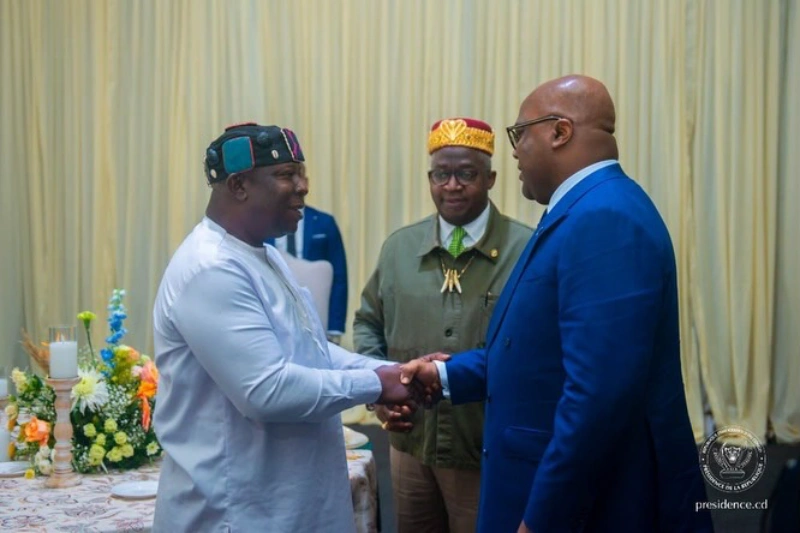
The decision came after a meeting with leaders of the country’s main religious denominations at the Cité de l’Union Africaine on 17 July.
Cardinal Fridolin Ambongo, the Archbishop of Kinshasa, announced the breakthrough to journalists after the audience. He said the president had responded favourably to an initiative long pushed by religious leaders, who wanted the country’s competing political forces brought into one framework for talks.
The DRC national dialogue has been demanded by opposition figures for months. They accuse Tshisekedi of using a proposed constitutional referendum to remove presidential term limits, opening a path to a third term when his current mandate ends in 2028.
Government spokesman Patrick Muyaya told a press briefing that the modalities of DRC national dialogue would be defined through a presidential ordinance. He said Tshisekedi, acting under Article 69 of the constitution as guarantor of the nation, would issue the ordinance within days to set out how the process should be organised.
The opposition coalition known as C64, which includes Moïse Katumbi and Martin Fayulu, had planned a mass mobilisation on 22 July to demand Tshisekedi’s resignation. The coalition takes its name from Article 64 of the DRC constitution, which grants citizens the right to resist an unconstitutional seizure of power.
C64 postponed the protest after mediation from the African Union, whose current chair is Burundian President Évariste Ndayishimiye. Under the mediated agreement, the DRC national dialogue must be convened before 15 August and led by religious organisations rather than the government itself.
The coalition has set conditions for its participation. It wants the government to abandon the constitutional reform plans, release political prisoners and guarantee political freedoms before it joins any talks. Nicolas Lenga of the opposition Envol party earlier described the constitutional push as an act of rebellion against the republic.
Political tensions over the DRC national dialogue have unfolded against a deteriorating security backdrop in the east. The AFC/M23 coalition controls significant territory across North and South Kivu, including the cities of Goma and Bukavu, despite months of regional mediation efforts.
Fighting in the east has continued to displace civilians even as Kinshasa pursues the dialogue process. Tshisekedi has previously warned that elections could face delays because of the conflict, a position that has deepened opposition suspicion of his intentions.
Government allies have framed the DRC national dialogue as part of a wider push for national unity against what Kinshasa calls Rwandan aggression. Muyaya said the process should help build what he termed a united home front, and added that participants should share a common commitment to defending the country.
That framing has not gone unchallenged. Supporters of the ruling Union for Democracy and Social Progress staged a demonstration outside the headquarters of CENCO, the Catholic bishops’ conference, after church leaders maintained their opposition to constitutional changes. Some government allies accused the clergy of advancing positions that indirectly benefited Rwanda.
The National Assembly has already passed a referendum bill that opposition figures view as the legislative foundation for constitutional change. Lawmakers passed the bill despite opposition boycotts and accusations that the ruling coalition was moving to bypass the existing two-term limit.
The Democratic Republic of Congo has a long history of national dialogues during periods of institutional crisis. Since multiparty competition returned in 1990, the country has held at least eight such processes, three of them in the past decade, though critics argue that several were used to co-opt opposition figures rather than resolve genuine disputes.
Whether the current DRC national dialogue breaks that pattern will depend on the mandate set out in the coming presidential ordinance. C64 has signalled it will judge the DRC national dialogue on its substance rather than its symbolism before deciding whether to take part or resume its planned street mobilisation.


