



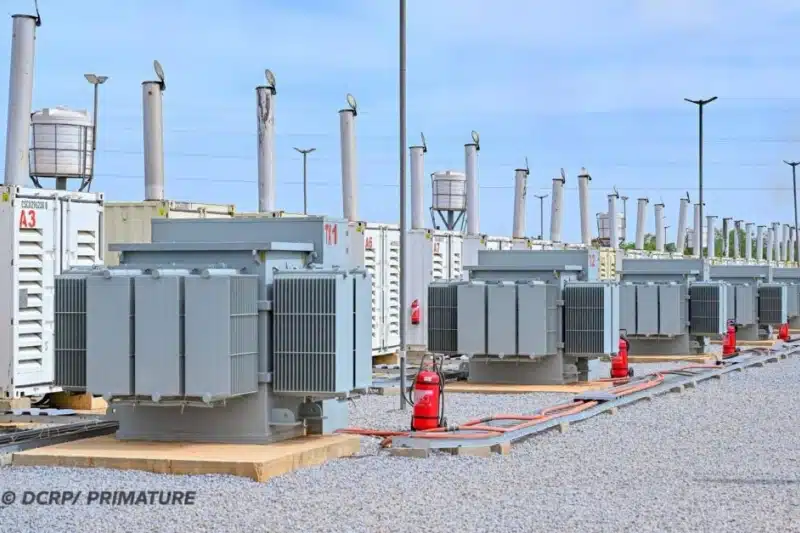

Burkina Faso’s military-led government has approved a CFA104.175 billion investment aimed at bringing electricity to hundreds of thousands of homes as it seeks to narrow one of West Africa’s widest urban-rural power gaps. The Burkina Faso power project is expected to connect more than 250,000 households and push national electricity access to 70 per cent by 2030.
The Council of Ministers signed off on the financing on Thursday in Bobo-Dioulasso, the country’s economic capital, under the chairmanship of Captain Ibrahim Traoré. Energy Minister Yacouba Zabré Gouba said the Burkina Faso power project would help accelerate efforts to expand access beyond the country’s major towns and cities.
Figures cited during the council session put urban electrification at nearly 88 per cent in 2024, while rural areas lagged at just over 10 per cent, a modest rise from under 8 per cent a year earlier. Closing that gap is the central task of the Burkina Faso power project.
More than 250,000 households, along with small businesses, schools and health centres, are expected to gain power directly through the scheme. The funds will pay for replacing ageing transmission equipment, extending distribution networks and installing sustainable energy solutions in communities that have gone without electricity for decades.
Two state bodies sit at the centre of delivery. SONABEL, the national electricity utility, and Faso Vêenem, a newly created agency, will both get expanded operational capacity to roll out transport and distribution networks under the scheme.
The financing forms part of a wider National Energy Pact and the RELANCE 2026-2030 plan. Both frameworks set higher ambitions than the minister’s public target for the Burkina Faso power project, calling for 90 per cent electrification nationally, full coverage in cities and roughly 71 per cent in the countryside.
Burkina Faso currently imports a large share of its electricity from neighbouring West African states, a dependence the government has repeatedly flagged as a strategic weakness. Officials say the Burkina Faso power project is meant to cut that reliance while turning energy access into a foundation for local industry and jobs.
The junta-led administration, in power since 2022, has increasingly framed energy self-sufficiency as central to what it calls sovereignty. That language now stretches from mining to food production. Thursday’s decentralised cabinet meeting, held outside the capital Ouagadougou, was itself presented as evidence of governance reaching beyond the seat of power.
Delivery remains the harder test. Energy schemes across the Sahel have a mixed record, with earlier rural electrification drives in the region often slowed by disbursement delays and cost overruns. Whether the Burkina Faso power projectavoids those pitfalls will shape how close the country comes to its 2030 targets.
For now, the approval marks a formal commitment of funds rather than kilometres of cable in the ground. Households in the areas earmarked for connection are still waiting to see when, and how, the promised power actually arrives. The success of the Burkina Faso power project will ultimately be measured not by the size of the budget approved, but by the number of homes and businesses that finally gain reliable electricity.


