



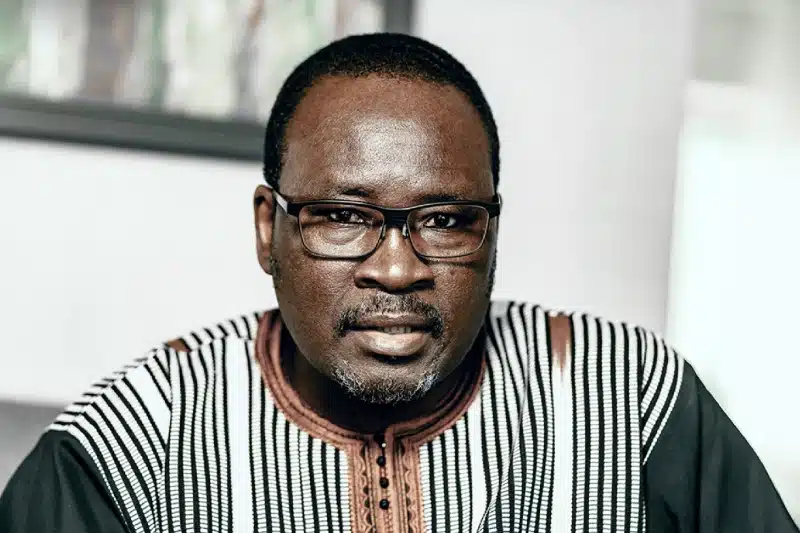

For six years, Isaac Zida said almost nothing. Then, from exile in Canada, he chose his words with the care of a man who knows exactly how they will be read back home.
In a new interview with Courrier International, Isaac Zida resurfaced with comments that are less a comeback than a quiet challenge to the men now running his country. He did not attack Ibrahim Traoré by name. He did not need to.
Isaac Zida’s last extended public remarks came around his unsuccessful 2020 presidential bid, mounted from abroad while desertion charges hung over him at home. Since then, silence. The general who once declared himself head of state within hours of Blaise Compaoré’s fall had, by most accounts, gone quiet for good.
To understand why his return to the microphone matters, it helps to remember how he got there in the first place.
Isaac Zida was a little-known deputy commander of the Presidential Security Regiment when the 2014 uprising toppled Compaoré after 27 years in power. On 1 November that year, he outmanoeuvred the army’s own chief of staff to declare himself interim head of state.
Weeks later, he handed power to the civilian diplomat Michel Kafando and became prime minister of the transitional government. He held that position through a 2015 coup attempt by his former regiment that briefly removed both men from office before the transition was restored.
By December 2015, Zida had left for Canada on family leave. He never returned. Burkina Faso’s authorities stripped him of his military rank for desertion and pursued him over corruption allegations he has always denied. He has lived in Ottawa ever since, reportedly working on a memoir and occasionally testing the waters of a political return that never materialised.
That history is what makes Isaac Zida’s newest comments worth reading closely. Asked about his relationship with Ibrahim Traoré, the captain who seized power in 2022 and now governs with tightening control over dissent, Zida offered a line that was polite on its surface and pointed underneath.
“We are not particularly close,” he said, before declining to discuss any private exchanges between them.
Isaac Zida was more direct on the question of authority itself. Traoré has told Burkinabe citizens to set democratic expectations aside for now, framing the country’s military-led administration as a revolutionary necessity rather than a democratic one. Zida’s response, without naming his successor, was to insist that firmness in government “must be exercised through institutions and the law, not through personal power.”
Coming from a man once accused of exactly that kind of personal overreach, the remark carries an edge he surely intended.
The interview also touched on Paul-Henri Sandaogo Damiba, the president Traoré himself ousted in 2022. Damiba spent years in exile in Togo before Lomé extradited him to Ouagadougou in January this year, a move Jeune Afrique reported came with Togolese assurances that he would not face the death penalty.
Isaac Zida was careful to separate the legal process from any presumption of guilt. “An extradition does not mean guilt,” he said, calling for justice that is “neither vengeance nor a political settlement.”
On his own possible return, Isaac Zida was cautious but not closed off. He said he has weighed coming home at least twice and that any decision now hinges on his safety and the resolution of the desertion case still open against him. He was careful to add that he is not chasing political office, only offering his experience should it prove useful.
Whether that offer is sincere or simply positioning, it lands at a delicate moment. Burkina Faso is a country where a captain now warns citizens against expecting elections, where a former president has just been handed back for trial, and where the men who once ran the transition are watching from a distance that suddenly does not feel far enough.
Isaac Zida spent six years choosing silence over risk. His decision to speak now suggests he believes the political landscape has changed, or that remaining silent no longer serves him either way. Whether his intervention marks the start of a return to public life remains unclear, but his voice has re-entered a national conversation from which it had long been absent.


