




Angola and Brazil are turning farming into the next big driver of their economic ties. Both governments now describe agribusiness as an engine capable of lifting output, jobs and trade far beyond what oil alone has delivered.
The push is not new, but it has gathered pace this year. Angola Brazil agribusiness cooperation has moved from broad promises to signed agreements, land offers and technical missions on the ground.
In May 2025, a Brazilian delegation of about 30 agribusiness entrepreneurs, led by Agriculture Minister Carlos Fávaro, spent a week touring farmland in Luanda, Malanje and Cuanza Norte, as reported by Brazil’s Ministry of Agriculture and Livestock. The visit fed directly into a state trip by Angolan President João Lourenço to Brasília later that month.
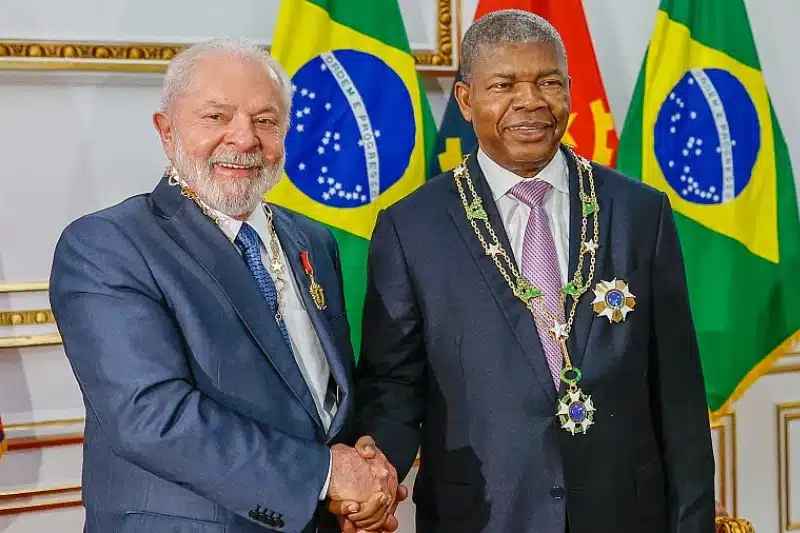
During that trip, President Lourenço and Brazilian President Luiz Inácio Lula da Silva signed six cooperation pacts, two of them focused squarely on agriculture, according to Ecofin Agency. One agreement targets research capacity for Angolan agricultural and forestry institutions, with a focus on developing semi-arid regions into productive farmland. The other supports irrigated farming and family agriculture. Lula said at the signing that Brazilian training could help turn dry Angolan land into a food hub, comparing it to Brazil’s own São Francisco valley transformation.
This pattern of exchange sits at the heart of Angola Brazil agribusiness cooperation. Brazil brings decades of experience turning its Cerrado savannah into one of the world’s most productive farming regions. Angola offers land, climate and geography that closely resemble that same terrain.
Angola has around 35 million hectares of arable land, yet only a small share is currently cultivated, according to the UN Food and Agriculture Organization. That gap is precisely what Brazilian investors are eyeing. A February 2026 report by Click Petróleo e Gás noted that Angola has begun leasing roughly 60,000 hectares to Brazilian producers, with early efforts concentrated on grain and staple food production before expanding into more complex agribusiness chains.
Officials on both sides describe this exchange of land, know-how and capital as the practical face of Angola Brazil agribusiness cooperation. Trade figures show why both sides see opportunity here. Brazil exported around $347 million in agricultural goods to Angola in 2024, dominated by beef, sugar, poultry and pork, according to the Rio Times. Angola wants to change that balance. Rather than simply buying Brazilian food, officials want Brazilian technology, machinery and know-how to help Angola grow more of its own.
Angola currently spends close to $3 billion a year importing food it could, in theory, produce domestically. Reducing that bill sits at the centre of the country’s National Development Plan for 2023 to 2027, which names agriculture and agribusiness as key tools for moving the economy away from its long dependence on oil.
That shift is already visible in the numbers. Angola’s agricultural sector has been steadily gaining ground within national output, with agriculture’s share of GDP now reported to have overtaken oil, according to figures published by Angola’s state news agency ANGOP and cited by FurtherAfrica in May 2026. Government programmes supporting mechanisation, irrigation and rural infrastructure are cited as key reasons for the shift.
Angola Brazil agribusiness cooperation is only one strand of a wider effort to modernise the sector. In June 2026, Angola and the World Bank Group launched the AgriConnect Compact, a national framework aimed at mobilising private investment, cutting food imports and creating rural jobs at scale. The programme, which runs to 2030, targets up to 700,000 jobs and up to $2.2 billion in annual added value, with a large share of the effort focused on the Lobito and Malanje development corridors.
Angola Brazil agribusiness cooperation now sits alongside other funding streams flowing into the sector. The African Development Bank has added further weight, approving $211.4 million in November 2025 for an agricultural value chain project in Angola’s eastern provinces. That scheme alone is expected to create 7,500 direct jobs and support around 1.2 million people across six provinces by 2031.
Challenges remain for investors weighing Angola Brazil agribusiness cooperation as a genuine opportunity rather than a slogan. Angola does not allow outright land purchase by foreign investors, only renewable land concessions. That rule shapes how far Angola Brazil agribusiness cooperation can go on the investment side and can complicate long term financing. Inflation near 30 percent and tight access to foreign exchange have also made it harder for businesses to plan with confidence, the Rio Times reported.
Even so, officials on both sides continue to describe farming as the natural next chapter in a relationship that already spans energy, mining and infrastructure. Brazil’s ambassador to Angola, Eugênia Barthelmess, said during the 2025 mission that Angola is positioning itself as a key hub for agricultural development in partnership with Brazil, a description that has only gained traction since.
With bilateral trade already above $1.2 billion and both governments actively courting private investment, agribusiness looks set to remain a central pillar of Angola Brazil agribusiness cooperation for years to come.


